How do you prune a walnut tree? Detailed pruning methods and techniques
How do you prune a walnut tree? Please explain the methods. Walnut tree pruning methods generally vary with tree age; for details, refer to the following: 1. Pruning young trees: this should vary according to the growth and development characteristics of each variety, mainly cutting out weak branches, crossing branches, overlapping branches, parallel branches and diseased branches, in order to...
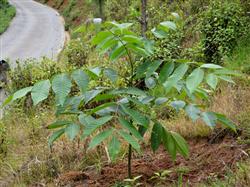 How do you prune a walnut tree? Please explain the methods
Walnut tree pruning methods generally vary with tree age; for details, refer to the following:
1. Pruning young trees:This should vary according to the growth and development characteristics of each variety. Mainly cut out weak branches, crossing branches, overlapping branches, parallel branches and diseased branches, so as to develop scaffold branches at all levels and fruiting branch groups. The specific methods: control secondary shoots; control water sprouts; properly handle vigorous vegetative branches; thin out excessively dense branches and properly handle downward-growing branches.
2. Pruning adult trees:For walnut trees that have just entered maturity, the tree shape has basically formed and yield is gradually increasing. The main pruning tasks at this stage are: continue to develop main and lateral branches, make full use of auxiliary branches for early fruiting, actively develop fruiting branch groups, and expand the fruiting area as much as possible. The pruning principles are: remove the strong and keep the weak, first spread then contract, combine spreading with contracting, and prevent the fruiting area from moving outward.
3. Pruning trees in full fruiting stage:For large walnut trees in full fruiting stage, most of the canopy is approaching closure or has already closed, the number of outer branches gradually increases, and most of them become fruiting branches. Due to poor light, some small branches dry up, bare zones appear at the rear of the main branches, the fruiting area moves outward, and alternate-year bearing is prone to occur. Therefore, the main pruning tasks at this stage are: adjust the relationship between vegetative growth and reproductive growth, continuously improve ventilation and light conditions inside the canopy, and continuously renew fruiting branches, so as to achieve high and stable yields.
4. Pruning aging trees:When walnut trees enter the aging stage, the outer branches droop and a large number of "scorched tips" appear. At the same time, a large number of water sprouts emerge, natural renewal occurs, and yield also drops significantly. In order to extend the fruiting years, renewal and rejuvenation can be carried out. The specific pruning methods: ① Trunk renewal (major renewal): saw off all main branches so that they regrow branches and form main branches. ② Main branch renewal (medium renewal): cut back main branches at appropriate positions so that they form new lateral branches. ③ Lateral branch renewal (minor renewal): cut back first-order lateral branches at appropriate positions so that they form new second-order lateral branches. Its advantages are: the new canopy forms and yield increases relatively quickly.
Click to get more hickory planting techniques
Click to get more fruit planting techniques