-
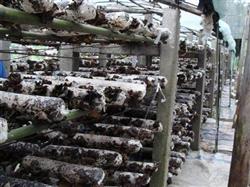
How to grow black fungus (wood ear mushroom) using vertical/three-dimensional cultivation? Detailed growing techniques
How to grow black fungus using vertical/three-dimensional cultivation? Please explain the method. For vertical/three-dimensional cultivation of black fungus, you can refer to the following methods: 1. Spawn preparation: The spawn production technique for wood ear mushroom is the same as for conventional edible fungi. 2. Spawn-running management: For the culture medium for cultivating wood ear mushroom, you can adapt to local conditions and use local materials, using cottonseed hulls or mixed wood sawdust as the culture medium. April-May...
-

Three key points for managing the color-change period of shiitake mushrooms
Edible fungi or fungal strains have their minimum, optimum, and maximum growth temperatures at each developmental stage, which are the so-called "three cardinal points" of temperature regulation. The "three cardinal points" temperatures for shiitake mushrooms are: the minimum temperature for mycelial growth is 6°C, the optimum temperature is 24°C, and the maximum temperature is 33°C; the minimum temperature for fruiting body growth is 8...
-
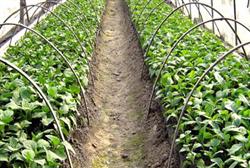
Three-dimensional Cultivation Technique of Interplanting Black Wood Ear Mushroom with Shaggy Mane
Interplanting shaggy mane (Coprinus comatus) in pepper fields is a good method of imitating wild cultivation of shaggy mane. It can save the expense of building mushroom houses, does not occupy extra space, and can greatly increase the economic benefit per unit of land area. Generally, after peppers are planted, furrows are opened in the middle of the pepper rows, material is spread, and spawn is scattered. For management and harvesting of the mushrooms...
-
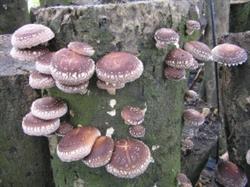
Three key points for shiitake mushroom management that mushroom growers must master
1. Selection of cultivation season. Shiitake mushrooms belong to the low-temperature type of fungi, and the mycelium can grow at temperatures between 5-32°C. As long as artificial cultivation can be properly regulated with suitable temperature and humidity, they can be cultivated all year round. However, inoculation and cultivation usually start from August to October, mushrooms begin to grow from November to October, production peaks around the Spring Festival, and by summer...
-
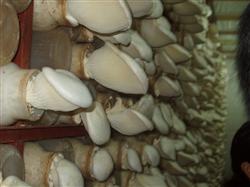
Three key techniques to master in the mushrooming management of the white king oyster mushroom
As a premium and rare edible mushroom, the white king oyster mushroom has developed rapidly in China, but many cultivation attempts end in failure. I would now like to share some of my experience in cultivating the white king oyster mushroom with everyone. 1. Post-ripening cultivation: after the mycelium of the white king oyster mushroom has fully colonized the bag, it cannot be induced to fruit immediately; it needs 50-60 days of physiological maturation before it can fruit. At this stage...
-
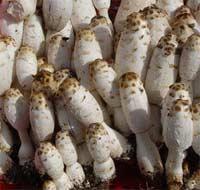
Hanging Bag Cultivation of Black Fungus (Wood Ear) and Stropharia rugosoannulata in a Multi-Layered Three-Dimensional Setup Doubles Returns
Distiller's grains are an excellent substrate for cultivating edible fungi. Their nutrient composition suits the growth of Stropharia rugosoannulata mycelium, and using them can both lower the production cost of Stropharia rugosoannulata and prevent environmental pollution. Distiller's grains contain a small amount of ethanol and active yeast that are harmful to mycelial growth, and they are highly acidic, with a pH of 3-5. Therefore, fresh distiller's grains should be selected...
-
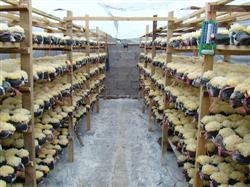
A Detailed Guide to Practical Multi-Tier Three-Dimensional Cultivation Techniques for White Wood Ear (Tremella fuciformis)
White wood ear, also known as white fungus, snow ear, or Sichuan ear, is a "prized fungus" used both as food and medicine, with broad market prospects. Artificial cultivation techniques for white wood ear are constantly being improved. Here we introduce the practical techniques for indoor multi-tier three-dimensional cultivation of white wood ear in Gutian County, Fujian Province, the "home of white wood ear": 1. Mushroom house setup: The specifications of a professional cultivation house or shed...
-

How to prevent vigorous mycelial growth in straw mushrooms? Three practical methods
(1) Do not make the growing medium too wet; the moisture content should not exceed 70%. When the temperature is low, choose noon or the afternoon for appropriate ventilation. (2) After spraying the fruiting water, open the doors and windows or remove the film to ventilate and exchange air, so that the medium temperature drops appropriately; ventilate until there are no water droplets on the surface of the medium, then appropriately close the doors and windows or cover with film again. (3) When cultivating with cottonseed hulls or waste cotton...
-
Key Techniques for Large-Bag Bed-Free Three-Dimensional Cultivation of Pholiota microspora (Nameko Mushroom)
Harvesting: When the mushrooms reach 70-80% maturity, that is, when the veil membrane of the cap has not yet stretched, they can be harvested. When harvesting, hold the substrate surface with one hand and gently twist off the mushroom cluster with the other, so as to avoid pulling up large chunks of substrate. After each flush is harvested, tidy the substrate surface and withhold water for 5-7 days before managing the next flush. Advantages of this cultivation model: it saves the wooden poles needed to build racks. No need to thread curtains or build racks, saving resources and reducing labor intensity; high-altitude work is changed to low-altitude work, making it easier to operate. Moisture in the substrate is easy to maintain, and during fruiting
-
Detailed Explanation of Harvesting and Processing Techniques for Three Types of Edible Fungi
1. Black wood ear (Auricularia heimuer): Under normal management for about 30 days, the ear pieces have fully expanded and reached physiological maturity, which means they are ready to harvest. When harvesting, all the wood ear on a single fungus bag should be picked at once, the base should be cleaned thoroughly, and the pieces should be spread on a raised sand net or straw curtain to dry in the sun. If the temperature is still around 20°C after the first harvest, manage it according to the first management method, and a second harvest can be expected. 2. Lingzhi (Ganoderma lucidum): The fruiting body of lingzhi is initially white when growing, then turns yellow, and after 2 to 3 months becomes purple, brown, or red. When the
条件筛选