-
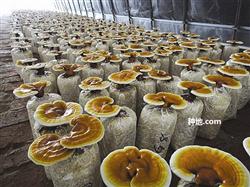
To grow Reishi mushrooms for three harvests a year, these five points need attention
Reishi (Ganoderma lucidum) is a medicinal fungus and one of China's nine legendary herbs. With the development of modern medicine, its medicinal value is constantly being discovered, and market demand is growing day by day, so artificial cultivation of Reishi has attracted widespread attention. Below, OPE Sports introduces the five key points that must be mastered to achieve three harvests a year with Reishi...
-
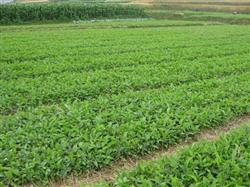
How can Pinellia ternata be planted to achieve three harvests in one year?
How can Pinellia ternata be planted to achieve three harvests in one year? Here is an introduction. To plant Pinellia ternata and achieve three harvests in one year, you can refer to the following planting methods: 1. Site selection and land preparation. For planting Pinellia ternata, loose and fertile soil is best. During land preparation, apply 3000-5000 kg of farmyard manure, 25-30 kg of phosphate fertilizer, and 100 kg of plant ash per mu. Do not apply ammonium bicarbonate...
-
Key Techniques for Three-Dimensional Cultivation of Soybean and Gastrodia elata
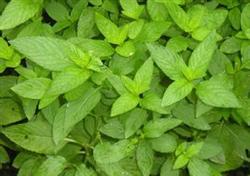
In order to develop the local economy and increase farmers' income, the introduction of the aromatic crop mint for demonstration planting has achieved success, the key techniques for mint cultivation have been clearly understood, and experience has been accumulated for large-scale promotion. 1. Seedling raising. 1. Rhizome propagation. Cultivate seed rhizomes in late April or late August. In the field, select robust-growing...
-

Cultivation method for growing Pinellia ternata in three crops a year
The Chinese medicinal herb Pinellia ternata can be grown in three crops a year. Planted in April, harvested in July; planted in July, harvested in October; planted in October, harvested in April of the following year. Three crops of Pinellia ternata can bring in more than 5,000 yuan per mu. Site selection and land preparation: For planting Pinellia ternata, loose and fertile soil is best. In combination with land preparation, apply 3,000-5,000 kg of farmyard manure, 25-30 kg of superphosphate, and 1,000 kg of plant ash per mu; ammonium bicarbonate must not be applied. After deep ploughing and fine harrowing, make beds 1.3 m wide and 17 cm high, with ditches 30 cm wide. In the ditches, intercropping can be done with
-
Detailed Explanation of the One-Year Three-Harvest Cultivation and Processing Technology for Pinellia (Pinellia ternata)
I. Land Selection and Preparation For planting Pinellia, loose and fertile soil is best. When preparing the land, apply 3000-5000 kg of farmyard manure per mu, 25-30 kg of phosphate fertilizer, and 100 kg of plant ash; do not apply ammonium bicarbonate. Plow deeply and harrow finely, with beds 1.3 m wide and 0.17 m high, and ditches 0.3 m wide; tall crops such as wheat, corn, sorghum, or kenaf can be intercropped in the ditches. II. Sowing Method Usually tuber propagation is used, allowing three plantings and three harvests in one year, namely planting in April and harvesting in July; planting in July and harvesting in October; planting in October and harvesting in April of the following year. The amount of seed tubers used per mu varies with
-
What is the annual yield per mu of Pinellia ternata with three plantings and three harvests?
If Pinellia ternata is propagated from tubers, hotbeds or electrically heated hotbeds should be used to sprout them. In early March, that is, between Yushui (Rain Water) and Jingzhe (Awakening of Insects), when the 5 cm soil temperature is stable at 8-10°C, it can be sown, and in the same year or the following year in mid-June, between Mangzhong (Grain in Ear) and Xiazhi (Summer Solstice), it can be dug up without affecting summer-sown autumn crops. Pinellia ternata generally yields 600-800 kg/mu of fresh tubers, with a drying ratio of 25%-30%, which can be converted to 180-240 kg/mu of dried product.
-
Detailed Explanation of Key Techniques for Cultivating Lingzhi with Three Harvests a Year
Lingzhi is a medicinal fungus. With the development of modern medicine, its medicinal value is continuously being discovered, and thus artificial cultivation has attracted widespread attention. Its high-yield cultivation techniques are neither as complex as some people think nor as simple as some people think. As long as appropriate technical measures are taken, achieving high yields is still hopeful. From years of practice, to achieve three harvests a year, the following points generally need to be mastered: 1. Reasonably arrange the production season. Lingzhi is a high-temperature, constant-temperature fruiting fungus. During its growth and development process, it needs
-
Detailed Explanation of the Biological Characteristics of Angelica sinensis (Part Three)
(1) Bolting and flowering. Angelica sinensis is a monocarpic plant. Under normal cultivation conditions, it enters the bolting and flowering stage in the third year. About half a month after the plant turns green again, the growing point begins to shift from the vegetative growth state to the reproductive growth state, forming a reproductive growing point, and some protrusions gradually appear at its apex, namely the inflorescence primordia. As the inflorescence primordia elongate and grow, the tip of each primordium begins to widen and produces several small protrusions, namely the umbellule primordia. After the umbellule primordia elongate, they form the rudiment of a compound umbel. At the same time, the basal stem swells and lengthens, forming internodes and constituting
-
Key Points on Harvesting and Processing Techniques for Licorice (Part Three)
For licorice propagated from seed, harvest in the 4th year; for licorice propagated from rhizomes, harvest in the 3rd year. Harvesting can be done either before Grain in Ear (Mangzhong) or after White Dew (Bailu), but harvesting after White Dew is preferable. After digging them up, cut off the branches and twigs while fresh, sun-dry until half dry, tie into small bundles separately according to thickness, and sun-dry until completely dry. Quality specifications for dry goods: cylindrical in shape, thick at the top and thin at the bottom with no reed head, surface purplish-red or grayish-brown, rough skin, loose and light in texture, cross-section yellow-white, starchy, sweet in taste, free from impurities, insect damage, and mildew. Grade One: length over 60 cm, diameter over 1
-
How to Increase Gastrodia elata Yield? The Three-Switch Measures Are Key
Gastrodia elata is a fine medicinal herb and has been selling well in the market in recent years. The farmers of Chalu Village, Baoshan Town, Fengcheng City, Liaoning Province, regard developing Gastrodia elata production as an important path to wealth; more than 40 households in the village grow Gastrodia elata and earn considerable income every year. Li Jingrong, a retired cadre of the village, has grown Gastrodia elata for 14 consecutive years and accumulated rich experience. He found that the yield of artificially cultivated Gastrodia elata tends to decline year by year. There are mainly 3 reasons: first, because self-bred and self-propagated tuber seeds are used year after year, the degeneration is severe; second, because self-bred and self-propagated fungal strains are used year after year,
条件筛选