What are the cultivation techniques for Scutellaria baicalensis (Chinese skullcap)? Detailed explanation of key growing points
What are the cultivation techniques for Scutellaria baicalensis? What issues should be noted when growing Scutellaria baicalensis? We ask experienced netizens to help share. Zhongdiwang has compiled the cultivation techniques and management methods for Scutellaria baicalensis, listed below for netizens' reference. Selection and preparation of the cultivation site for Scutellaria baicalensis: when growing Scutellaria baicalensis, choose...
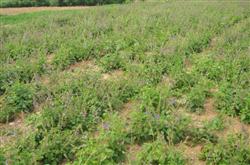 What are the cultivation techniques for Scutellaria baicalensis? What issues should be noted when growing Scutellaria baicalensis? We ask experienced netizens to help share
Zhongdiwang has compiled the cultivation techniques and management methods for Scutellaria baicalensis, listed below for netizens' reference.
Selection and preparation of the cultivation site for Scutellaria baicalensis:
When growing Scutellaria baicalensis, choose a sandy loam with sufficient sunlight, good drainage, and deep, fertile soil. Apply 30---60 kg of compound fertilizer as base fertilizer per mu, and plough to a depth of 25-30 cm. Rake fine and level, and make beds 1.2 m wide, of any length.
Propagating Scutellaria baicalensis by seed or root division:
Seed propagation method for Scutellaria baicalensis:
Before sowing, soak the seeds in warm water for 5-6 hours, remove and air-dry briefly, then sow. Sowing time: divided into spring sowing and autumn sowing; spring sowing is from mid-April to early May, and autumn sowing is from mid-August to late September. Open furrows at a row spacing of 30-40 cm, with a furrow depth of 0.5-1 cm, sow the seeds evenly into the furrows, cover with fine soil, press lightly, and water, keeping the soil moist. At a temperature of 15-18 °C, seedlings emerge about 15 days after sowing. The germination rate of Scutellaria baicalensis seeds is 60%. The sowing rate is 2 kg per mu.
Root division propagation method for Scutellaria baicalensis:
In spring, before Scutellaria baicalensis sprouts new shoots, dig out the roots, cut off the main root for medicinal use, then according to the size of the rhizome clump, cut the mother plant rhizome into several pieces, each with 2-3 buds, and plant them in holes at a row spacing of 30 cm and a plant spacing of 15 cm, cover with soil and firm it, water, and seedlings can grow in about 10 days. This method can shorten the growth cycle, but produces more root branches than direct sowing.
Management points after planting Scutellaria baicalensis:
Point 1, thinning of Scutellaria baicalensis:
After the seedlings are initially complete, thin out the overly dense and weak small seedlings in 2 rounds, and finalize the stand at a row spacing of 12-15 cm.
Point 2, intertillage and weeding:
After the seedlings emerge, loosen the soil and weed in time, and in conjunction with loosening the soil, properly bank soil around the seedlings, 2-3 times a year; being free of weeds is conducive to normal plant growth
Point 3, topdressing of Scutellaria baicalensis:
When the Scutellaria baicalensis seedlings are 10-15 cm tall, apply 10 kg of diammonium phosphate as topdressing to help seedling growth and increase yield. At the end of June and beginning of July, apply 10--20 kg of compound fertilizer per mu as topdressing. Open furrows between the rows and apply, then cover with soil and water once.
Point 4, timely removal of flower buds:
If seeds are not to be collected, cut off the flowering branches to reduce nutrient consumption, promote root growth, and increase yield.
Pest and disease control of Scutellaria baicalensis:
The main pest and disease of Scutellaria baicalensis is leaf blight, which damages the leaves, extending inward from the leaf tip or leaf margin, showing irregular dark brown lesions, spreading rapidly and causing the leaves to wither and die. The disease is severe in hot and rainy seasons. Spray 50% carbendazim 1000-fold solution for control, spraying once every 7-10 days, for 2-3 consecutive sprays.
Root rot, which damages the roots. In the early stage of the disease, individual lateral roots and fibrous roots turn brown and rot, then gradually spread to the entire root, which rots, and the whole plant dies. In the early stage of the disease, drench the diseased plants with 50% thiophanate-methyl 1000-fold solution.
Click to get more Scutellaria baicalensis cultivation techniques
Click to get more medicinal herb cultivation techniques