-

Winter Pruning Techniques for Spring Branches of Persimmon Trees
Methods to Improve Persimmon Tree Yield and Quality: 1. The prospects of the persimmon industry. In recent years, most Fuping persimmons (not pressed into cakes) have been purchased and exported by Japanese and South Korean buyers at a price of over ten yuan per kilogram. Meanwhile, several large supermarkets in Xi'an have long been selling Guangxi dried persimmons, with a retail price of under 10 yuan per (0.5 kg). This shows...
-
Management Measures for Spring Planting and Cultivation of Chestnut
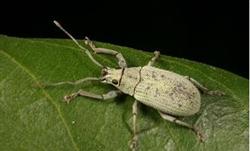
The chestnut weevil, also known as the chestnut snout beetle, lays eggs in August, and the eggs hatch into larvae in September. The larvae bore into and feed on chestnut fruits, causing the damaged fruits to be filled with insect droppings, affecting their edibility and making them unsuitable for seed. Fruit damage generally ranges from 20% to 40%, and can reach 90% in severe cases. The control method is to spray insecticide on chestnut trees. Use 50% fenitrothion at 800 times dilution...
-
Key Technical Points for Spring Irrigation and Moisture Conservation in Chestnut Orchards
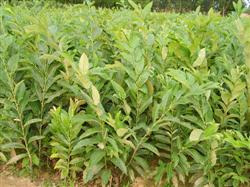
Chestnut (Castanea mollissima) is a deciduous tree and one of the woody grain tree species, with a long lifespan, known as the "iron-stemmed crop." The chestnut fruit is nutritious and delicious, and can serve as a substitute for grain; all parts of the chestnut tree can be used medicinally, and tannin extract can also be obtained from the bark, branches and leaves, and the pith of the wood, while the leaves can also be used to raise camphor silkworms and oak silkworms. Chestnut wood is hard, with straight grain, moisture-resistant and rot-resistant...
-

How to prevent and control pests and diseases in early spring eggplant? Key technical points to master
For eggplant seedlings raised in early spring, the main focus is preventing and controlling soil-borne diseases: damping-off, rhizoctonia rot and sclerotinia rot. For seedbed soil disinfection, mix 50 kg of seedbed soil with 20 g of 68% Jinlei water-dispersible granules and 10 ml of 2.5% Shileshi suspension concentrate, sift the soil and mix well, then fill nutrient pots, or spread it over the seedling bed. During the seedling stage, spray 0.1%-0.2% monopotassium phosphate...
-
Key Technical Points for Multi-Layer Covered Seedling Raising of Cucumbers in Spring Greenhouses
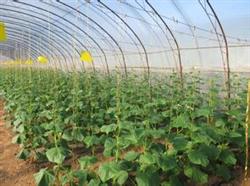
I. Greenhouse Structure. The best span for the greenhouse is 6-8 m. Put on the greenhouse film in early November. Set up a 1.5 m low tunnel inside the greenhouse and cover it with 3 m wide greenhouse film. At night, cover the low tunnel with a thick straw mat, and add a layer of old greenhouse film over the straw mat, which greatly enhances heat preservation. After seedling raising, cucumbers can still be planted in the greenhouse. II. Nutrient...
-
How is the planting time determined for early spring forcing cultivation of cucumbers in small arched tunnels
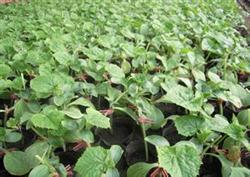
When is the best time to plant cucumbers for early spring forcing cultivation in small arched tunnels? How can they be helped to recover from transplanting quickly and grow vigorously? The suitable planting period for early-maturing cultivation of cucumbers in plastic-film small arched tunnels is late March. After planting, how quickly the cucumbers recover from transplanting and how well they grow is the result of many environmental factors acting together, among which the most important is how well the root system grows...
-
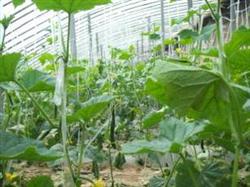
Integrated Pest and Disease Control Methods for Greenhouse Cucumbers in Spring
I. Common Diseases in Spring 1. Downy mildew (1) Occurrence characteristics: persistent (long-term companion), devastating (rapid spread, outbreaks). (2) Occurrence conditions: High humidity: relative humidity above 83% favors disease development, (water droplets or water film on leaf surface), spore germination and invasion. Optimum temperature: 15-20°C. Nutritional status...
-
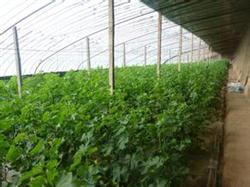
Key Points of Greenhouse Cucumber Management Techniques After Spring Festival
Manage Fertilizer and Water Well In mid-to-late February, most greenhouse cucumbers enter the peak fruiting period, and their demand for fertilizer and water gradually increases. Therefore, topdressing cucumbers should preferably be carried out after the end of February, generally applying 20 kg of urea, 5-8 kg of monopotassium phosphate, or 30-35 kg of potassium sulfate compound fertilizer per 1/15 hectare, once every 20...
-
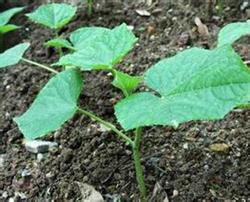
How to prevent root burn and seed rot when raising cucumber seedlings in winter and spring
Winter and spring are seasons with low temperatures, short daylight, and weak light. These natural conditions are all important factors affecting the formation of strong seedlings. However, under current production levels, it is difficult to fundamentally solve them artificially, especially the light conditions. Therefore, in the winter and spring seedling-raising season, if management is improper, the cucumber seedlings will easily...
-
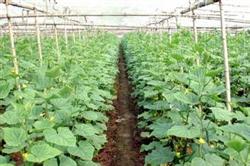
Detailed Explanation of Multi-Layer Covered Seedling Cultivation Technology for Cucumbers in Spring Greenhouses
1. Do not arbitrarily change the light-receiving angle of the greenhouse. The angle of the solar greenhouse currently used for cucumber cultivation has been scientifically verified over a long period. Its north-south span, height, and rear slope angle should not be arbitrarily changed. 2. Do not apply concentrated fertilizer at transplanting. Various chemical fertilizers, especially nitrogen fertilizers, under humid and high-temperature conditions, will produce large amounts of...
条件筛选