How is the planting time determined for early spring forcing cultivation of cucumbers in small arched tunnels
When is the best time to plant cucumbers for early spring forcing cultivation in small arched tunnels? How can they be helped to recover from transplanting quickly and grow vigorously? The suitable planting period for early-maturing cultivation of cucumbers in plastic-film small arched tunnels is late March. After planting, how quickly the cucumbers recover from transplanting and how well they grow is the result of many environmental factors acting together, among which the most important is how well the root system grows...
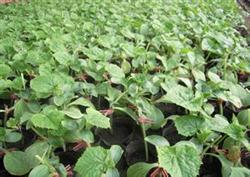
When is the best time to plant cucumbers for early spring forcing cultivation in small arched tunnels?
How can they be helped to recover from transplanting quickly and grow vigorously?
The suitable planting period for early-maturing cultivation of cucumbers in plastic-film small arched tunnels is late March. After planting, how quickly the cucumbers recover from transplanting and how well they grow is the result of many environmental factors acting together, among which the most important is how well the root system grows. In fact, whenever we observe the growth state of the aboveground parts, we should first think about how the root system is developing. Some symptoms appear on the aboveground crown, but the root of the problem lies in the underground root system. Therefore, to achieve quick recovery from transplanting and vigorous growth, we must first protect the root system during the planting process and minimize damage to the roots during planting. After planting, take various measures to promote root growth; when the root system is vigorous, the stems and leaves aboveground will naturally grow vigorously. For this purpose, the following measures should be taken:
(1) Do a good job of soil-blocking (tunmiao): the length of the soil-blocking period mainly depends on the soil texture of the seedbed. Sandy loam dries quickly, so the soil-blocking time should be shorter; clay loam dries slowly, so the soil-blocking time can be longer. The suitable soil-blocking time is 5-7 days. When preparing the culture soil, in addition to considering fertility, the texture of the culture soil should also be considered; it is best if it is somewhat on the heavy loam side.
(2) Preheat the bed in advance: the planting bed should be covered with a tunnel about 10 days in advance to warm the bed and raise the soil temperature.
(3) Stabilize seedlings with dark water: in late March, choose a sunny, windless morning at the tail end of a cold spell and the beginning of a warm one for planting. Dig holes according to the required spacing between plants and rows. For example, for early-maturing cultivation in small arched tunnels, the row spacing is 60 cm and the plant spacing is 25 cm. The depth of the holes is 12-13 cm, so that after planting the original soil block is level with the ground surface. Water first and then place the seedling blocks, but never wait until the water in the holes has seeped dry before setting the seedling blocks. It is required that when the water in the holes has finished seeping, the seedling blocks are already thoroughly wet; if the seedling blocks are not thoroughly wet, an appropriate amount of additional water should be added. Do not plant too deep. As the farming proverb says: "Eggplants bury their necks, cucumbers expose their blocks," which means cucumbers should be planted shallower, because cucumbers have a shallow root system, and shallow planting allows the root system to develop well; moreover, the temperature of the shallow soil layer is higher than that of the deeper layer, which is favorable for root development.
(4) Cover the film tightly: after planting and before recovery from transplanting, cover the film tightly to raise the air temperature and soil temperature and promote the growth of the entire seedling. When there is high temperature during the day, put the straw mats back on to provide shade and prevent the seedlings from wilting. Under normal circumstances, do not ventilate.
(5) Cultivate and loosen the soil: after recovery from transplanting, cultivate in time. After cultivating, give a small watering according to the growth of the seedlings and the degree of soil dryness and wetness, then cultivate continuously 2 more times. Each cultivation can reach a depth of 7-10 cm, and the spaces between rows and between plants should be loosened, but no matter how you cultivate, you must not damage the seedling soil blocks from planting. Cultivation can raise the soil temperature, increase soil permeability, and is favorable for root growth.
(6) Manage the bed temperature reasonably: after recovery from transplanting, ventilate appropriately during the day. During the day the bed temperature should be 20-25°C, and at night 15°C. In mid-April, if the daytime air temperature reaches above 20°C, the plastic film can be fully uncovered to let the plants receive natural light, and at around 4 p.m. cover the film again, cover part of the straw mats, and prevent the wind from blowing the film away. In early May, when the nighttime temperature stabilizes above 15°C, remove the film and straw mats.