-
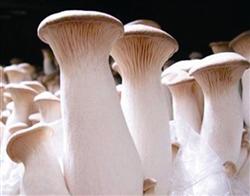
How can high yields be achieved in winter and spring cultivation of king oyster mushrooms?
How can high yields be achieved in winter and spring cultivation of king oyster mushrooms? Please give an introduction. Winter and spring cultivation of king oyster mushrooms is not only easy to achieve high yields, but the mushrooms also have thick, tender flesh, a delicious taste and rich nutrition, and are very popular with consumers. The main techniques for high-yield winter and spring cultivation of king oyster mushrooms are as follows: 1. Cultivation time. From sowing to fruiting takes about 50 days to 6...
-
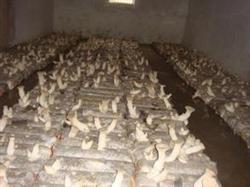
Cultivation and Management Methods for Getting More Flushes of King Oyster Mushroom in Spring
Control the environment and try to keep the ambient temperature within the growth range. The growth temperature of king oyster mushroom (Pleurotus eryngii) is 6°C to 25°C. At 6°C to 15°C, the fruiting body grows slowly, but its tissue is dense and its color is attractive, so high-quality mushrooms can be produced. Bud-stage management 1. Increase ventilation Increase ventilation to promote cap growth and inhibit stipe growth...
-
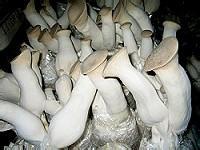
Advance preparation of raw materials is needed for winter and spring cultivation of king oyster mushrooms
King oyster mushroom (Pleurotus eryngii), also known as xuerong, is a high-quality large fleshy agaric. The king oyster mushroom has a thick, plump stalk, a crisp and tender texture, and a delicious flavor, and can be called the "king of oyster mushrooms." It is rich in nutrients and high in oligosaccharides, with effects on intestinal regulation and beauty. It is suitable for fresh preservation or drying and is highly favored by consumers...
-
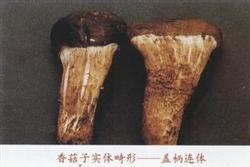
Master key shiitake techniques to get more shiitake mushrooms in spring
During the growth of shiitake mushroom fruiting bodies, "candle mushrooms" (with a stalk but no cap), "pinecone mushrooms" and "lychee mushrooms" (caps clumped together with no stalk or not opening) often appear. These are all malformations of shiitake mushrooms and belong to physiological diseases. There are several control methods: 1. Understand the fungal characteristics and prevent mistakes in introducing spawn: plant...
-
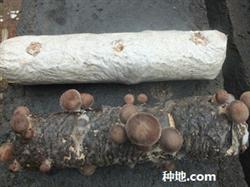
How to manage shiitake mushrooms in winter and spring? Detailed technical points
How should shiitake mushrooms be managed in winter and spring? Please advise on the winter and spring management of shiitake mushrooms, which is the management during the fruiting period; this period determines the level of economic benefit of shiitake mushrooms. Before fruiting, the fruiting shed should be built first. A two-shed system can be adopted: one for cultivating small mushrooms and the other for cultivating flower shiitake mushrooms. The fruiting shed should be chosen on flat terrain, with...
-
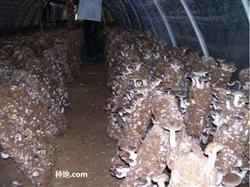
What are the methods for rehydrating shiitake mushrooms in spring?
How do you rehydrate shiitake mushrooms in spring? Please advise. After the mushroom logs in log-style shiitake cultivation have fruited through autumn and winter, their water content decreases. To increase shiitake yield, rehydration treatment is needed. There are two rehydration methods: the injection method and the soaking method. Here we mainly introduce rehydration by the injection method. The mushroom logs in the mushroom bed stay in place, and...
-
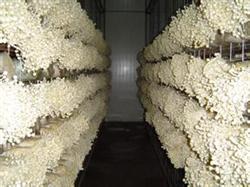
How to promote mycelial growth in spring oyster mushrooms? Sharing practical measures
Enoki mushrooms have a crisp, tender flesh, a delicious taste, a pleasant mouthfeel, and are extremely rich in nutrients, and they also have relatively good medical and health benefits. Enoki mushrooms are generally cultivated in autumn and winter, with fewer cultivated in summer. The Agricultural Bureau of Shizhong District, Zaozhuang City, used cold storage to control temperature for cultivating enoki mushrooms in summer, and succeeded, with each sq m of cold storage in July, August, September...
-
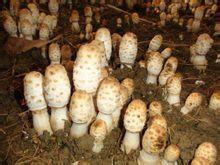
Detailed Explanation of Key Techniques for Spring Management of Shiitake Mushrooms
The shaggy ink cap, also known as Coprinus comatus, gets its Chinese name "chicken-leg mushroom" because its fruiting body resembles a chicken leg and its flesh tastes like shredded chicken. It has high edible and medicinal value. Through repeated practice, the author cultivated shaggy ink cap mushrooms directly in the open field using whole straw (rice straw, wheat straw, grass straw, etc.) and achieved a good return of 150 kg of mushrooms per 100 kg of dry straw. The method is as follows...
-
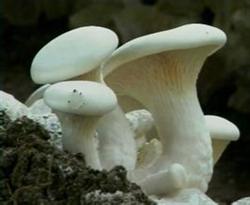
Key techniques for multiple flushes of white lingzhi mushrooms in spring
White lingzhi mushroom (Pleurotus nebrodensis) is a rare edible fungus developed in recent years, with excellent mushroom quality, good marketability, and high economic and nutritional value, offering broad market prospects. At present, it is mainly cultivated with cottonseed hulls as the main substrate, and developing white lingzhi mushroom cultivation in non-cotton regions presents certain difficulties. Through experiments, the author found that cultivating white lingzhi mushroom using whole corn plants is entirely feasible, and the biological...
-
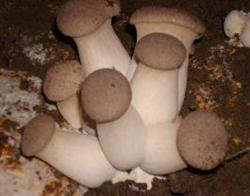
Key technical points for getting more mushrooms from king oyster mushrooms in spring
1. Grasping the best fruiting period for king oyster mushrooms. King oyster mushrooms have been cultivated in Panjin, Liaoning, for several years now, and the experience gained is that the most suitable fruiting period for producing king oyster mushrooms in local mushroom sheds is from early March to the end of April in spring, and from late September to early November in autumn. Without heating facilities, during this period...
条件筛选