How can high yields be achieved in winter and spring cultivation of king oyster mushrooms?
How can high yields be achieved in winter and spring cultivation of king oyster mushrooms? Please give an introduction. Winter and spring cultivation of king oyster mushrooms is not only easy to achieve high yields, but the mushrooms also have thick, tender flesh, a delicious taste and rich nutrition, and are very popular with consumers. The main techniques for high-yield winter and spring cultivation of king oyster mushrooms are as follows: 1. Cultivation time. From sowing to fruiting takes about 50 days to 6...
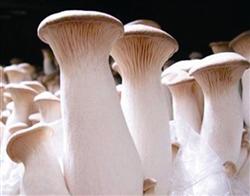
How can high yields be achieved in winter and spring cultivation of king oyster mushrooms? Please give an introduction
Winter and spring cultivation of king oyster mushrooms is not only easy to achieve high yields, but the mushrooms also have thick, tender flesh, a delicious taste and rich nutrition, and are very popular with consumers. The main techniques for high-yield winter and spring cultivation of king oyster mushrooms are as follows:
1. Cultivation time. From sowing to fruiting takes about 50 days to 60 days. Generally, bag preparation and cultivation can be scheduled from October of the current year to February of the following year, and fruiting can occur from November of the current year to March of the following year. Cultivation can be done indoors or in outdoor greenhouses.
2. Substrate formulas. Formula 1: cottonseed hulls 60%-70%, wheat bran 15%-20%, cottonseed powder 10%-15%, sugar 1%, calcium carbonate 1%. Formula 2: mixed wood sawdust 68%-75%, wheat bran 10%-20%, cottonseed powder 10%-20%, sugar 1%, calcium carbonate 1%. Formula 3: mixed wood sawdust 30%-35%, cottonseed hulls 30%-35%, cottonseed powder 10%-20%, sugar 1%, calcium carbonate 1%, wheat bran 10%-20%.
3. Mixing ingredients and making bags. Choose one of the above methods, adjust the water content of the raw materials and mix thoroughly, with a water content of about 60%. Then fill into 15 cm x 30 cm polypropylene plastic bags. When filling, pack tightly at the bottom and loosely at the top, with the filling amount accounting for 60% of the bag, and make a hole in the middle extending one third of the way into the substrate. Close the bag opening with a ring and cotton plug, and sterilize for 2 hours to 2.5 hours under high pressure at 1.5 kg per square cm.
4. Inoculation and mycelial colonization. When the substrate temperature has cooled to below 23°C, place it in an inoculation box or sterile room and inoculate with spawn. Each 750 g bottle of spawn can inoculate 50 bags to 60 substrate bags. Then place the substrate bags in a disinfected, clean room for mycelial colonization and cultivation, with the temperature controlled at 23°C-25°C and the indoor relative humidity controlled at about 70%. Ventilate 1 time to 2 times per day, and the spawn bags will be fully colonized in 25 days to 35 days.
5. Arranging beds for fruiting. Management during the stage of fruiting body growth and development of king oyster mushrooms is the key to high yield and high quality. In the mushroom house, arrange the fully colonized spawn bags on shelves in layers, with 5 layers to 6 layers per shelf and a layer spacing of 25 cm. After arranging them, cover the bag surfaces with newspaper. Maintain a relative humidity of 80% and a temperature of 15°C-18°C. After about 15 days, uncover the newspaper and spray water 1 time to 2 times per day to maintain a relative humidity of 85%-90%. When humidity is high in greenhouse cultivation, the film can be uncovered for 30 minutes. In winter, also pay attention to removing carbon dioxide to avoid the appearance of deformed mushrooms. Shade materials should be set up above the mushroom shed to prevent strong direct light from discoloring the mushroom bodies. After producing 1 batch to 2 batches of mushrooms, the spawn bags can be removed from the film, covered with 3 cm-4 cm of soil, and managed by soil casing.
Click to get more king oyster mushroom cultivation techniques
Click to get more edible mushroom cultivation techniques