-
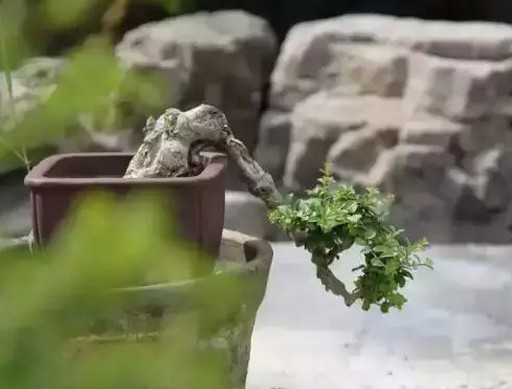
Cultivation of small trees for landscape bonsai originates from insights into how nature shapes trees
Bonsai starts from small seedlings, pruned once a year in the early stage, beginning with basic training; as time accumulates, the small tree naturally shows healed pruning cuts, and according to one's own needs and purposes, the tree's form is gradually perfected through continuous pruning. Young trees in the early stage have no degree of aging. Due to the characteristics of some tree species, such as Chinese privet (Ligustrum sinense)
-
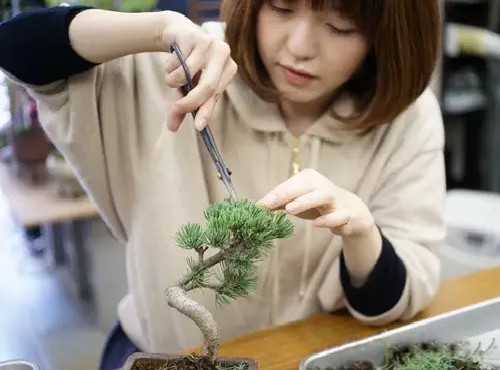
Detailed Explanation of Pruning Methods and Techniques for Small-Scale Bonsai
Pruning of small-scale bonsai is synonymous with the means of shaping bonsai trees. Although there are also techniques such as wiring, pulling and hanging, guy-wiring, carving and grafting, they are often conventionally grouped under pruning. As the main means of bonsai shaping, it not only integrates related techniques
-
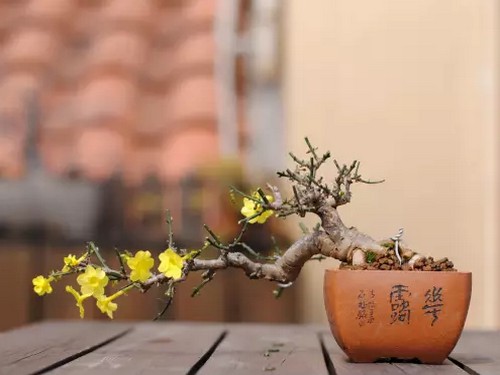
How to Fertilize Small Bonsai: Methods and Precautions Explained
Because bonsai have limited soil, fertilization must be timely, otherwise it easily causes leaves to turn yellow, decline, and branches to wither. The amount of fertilizer varies with the type of plant. For small bonsai grown mainly for their flowers, a lighter fertilizer should continue to be applied after flowering to encourage more blooms the following year
-
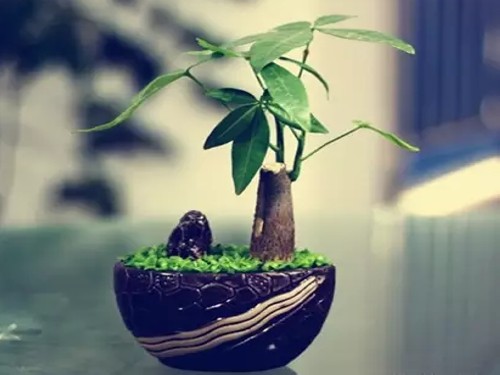
How to Fertilize Small Bonsai? A Complete Guide to Methods and Techniques
Potted plants are grown in containers where space and soil are limited, and natural nutrients are limited as well. For the normal growth of potted plants, supplementing nutrients is absolutely necessary, so fertilizing is also a very important part of daily bonsai care. The commonly mentioned three essential nutrients in fertilizer refer to three components: nitrogen, phosphorus, and potassium.
-
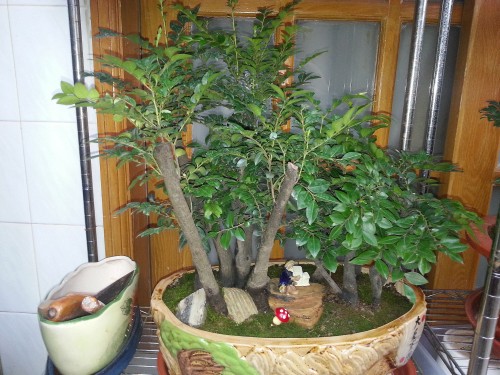
A Detailed Guide to Pruning the Small-Leaf Red Sandalwood Bonsai
Red sandalwood is a tropical plant that loves sunlight and cannot tolerate low temperatures. Its root system is well developed and bears root nodules that can fix nitrogen, and it is not demanding about soil. Because it grows slowly, it needs no special pruning! However, yellow leaves, dry tips, dead branches and leggy growth spoil the beauty of the plant, so it should be pruned regularly to keep it looking good. The small-leaf red sandalwood has fairly strong vitality
-
How to water a small-leaf red sandalwood bonsai correctly
Small-leaf red sandalwood bonsai has an excellent foliage effect, but watering is crucial during the care and management process. Many people worry that improper watering will cause the leaves of the small-leaf red sandalwood bonsai to lose their green color and lead to various growth problems. In fact, watering a small-leaf red sandalwood bonsai is quite simple; overall, watering should be frequent. So
-

How to water a small Sageretia bonsai correctly
The Sageretia (Sageretia thea) has unusual roots, an ancient-looking tree form, small leaves and abundant buds, and extremely high ornamental value, making it an excellent material for making bonsai of all sizes. Compared with many tree species, Sageretia is fairly drought-tolerant, but it also likes moisture, though it fears being waterlogged, so watering at ordinary times needs to follow a certain routine. So
-

Detailed Explanation of Maintenance and Management Methods for Miniature and Small Bonsai
Although miniature and small bonsai are relatively easy to tend, they are not easy to cultivate. The maintenance of miniature bonsai especially requires careful and meticulous attention. The potting soil should be kept moist at all times, following the principle of "dry-wet alternation" (water when dry, let dry between waterings), or water can be applied by the pot-soaking method. In midsummer, place them in a shaded area and use a fine-nozzle spray bottle to mist the plants, maintaining a humid environment. During the growing season, apply light fertilizer frequently.
-
How to care for a small-leaf banyan bonsai? Teach you the correct care methods
The small-leaf banyan's advantages are its beautiful form, beautiful root base, beautiful branches, beautiful bark color, beautiful leaves, and beautiful aerial roots. The banyan has vigorous roots, dense branches and leaves, grows easily, tolerates pruning, and has a long lifespan. It is also wonderfully varied and uniquely shaped, making it an excellent material for cultivating stump bonsai, and it is highly favored by many bonsai enthusiasts. Nowadays
-
What to do when the leaves of a small-leaf banyan bonsai turn yellow? Causes and solutions
The small-leaf banyan bonsai is also a type of banyan bonsai. It belongs to the mulberry family and its fruit is somewhat spherical. The fruit comes in various colors, mostly red. The small-leaf banyan uses the banyan tree as its basic material and is pruned to achieve unusual forms in the trunk, roots, stems and leaves of the ornamental banyan. But in our daily care process
条件筛选