How to water a small-leaf red sandalwood bonsai correctly
Small-leaf red sandalwood bonsai has an excellent foliage effect, but watering is crucial during the care and management process. Many people worry that improper watering will cause the leaves of the small-leaf red sandalwood bonsai to lose their green color and lead to various growth problems. In fact, watering a small-leaf red sandalwood bonsai is quite simple; overall, watering should be frequent. So, how do you water a small-leaf red sandalwood bonsai? How often should you water it?
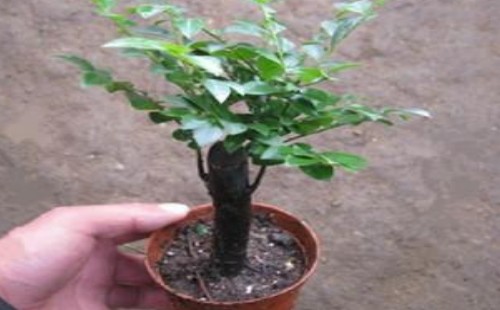
Small-leaf red sandalwood is a tropical tree species with a relatively high water demand, and its drought tolerance and cold tolerance are both relatively poor. Therefore, the watering frequency should be high; generally, watering once every 2-3 days can be maintained, and it is best to water thoroughly. So, friends who are usually carefree should be careful when watering; do not flush with a strong stream of water, or dump a whole basin of water in at once. These are all unscientific watering methods.
In addition to a high watering frequency, the timing of watering should also be well controlled, especially in the hot summer, when you must not water at noon. This is because the sunlight is too strong at that time, and after watering, the water easily evaporates quickly, which not only fails to achieve the purpose of watering, but also easily causes the plant to wilt, and in severe cases may even kill it. In summer, watering is generally done in the morning and evening. At the same time, considering the high temperature and rapid water evaporation, it is also necessary to spray more water on the leaves to cool down and retain moisture.
Moreover, in winter, because the temperature is very low, especially in northern regions, and because the cold tolerance of small-leaf red sandalwood is relatively weak, in order to ensure that the plant can successfully overwinter, watering should be restricted, mainly by promptly reducing the watering frequency. The water temperature for winter watering should be as close as possible to the ambient temperature, and it is likewise necessary to water thoroughly; do not only wet the surface soil or water only halfway. However, if it is indoors with heating or in a heated room, because the air is relatively dry, appropriate spraying is needed to retain moisture.
In the daily watering work for small-leaf red sandalwood bonsai, apart from appropriately controlling water in winter, in other seasons it is often necessary to ensure sufficient water to maintain the plant's growth needs. At the same time, when caring for it in a low-humidity, dry environment, it is also necessary to spray more water to increase air humidity so as to maintain the plant's growth needs.
Of course, to grow a red sandalwood bonsai well, relying on a single watering action alone is still not enough. The care and management of potted plants is a complete process, during which multiple care methods need to be combined. Only in this way can the plant be grown well and can the ornamental value that a potted plant or bonsai should have be brought out.