-
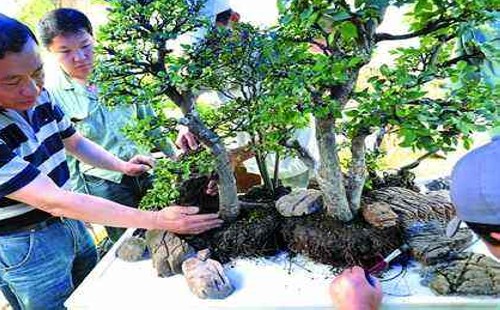
How Short Should You Cut Elm Bonsai Branches? A Detailed Guide to Pruning Methods
Elm is a deciduous tree, and generally, whether for routine care and management or for bonsai styling, pruning is usually the primary method used. Pruning an elm bonsai is mainly done to shape a good tree form, so we cannot simply focus on pruning alone; during the pruning process, we should also appropriately consider leaving some branches unpruned.
-
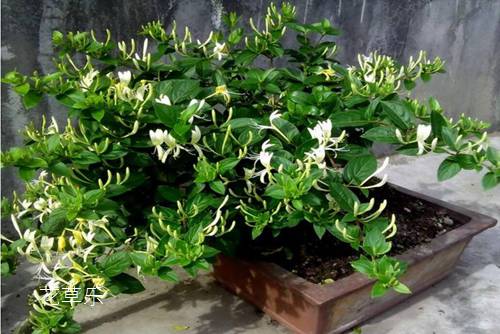
How do you grow a honeysuckle bonsai so it has short branches and abundant flowers?
Honeysuckle, also known as Japanese honeysuckle. It is also called gold-and-silver vine and mandarin duck vine. Honeysuckle blooms in March, with five petals, a faint fragrance, and a reddish base; the flower is white when it first opens, and after one or two days it turns yellow, hence the name honeysuckle. Since ancient times, honeysuckle has been praised as a good medicine for clearing heat and detoxifying. It is sweet in nature, cold in energy, and aromatic; being sweet and cold, it clears heat without harming the stomach
-
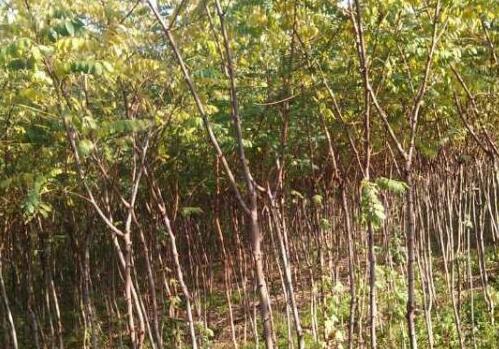
Short-lived Tree: Torch Tree Seedling Price, What It Looks Like, and How It Affects People
The torch tree is also known as deer antler sumac, torch lacquer, and Canadian sumac. It is cultivated more in the provinces (regions) north of the Yellow River basin, mainly used for barren hill greening and also as a landscape forest tree species for saline-alkali wasteland. So about how much does a torch tree seedling cost? What does it look like? Is it harmful to people? How is it cultivated and planted?
-
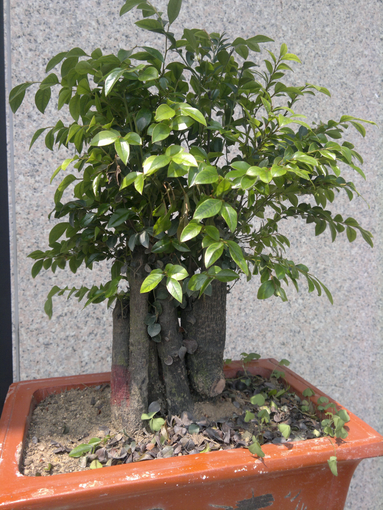
Growing methods and precautions for the small-leaf rosewood (Pterocarpus santalinus), and symptoms of water shortage
When people mention small-leaf rosewood, the first thing that comes to mind is bead bracelets, but here we are talking about the small-leaf rosewood plant. What are the growing methods for small-leaf rosewood? What precautions should be taken? What are the symptoms when small-leaf rosewood lacks water? Growing methods for small-leaf rosewood: the growing temperature for small-leaf rosewood is 20-30 degrees
-

How to care for honeysuckle so it has short branches and dense flowers?
Potted honeysuckle, due to the limited space of the pot, cannot be allowed to grow freely; the ornamental requirements are higher, requiring a better shape; most importantly, when it blooms it cannot be as unruly as when planted in the ground, but rather its flowers should be concentrated and bloom profusely. The following methods can help you achieve this: 1. Water control. Honeysuckle is a vine, and without intervention
-

Key Techniques for Raising Tea Seedlings from Short Cuttings in Summer and Autumn
I. Nursery Plot Preparation 1. Site selection. A yellow soil in which tobacco, hemp or vegetables have never been grown is required; sandy loam or red soil may also be used; the soil pH should be 4.5-5.5, and the organic matter content in the 0-15 cm soil layer should be below 1.5%; watering should be convenient, and the site should be located below and near a water source. 2. Land preparation. First plow the soil deeply and thoroughly to 25-30 cm, then finely work the top 20 cm of soil repeatedly to ensure the soil is crumbled and the surface is level. 3. Bed making. In summer, make the beds oriented due east-west; in autumn, make them oriented slightly east-west. The beds should be 1.2 m wide and 8-10
-
Key points of the soilless short-stem cutting technique for tea plants
Soilless short-stem cutting of tea plants not only saves costs compared with the traditional short-stem cutting with a soil core layer, but also achieves a cutting survival rate of up to 85%, giving it considerable value for wider promotion. 1. Nursery site preparation (1) Plot selection. The nursery site should be close to a water source, with loose soil and flat terrain, and easy to drain and irrigate. (2) Planning. Adjust measures to local conditions, dividing the site into blocks according to the natural drop of the plot. A drainage and irrigation ditch should be dug around each block, 60 cm wide and 40 cm deep. The beds are generally 10-15 m long and 1 m wide, with a working ditch 40 cm wide between beds, and an east-west bed orientation is preferable.
-
Detailed Explanation of the Short-Cutting Cutting Propagation Technique for Tea Plants in Nutrient Bags
The short-cutting cutting propagation technique for tea plants in nutrient bags is the process of using nutrient bags to directly insert short cuttings and cultivate plants. This asexual propagation method can effectively maintain the characteristics of the mother tea plant, produce offspring with uniform traits, help cultivate strong seedlings, avoid damaging the root system during transplanting, and effectively increase the survival rate. However, the seedling propagation technique is demanding, and the process is relatively complicated; if not mastered well, it can easily lead to failure. The following technical points should be noted in seedling propagation: 1. Build a shade shed. The shade shed has the functions of sun protection, wind protection, and frost protection. It is an important part of the success or failure of nutrient bag seedling propagation. Shade
-
Detailed Explanation of Key Techniques for Short-Cutting Propagation of Tea Plants
I. Selection of Mother Trees and Cultivation of Cuttings: Select a vigorous, genetically uniform, pest- and disease-free garden as the mother garden, then select mother trees within the mother garden. The selected mother trees should not be plucked for tea; instead, shoots are retained for cutting propagation. Generally, spring shoots are retained for summer cuttings, and summer-autumn shoots are retained for autumn-winter cuttings. Topping should be done about 13 days before cutting the cuttings. II. Selection and Preparation of Nursery Land: Select a site near the new plantation, with convenient transportation, loose and fertile slightly acidic red-yellow loam soil, and convenient drainage and irrigation. Plow and sun-bleach, rake level and break up clods, and remove grass roots, tree roots, debris, etc. With a bed width of 1 m
-
Detailed Explanation of the Key Points of the New Short-Cutting Tea Propagation Technology
At present, asexual propagation of tea plants mainly uses the short-cutting method with heart soil spread on the bed surface. Although this technique can effectively reduce diseases and weed damage during the propagation process, its heavy workload and high input cost have largely restricted the propagation and promotion of improved tea varieties. In recent years, through relatively large-scale trials, we have proposed a simple, reliable, labor-saving and material-saving cutting technique without heart soil. The land preparation production cost of this technique is only 300 yuan per mu. It not only saves costs compared with the traditional heart soil method, but the cutting survival rate can also reach about 85%, offering
条件筛选