Growing methods and precautions for the small-leaf rosewood (Pterocarpus santalinus), and symptoms of water shortage
When people mention small-leaf rosewood, the first thing that comes to mind is bead bracelets, but here we are talking about the small-leaf rosewood plant. What are the growing methods for small-leaf rosewood? What precautions should be taken? What are the symptoms when small-leaf rosewood lacks water?
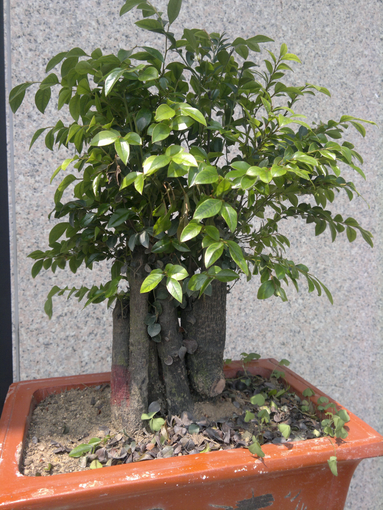
Growing methods for small-leaf rosewood:
The growing temperature for small-leaf rosewood is 20-30 degrees. In winter, if there is heating indoors, small-leaf rosewood will also put out new leaves. Apart from winter, when there is no heating equipment and the room temperature is low, this plant needs moist potting soil in the other seasons, but the potting soil must not become waterlogged, otherwise the old leaves are prone to falling off.
It does not like drought. In spring, summer and autumn it can be kept outdoors for care. In midsummer in the north it needs half shade. Small-leaf rosewood likes a humid and hot climate, and the minimum temperature should be above 2 degrees. Seedlings are prone to frost damage below 3 degrees. It likes full sunlight and does not tolerate shade.
The usual planting season is from March to May, and using containers 30-40cm tall for raising seedlings gives the best results.
Insects like to eat the tender branches and leaves of Indian rosewood, so during the seedling stage care must be strengthened and waterlogging must be avoided.
After 1 month, apply a top dressing of thin fertilizer water. Each year apply a nitrogen, phosphorus and potassium compound fertilizer 1-2 times, for 2 consecutive years. In the 1st and 2nd years, buds should be rubbed off and branches pruned to cultivate a straight trunk.
Precautions for small-leaf rosewood:
Small-leaf rosewood seedlings and young trees suffer from black spot disease, which generally harms leaves, small branches and seed pods. In the early stage of the disease, small faded spots first appear on the leaves, then gradually turn black.
Seedlings and young trees can also be infected by anthracnose, which often attacks the leaves and, in severe cases, can harm the tender branches.
If seedlings are too dense or there is a lot of cloudy and rainy weather, gray mold can be triggered. Use a 1:1:100 Bordeaux mixture or a 50% carbendazim 1000-times solution for control, and burn the diseased branches and leaves.
For leaf-eating pests such as flea beetles and scarab beetles, trichlorfon can be used for control.
Symptoms of water shortage in small-leaf rosewood:
1. The early symptom of water shortage is drooping, weakened branches and leaves
For this symptom, it will recover as long as it is watered thoroughly once in the morning and once in the evening.
2. In the severe stage of water shortage, the leaves are half withered and the tender branch tips dry out
For this symptom, the dried and withered branches should be cut off, the cut surfaces sealed with lacquer, wax, etc., watering resumed, and the plant placed in a slightly shaded and cool place (small-leaf rosewood likes a hot and humid climate, needs full sunlight, and does not tolerate shade) for care, so that it can sprout new buds.
3. If the branches have already dried out down to the main
At this point, cut off the dried and withered branches, seal the cut surfaces with lacquer, wax, etc., then restore watering by soaking the pot in water. After thorough watering, place it in a slightly shaded and cool place (small-leaf rosewood likes a hot and humid climate, needs full sunlight, and does not tolerate shade) for care, so that it can slowly recover its vitality.
That is all for the growing methods and precautions for small-leaf rosewood. Be careful about water shortage in small-leaf rosewood; once it lacks water it stops looking good.
How to grow a small-leaf rosewood bonsai: a few key points for growing this precious potted plant well
Rosewood is the foremost of the red woods, and small-leaf rosewood is the finest among rosewoods, so it is extremely valuable. In Buddhist scriptures, small-leaf rosewood is called the wood bestowed by heaven, and it is believed to have the effects of detoxifying, warding off evil and improving feng shui, so this potted plant is not only for ornament. As the saying goes, one inch of rosewood is one inch of gold. What techniques are there for growing such a precious plant? Let us explain in detail below.
1. Temperature requirements.
Small-leaf rosewood is a tropical plant from India, adapted to the temperature and climate conditions of Southeast Asia, so it likes sunlight and cannot adapt to low-temperature environments. The growing temperature for small-leaf rosewood is between 20 and 30 degrees, and it is prone to frost damage below 3 degrees Celsius. In spring, summer and autumn it can be kept outdoors for care, but in summer it needs moderate shading, and in winter it should be kept indoors to avoid low-temperature conditions.
Generally, when people grow potted plants they like to place them in a study or living room. These positions have no direct sunlight and are not suitable for sun-loving plants. If small-leaf rosewood stays in such an environment for a long time, it will grow leggy, with branches getting longer and longer, and the shape will no longer be attractive, so it should be placed in a position with ample sunlight.
2. How to water.
Small-leaf rosewood has relatively high water requirements and is a tropical plant that does not tolerate drought, so it should be watered about every two or three days. There is technique to watering small-leaf rosewood: water thoroughly each time, but be careful that there is no standing water in the pot. Do not water at noon when the sun is direct and the temperature is high; the evaporation of water vapor caused by high temperature will make the plant wither and die. Small-leaf rosewood likes a relatively humid environment, and a spray bottle can be used to spray mist-like water to create a humid environment.
Many friends cannot judge the timing and amount of watering well when growing small-leaf rosewood bonsai, causing the plant to lack water. Below we explain how to deal with it.
1. How to handle the early stage of water shortage.
When you find the bonsai branches drooping, it shows that it lacks water. This state indicates the plant is in the early stage of water shortage, which is relatively easy to handle. Just water it thoroughly once in the morning and once in the evening.
2. How to handle drying of the newly emerged tender shoots caused by severe water shortage.
When the water shortage is severe, you will find that the leaves of the small-leaf rosewood are half withered and the newly grown slender tender branches have dried out. At this point, the dried branches should be pruned off, the wounds sealed with lacquer or wax, and the bonsai placed in a cool place to wait for it to slowly sprout new buds, paying attention to watering during this period.
3. How to handle water shortage that has damaged the main trunk.
When the bonsai has lost water very severely and the main trunk has already begun to dry out, what should be done? The dried main trunk should be cut off, and after sealing the wound, the entire bonsai should be placed in water to replenish moisture. After the bonsai has absorbed enough water, place it in a cool place to let it recover its vitality.
3. How to fertilize.
Small-leaf rosewood has a relatively developed root system, and its own parasitic root nodules have nitrogen-fixing ability, so it has low requirements for soil and does not need frequent fertilizing. You can dilute plant nutrient solution once a month and water it into the soil along with the water.
Because of the special nature of its developed root system, small-leaf rosewood bonsai cannot have its flower soil directly replaced with nutrient soil, nor should nutrient fertilizer be buried directly in the soil, as this will harm the roots. Too much nutrient soil and fertilizer can also burn the roots and is instead harmful.
4. Do not change the placement location of the bonsai at will.
Once your small-leaf rosewood is growing well and has adapted to its existing environment, do not move the flower pot at will, otherwise it will increase the burden on its growth.
The above are the care techniques for small-leaf rosewood. A special reminder: because rosewood timber is precious, there are many counterfeit goods on the market, so please distinguish the genuine from the fake before buying.
Common bonsai on the market
Rosewood is one of the most precious woods in the world, mainly produced in the tropical regions of the South Sea Islands, and secondly in Jiaozhi. Guangdong and Guangxi in China also produce rosewood, but in small quantities. Small-leaf rosewood from India, also called chicken-blood rosewood, is the most precious wood known at present and the highest grade among rosewoods. As the saying goes, ten rosewoods, nine hollow; the largest rosewood trunk is only about twenty centimeters in diameter, so its preciousness can be imagined.Rosewood is an evergreen sub-tree, five or six zhang tall, with compound leaves, butterfly-shaped flowers, winged fruit, very hard wood, and a red color that sinks when placed in water. Rosewood is a rare wood, also called "green dragon wood", of the legume family, an evergreen large tree, with odd-pinnate compound leaves, butterfly-shaped corollas, yellow, in panicles. The pod is flat and round, with broad wings around it.
It is generally divided into two types, large-leaf rosewood and small-leaf rosewood. Small-leaf rosewood is the finest of the rosewoods, usually also simply called "rosewood" (the "rosewood" referred to below is small-leaf rosewood). Rosewood has relatively high density and relatively small pores, and is mostly produced in tropical and subtropical primeval forests, with Indian rosewood being the best. Rosewood grows extremely slowly, thickening only 3 centimeters every 100 years, and it takes eight or nine hundred years or even a thousand years to grow into usable timber.
Small-leaf rosewood is the finest of the rosewoods, usually also simply called "rosewood" (the "rosewood" referred to below is small-leaf rosewood). Rosewood has relatively high density and relatively small pores, and is mostly produced in tropical and subtropical primeval forests, with Indian rosewood being the best. It is mainly found in Mysore State, while the other various types of sandalwood are classified under the rosewood category. As the saying goes, ten rosewoods, nine hollow; the largest rosewood trunk is only about twenty centimeters in diameter, so its preciousness can be imagined. First it should be explained that there are many kinds of wood belonging to the genus Pterocarpus, but in the botanical world only one is recognized as true rosewood, "sandalwood rosewood", commonly known as "small-leaf rosewood".
Morphological characteristics of small-leaf rosewood: a tree with a straight trunk, dark brown bark that splits deeply into rectangular flakes. The sap of the trunk is dark red. It has 3-5 leaflets, generally elliptical or ovate, 9-15cm long, with yellow flowers or yellow-striped flowers; the flowering period is November-December, the fruit is round, and the fruiting period is April-May. Rosewood, also called green dragon wood, belongs to the Fabaceae (butterfly-flower family), a subtropical evergreen tree, mainly produced in India and the Malay Peninsula, the Philippines and other places, with a small amount also produced in the Hunan-Guangdong and Yunnan areas of China.
Effects and functions 1. Improving fortune and dissolving negative energy
Small-leaf rosewood can supplement yang energy to "improve fortune and dissolve negative energy", with powerful effects, and is very good both for wearing yourself or giving to relatives and friends.
2. Calming the mind and refreshing the brain
After repeated handling and polishing, small-leaf rosewood gives off a substance called "wood qi", which is greatly helpful for sleep and for calming the mind and refreshing the brain.
3. Anti-wrinkle and internal regulation
Long-term wearing of small-leaf rosewood Buddhist bead bracelets can promote cell regeneration and prevent wrinkles. It is also very good for the stomach and intestines. Some people put rosewood shavings into a pillow core as a hug pillow, which has a very good soothing effect on the stomach and intestines.
4. Warding off evil and boosting fortune
Wearing the bracelet on the left wrist can stabilize a person's emotions and make one steady when facing matters. Wearing it on the right wrist can turn danger into safety, turn misfortune into good fortune, and eliminate evil energy.
5. Helping sleep
Placing the beads beside the pillow at bedtime helps improve sleep quality and is even more helpful for meditation. In the Buddhist world it is also recognized as a sacred wood with the effect of driving away evil.
6. Concentrating the mind and calming the spirit
Rosewood is beneficial to the functions of the human heart, liver and kidneys, can effectively stabilize human brain waves, and makes people emotionally stable, serene and calm, with a remarkable effect of steadying the spirit. [2]
Euphorbia neriifolia likes warmth, requires ample sunlight, and is suited to well-drained sandy loam. It is drought-tolerant, not cold-tolerant, but also tolerates half shade, and is suitable for home potted ornament. It has emerald green and beautiful leaves, and both stems and leaves are fleshy. Its plant shape is elegant, closely resembling the qilin of ancient Chinese legend, hence the name jade qilin (Euphorbia neriifolia). Because in China it is generally believed that the qilin has the benefit of warding off evil, some people also feel that jade qilin can protect the home. From the auspicious omens that Chinese people like, plus the fact that jade qilin is one of the most primitive cactus-family plants, it also has quite a feel to it! Still, it depends on personal preference!
The fleshy abnormal stems of jade qilin are irregular palmate fan shapes, green when young, and yellow-brown and lignified when old, with fleshy leaves densely growing at the tips and edges of the abnormal stems. At the First China Flower Expo, the jade qilin flower sent for exhibition by Guangxi won the High-Quality Excellent Work Award, and was selected for Zhongnanhai as one of the precious flowers cultivated there for the long term.
Jade qilin is one of the most primitive groups among cactus-family plants. It has the function of absorbing formaldehyde and benzene substances. Jade qilin likes ample sunlight but also tolerates half shade, and will not die of drying even with slight drought, making it suitable for home potted ornament. Jade qilin is generally propagated by cuttings, and can be cut anytime from April to October. For the cutting time, a sunny morning is best. After the cutting is trimmed off, insert it into a sand bed (pot). After cutting, place it in a shaded place for care. Keep it moist, but never let water accumulate, as waterlogging will rot the cutting. Once roots have formed, it can be transplanted.
Jade qilin likes soil with good drainage and aeration. After planting and potting, water it to settle the roots. Afterwards, based on actual conditions, water once every two or three days; the amount of water can be less than for ordinary broadleaf flowers, but slightly more than for leafless cactus flowers. Treasure functions: absorbs computer radiation and protects eye health (if you spend every day with a computer, then you must be careful about the harm radiation does to the body). Releases oxygen at night and absorbs the carbon dioxide exhaled by the human body, helping you improve sleep quality (this is a special function of cactus plants; because its metabolism at night is completely opposite to other green plants, it is one of the few plants that releases oxygen both day and night). Adsorbs dust and purifies the air. Treasure features: extremely easy to cultivate, a desert plant, likes ample light, with appropriate shading in midsummer; no need to put in effort for careful daily care, just water once a month.
It can mainly be used for living rooms, lobbies, hotels, bookstores, conference arrangements, and receptions.
Banyan bonsai refers to using the banyan tree as material, with the purpose of appreciating the peculiar forms of the banyan's trunk and roots, stems and leaves, and through pruning, branch training, tying and grafting, carefully cultivating and controlling its growth and development over the long term, so that it becomes a potted banyan bonsai with a unique artistic shape. The aerial roots growing on the branches extend downward into the soil and form new trunks, called "prop roots". The banyan tree can reach 30 meters tall and can extend infinitely in all directions. Its prop roots and branches interweave together, resembling a dense jungle, and so it is called "a single tree forming a forest". Banyan bonsai has a unique appearance and extremely high ornamental value. Among home plant bonsai, banyan bonsai is relatively popular because of its evergreen nature in all four seasons. Banyan leaves are leathery, dark green and glossy, evergreen in all four seasons; the bark is dark brown, the branches are soft, and it has strong whisker-like aerial roots. Some aerial roots hang down into the ground, resembling pillars; some wind downward, with twisted roots and gnarled branches, quite spectacular. Banyan bonsai is a shaped landscape that symbolizes vitality,
1. Light and ventilation: the banyan belongs to subtropical plants and likes a sunny, well-ventilated, warm and humid environment. It is drought-tolerant and tolerates half shade. Generally it should be placed in a ventilated and light-transmitting place, with a certain spatial humidity. If sunlight is insufficient, ventilation is poor, and there is no certain spatial humidity, the plant can turn yellow and dry out, leading to pest and disease outbreaks, until it dies.
2. Watering: when the banyan is planted in a pot, if it is not watered for a long time to replenish moisture, the plant will wither from lack of water, so it is necessary to observe promptly and water according to the wetness or dryness of the soil to maintain soil moisture. Water until water seeps out of the drainage hole at the bottom of the pot, but do not give half watering (that is, wet on top and dry below). After watering once, wait until the soil surface turns pale and the surface soil is dry, then water a second time; never wait until the potting soil is completely dry before watering. In hot seasons, frequently spray water on the leaf surface or the surrounding environment to lower the temperature and increase air humidity. Water less often in winter and spring, and more often in summer and autumn.
3. Fertilizing: the banyan does not like fertilizer; applying more than 10 granules of compound fertilizer each month is enough. When fertilizing, note to bury the fertilizer into the soil along the edge of the flower pot, and water immediately after fertilizing. The main components of the fertilizer are nitrogen, phosphorus and potassium.
4. Pruning: for a wild stump to become a stump landscape, pruning is a very important process. In the first year, first cultivate its roots and preserve its essence, only rubbing off buds that are in the wrong position. Only in the second year, after the branches have grown thick and lignified, can scissors be used. Pruning is primary and tying is secondary. Trimming once a year is appropriate; for vigorous ones, scissors can be used twice. After the forked branches growing from the shortened branches become thick and strong, use scissors again. Repeat this way, and if pruning is done properly and skillfully, within four years a good bonsai will appear in your hands.
Special reminder: banyan bonsai should generally be placed in a ventilated and light-transmitting place. If the soil is sandy, it can be watered a bit more appropriately; for clayey soil, water less, because clayey soil has poor water permeability and too much watering will cause root rot; there must be a certain spatial humidity. If sunlight is insufficient, ventilation is poor, and there is no certain spatial humidity, it is easy for the plant to turn yellow and dry out, leading to pest and disease outbreaks, until it dies. If problems occur, pay attention to observing the specific causes and treat according to the symptoms.
Asparagus fern is relatively shade-tolerant, but the light should be good. In winter, spring and autumn it is best placed on a windowsill to get sun. Even if it does not get sun, it should be placed in a place with good light.
Substrate for asparagus fern:
Asparagus fern likes a loose, fertile, well-drained sandy substrate. When planting asparagus fern, place a layer of a mixture of small stones, ceramic pellets and perlite near the drainage hole. This ensures good drainage and prevents the substrate from clogging it. If you want the asparagus fern to grow faster, add a little base manure, but do not add too much base manure, as it easily burns the seedlings. The substrate generally uses one part garden soil, one part peat, and two parts perlite (perlite can ensure good aeration). Asparagus fern has semi-fleshy roots; like clivia and orchids, its fleshy main roots have many fine hair roots, so asparagus fern fears waterlogging, and good drainage and aeration are necessary.
Many asparagus ferns bought back are cultivated in clay, and beginners basically cannot keep them alive.
Fertilizing:
During the growing season, if you want the asparagus fern to grow taller and more impressive, apply thin fertilizer frequently, using fertilizer diluted to half the normal concentration; better too thin than too strong. After the beginning of winter, do not fertilize.
Watering:
Asparagus fern likes moisture, but must not be waterlogged. Good aeration at the roots must be ensured. Watering should follow eight parts dry and two parts wet. Some people say water once a week, some say once a day, and others say once a month. In fact, the frequency of watering depends on the water retention of the substrate, its aeration, and seasonal changes. Water more during the spring and autumn growing seasons; in summer, when the temperature is higher and humidity is greater, water a little less instead. Generally use the watering method of "water when dry, stop when wet" - that is, water again when the surface soil looks a little dry. When air humidity is low, you can spray a little water on the asparagus fern. One thing: when humidity is high, ventilate, otherwise it is prone to disease
Growing methods for the Norfolk Island pine (Araucaria heterophylla): it likes a warm, humid environment, grows well in places with ample sunlight, has a certain shade tolerance, but must avoid strong sunlight exposure in summer. It is not tolerant of cold or drought, and is suited to well-drained, humus-rich, slightly acidic sandy loam.
When potting the Norfolk Island pine, a substrate mixed from garden soil, leaf mold and peat moss is best. Potted plants mostly use small seedlings, and a suitable flower pot should be chosen according to the size of the seedling. The Norfolk Island pine likes diffused light and should be placed in a bright place inside a shed. If placed in a dark place for a long time, it should be moved into the sunlight every few weeks for appropriate exposure, which can keep the deep green leaves a beautiful color. Its growing season is long; except when the summer temperature exceeds 32°C, it can grow all year round. From spring to autumn, it should be watered more, but standing water in the pot must be avoided. When it is hot and dry, spray water on the potted plant and the nearby ground to lower the temperature and increase humidity. Water promptly; do not wait until the soil is dry before watering. From late autumn onward, gradually reduce watering to enhance its cold resistance. During the growing season, apply fertilizer once every 2 weeks, with a compound fertilizer containing nitrogen and potassium being suitable. Insufficient fertilizer easily makes the branches and leaves turn yellow.
During growth, to prevent the main trunk from leaning to one side, it is best to turn the pot once every half month so the plant receives light evenly. In addition, young trees have brittle trunks and are prone to bending and deforming, so from the young plant stage a support should be set up to fix the main trunk. To prevent the plant from growing too tall, it should be repotted once every 2-3 years after the warmth of spring arrives. Usually pay attention to protecting the side branches so they are not damaged and affect the plant's shape.
Under normal conditions, the Norfolk Island pine does not need branch pruning; let it grow naturally. The suitable growing temperature is 10-25°C, and the overwintering temperature is above 5°C. During the overwintering season, a certain amount of light can be given, the potting soil should not be too dry, and on clear days water should also be sprayed to increase humidity.