-

How to Propagate Bromeliads: Division Steps and Whether Division Is Necessary
(1) Offshoot propagation. When the offshoots at the top of the fruit, at the stem base, or at the roots of the bromeliad grow to 10 cm long, use a scraper to cut at the point where they connect to the mother plant, peel off the lowest leaves of the shoot, let it dry for about a day, and then plant it in growing medium. The planting depth should not exceed 1/5 of the total length of the shoot.
-
What are the effects and benefits of bromeliads? A detailed introduction
What are the effects of bromeliads
-
What to Do When Bromeliad Leaves Turn Yellow? Causes and Solutions
[Bromeliad Leaves Turning Yellow] What to Do When Bromeliad Leaves Turn Yellow
-
How to Grow Bromeliads Well? A Detailed Guide to Care Methods
[How to Grow Bromeliads Well]How to Care for Bromeliads
-
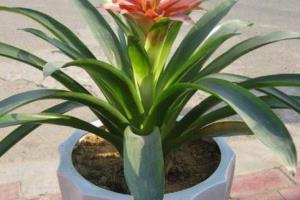
How to grow and care for the bromeliad (Guarana) and things to note
How to grow the bromeliad (Guarana)
-
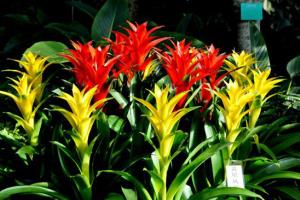
How to care for bromeliads? Detailed guide to growing methods and key points
What are the growing methods for bromeliads and what are the key points
-

How to prevent and treat sudden death syndrome in laying hens? A detailed guide to practical measures
Prevention and control measures for sudden death syndrome in laying hens
-
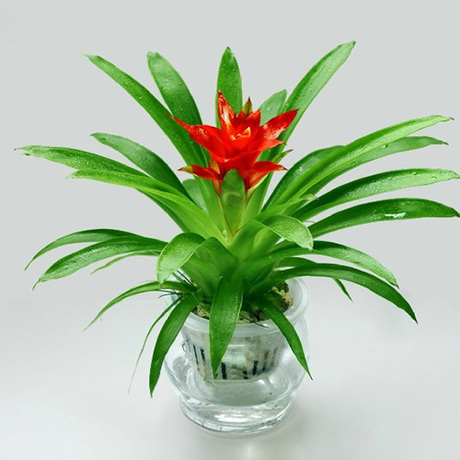
How to Grow Bromeliads and a Gallery of Pictures
Everyone has eaten a pineapple, right? The bromeliad looks quite similar to a pineapple. It belongs to the genus Billbergia in the family Bromeliaceae, native to the forests from Mexico to southern Brazil and northern Argentina, with about 50 species, mostly terrestrial. The leaves are sickle-shaped, with the upper part slanting downward, arranged in groups of 5 to 8 in a tubular rosette. Everyone has eaten a pineapple, right? The bromeliad looks quite similar to a pineapple. It belongs to the genus Billbergia in the family Bromeliaceae, native to the forests from Mexico to southern Brazil and northern Argentina, with about 50 species, mostly terrestrial. The leaves are sickle-shaped, with the upper part slanting downward, arranged in groups of 5 to 8 in a tubular rosette. The leaves grow in a basal rosette, hard and leathery, strap-shaped and curving outward; some leaves have dark green horizontal stripes, some are brown with green water-mark patterns, and others are green with dark green spots. Especially near the flowering season, the leaves at the center turn bright dark red or pink, or the whole leaf turns dark red, or only the tip turns red. The leaf margins have fine sharp teeth, and the leaf tips have spines. The flowers are mostly sky blue or pale purplish red. Growing habits: it likes at least 3 hours of full sunlight per day, but also tolerates partial shade; in summer it likes cool, ventilated conditions, and can also tolerate a slightly dry climate. Common varieties include Billbergia elegans, Billbergia pyramidalis, Billbergia nutans, and Billbergia 'Maidens' Tears'. The soil should be an acidic sandy loam rich in humus with good drainage. Now the editor of Yiqiwang will introduce the bromeliad.
-
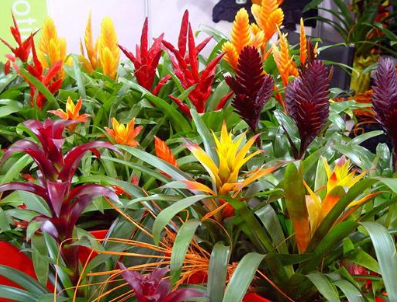
Is the Bromeliad (Guzmania) Poisonous? Solutions for Yellowing and Curling Leaves
Many flower lovers keep Guzmania (Bromeliad) at home. Not only because of the auspicious meaning of this plant's name, but also because its own brilliant and colorful hues paired with long emerald-green leaves give it a uniquely charming look when viewed. Today, the editor will take everyone to learn about all the little details concerning Guzmania.
-
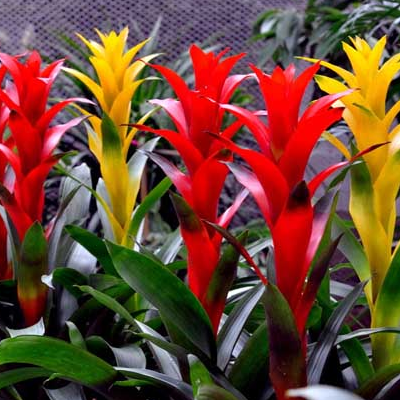
Bromeliad offset propagation methods and how many years until it blooms
There are several different ways to propagate bromeliads, and offset propagation is one of them. So how do you propagate bromeliads by offsets? How many years until a bromeliad blooms? How to propagate bromeliads by offsets: With offset propagation, small shoots keep emerging from the leaf axils at the base of the bromeliad, and when they have grown 5-6 leaves
条件筛选