Is the Bromeliad (Guzmania) Poisonous? Solutions for Yellowing and Curling Leaves
Many flower lovers keep Guzmania (Bromeliad) at home. Not only because of the auspicious meaning of this plant's name, but also because its own brilliant and colorful hues paired with long emerald-green leaves give it a uniquely charming look when viewed. Today, the editor will take everyone to learn about all the little details concerning Guzmania.
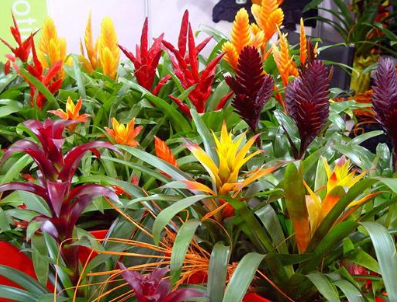
Is Guzmania Poisonous?
Regarding whether Guzmania is poisonous, there are two schools of thought: most people believe it is not poisonous, while a small number believe it is. Let's look at the specific claims.
1. Guzmania Is Not Poisonous
Isn't Guzmania just what we commonly call a pineapple, only without fruit, and no different from the edible pineapple? If it were poisonous, wouldn't those who love eating pineapple and the people living in tropical regions be deeply poisoned?
Guzmania is such a popular indoor plant now -- isn't that good proof in itself? At least so far, no flower lover or horticulturist has stepped forward to say: Guzmania is poisonous. Practice brings true knowledge; the firsthand cultivation experience of flower lovers explains everything.
2. Guzmania Is Poisonous
It is said that Guzmania, along with flowers such as Datura, are southern subtropical plants, and the extract from their leaves and stems is the prototype of anesthetics. The oxygen produced by their photosynthesis contains a small amount of alkaloids (strongly alkaline). After a slightly longer time, symptoms such as dizziness and nausea may occur. Long-term cultivation may cause hallucinations, numbness in the hands and feet, and other symptoms. Therefore, this kind of ornamental plant is absolutely unsuitable for indoor cultivation.
3. Summary
Whether it is poisonous or not should of course be decided by science. That Guzmania is poisonous is correct, because in tropical regions, under specific wild environments, the photosynthesis of Guzmania produces alkaloids. But once away from its place of origin and moved into people's homes, the environment changes greatly, and this alkaline substance will change somewhat, with its content decreasing, so it basically will not affect people's health.
Scientific verification shows that Guzmania does indeed have a certain degree of toxicity, but with timely ventilation during home cultivation, it will not cause harm to the human body.
What to Do When Leaves Turn Yellow and Curl
When encountering yellowing or curling leaves on Guzmania, you should consider whether it is caused by one or a combination of the following factors.
1. Temperature Too High or Too Low
Guzmania lives in a warm and humid environment. The suitable temperature for growth is: 21-28°C during the day, 18-21°C at night, and the maximum temperature must not exceed 35°C.
High temperatures are unfavorable for the growth of Guzmania, but being in a 10°C environment for a long time can also easily cause slow plant growth, and the leaves or bracts turning red or white and losing their color, among other issues. At this time, anti-freeze and cold-protection agents should be sprayed to prevent the temperature from continuing to drop and causing the plant to die.
2. Overwatering or Insufficient Watering
Although Guzmania likes a humid environment, keeping the potting soil moist on ordinary days is sufficient, and generally no watering is needed on rainy days. During home cultivation, it is best to use water that has been left to stand, rather than directly watering with tap water.
Guzmania is a flower that offers both beautiful blooms and attractive foliage. It is best to spray clear water on the leaf surface once a day to remove dust, make the leaf color brighter, and at the same time help photosynthesis and promote robust plant growth.
If watered too much, the potting soil being too wet for a long time will cause a lack of oxygen in the soil, ultimately leading to root rot. Because normal respiration and the absorption of water and nutrients are hindered, it will cause leaves to turn yellow and fall off. After being affected, the young leaves first turn light yellow, and then the old leaves also gradually turn yellow. When this happens, watering should be controlled immediately, fertilizing should be suspended, and the soil should be loosened frequently to give it good aeration.
But if watering is missed or half-watering is done for a long time (that is, wet on top and dry at the bottom), it will affect nutrient absorption and also easily cause the leaf color to become dull and lusterless, with leaves wilting and drooping. First the lower old leaves age, and gradually dry up, turn yellow and fall off from bottom to top. At this time, a small amount of watering and spraying is needed to help it gradually recover before returning to normal watering.
Air humidity should be high, preferably maintained at 75-85%; when below 50%, the plant's growth will show phenomena such as leaf shrinkage and curling.
3. Improper Fertilization
The flowering period of Guzmania is in winter. During the flowering period, sufficient fertilizer is required. Usually, a thin organic liquid fertilizer is applied once every two weeks, such as soaking liquid of soybean cake and sesame paste residue (at a concentration of 20%); soybean soaking liquid or fermented rice washing water can also be used.
When fertilization is insufficient, the pot will lack nitrogen and other nutrient elements, resulting in weak branches and leaves, and thin, yellow leaves. It is necessary to repot in time, replace with new loose and fertile culture soil, and gradually increase the application of thin decomposed liquid fertilizer or compound flower fertilizer. If too much fertilizer is applied, new leaves will become thick and fleshy with many bumps and unevenness, and the tips of old leaves will dry and scorch, turning yellow and falling off. At this time, fertilization should be stopped immediately, the amount of watering should be increased so that the fertilizer flows out from the drainage holes at the bottom of the pot, or the plant should be repotted immediately, rinsing the soil ball with water and then replanting it into the pot.
4. Insufficient Light
To make Guzmania's leaves bright in color and bloom regularly, light is very important. In winter, there should be at least 4 to 5 hours of direct sunlight every day. On rainy days, lighting can be used to increase light. In summer, the seedling pot should be placed in the shade of trees; for indoor cultivation, shade nets can also be set up as needed.
5. Soil Quality
Guzmania is suitable for growing in loose, fertile, humus-rich soil. For home cultivation, you can choose 2 parts peat soil mixed with 1 part fine sand to make culture soil. Generally, the soil bought back from the flower market is suitable for plant growth; when adding soil to it yourself later, pay attention to the soil quality.
6. Pests and Diseases or Improper Control
In an environment with excessively high temperature or humidity and poor ventilation, Guzmania is prone to pest and disease damage, and at this time the leaves are also likely to show signs of yellowing or curling. But if the pesticide concentration used for pest and disease control is too high, or if it is polluted by toxic gases in the air, or if cold water is suddenly poured when the temperature is high, all of these can easily cause the leaf tips or parts of the leaf surface to turn yellow and scorch, or even cause the whole plant to wither and die. Therefore, attention should be paid to the reasonable use of pesticides, and efforts should be made to eliminate sources of air pollution.
7. Unsuitable Placement Location
Try to avoid placing Guzmania near air conditioner vents or beside the television; excessive radiation may also cause pathological changes in its leaves.
In addition, some friends have noticed that their Guzmania is no longer red. The flowering period of Guzmania is generally in winter and spring. If the flowering period has passed, it is normal for the color of the central flower to become lighter and gradually fade. When this happens, you can cut off the central core, cultivate the side shoots around the old plant, and when they grow to more than a hand-span in length, gently break them off by hand and repot them (using a small pot, humus soil, or peat soil). After that, when watering, be careful to pour it into the leaf cup, filling the leaf cup as the standard.
Guzmania is an indoor ornamental flower for winter and spring, evergreen in all four seasons, with beautiful and varied inflorescences and rich colors, but it is not impossible to encounter situations such as yellowing or curling leaves. When encountering such problems, compare them with the causes above to see whether the yellowing (curling) of Guzmania leaves can be resolved.