-
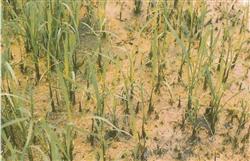
What are the common methods for disinfecting rice seeds?
What methods are there for disinfecting rice seeds? Experienced gardeners, please share your suggestions. The Zhòngdì website has compiled ten methods for disinfecting rice seeds, listed in detail below for readers' reference. Method one: To prevent rice bakanae disease, rice blast, rice brown spot, and rice seedling blight, you can use a 50% carbendazim, 50% thiophanate-methyl, or 50% thiram 500-fold solution to soak rice seeds for 48 hours (200 grams of the solution mixed evenly with 100 kg of water can soak 60-70 kg of rice seeds), then remove them, sprout them, and sow them.
-
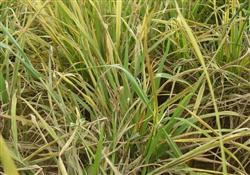
How can premature senescence be effectively prevented in rice cultivation?
What causes premature senescence in rice? How can premature senescence be prevented when growing rice? Is there any fellow gardener who knows about this and can help explain? Premature senescence in rice can lead to a major reduction in yield. Farming Network has compiled the causes of premature senescence in rice and the control methods, listed below for fellow gardeners' reference. Causes of premature senescence in rice: premature senescence...
-
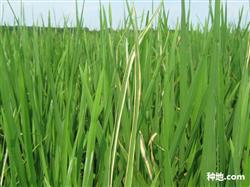
What are the common types of rice pests and diseases?
What are the common pests and diseases of rice? How to prevent and control them? We also ask experienced rice growers to help introduce this. Nearly half the world's population relies on rice as a staple food, but during rice cultivation it is often harmed by rice blast, bacterial leaf blight, bacterial leaf streak, sheath blight, rice false smut, and rice planthoppers and rice stem borers, so Zhongdi Web has compiled...
-
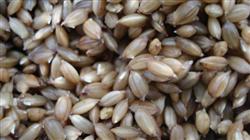
How can rice white-tip nematode disease be controlled effectively?
After the Beginning of Spring, some areas in the south begin preparing to raise rice seedlings, so Zhongdiwang has compiled the four key points of rice seedling raising, listed in detail below for netizens' reference. Key point one, treatment of rice seeds: to improve the germination rate of rice, the seeds should be sun-dried before sowing, then treated with Baike (25% prochloraz)...
-

Is the rise in soybean prices related to China's massive demand?
International soybean prices are indeed closely linked to China's soybean demand, but if the rise or fall of national soybean prices is attributed entirely to China, then we can only say we won't take the blame. In addition, the claim that South America grows soybeans mainly for the Chinese...
-
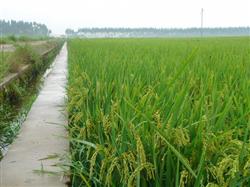
What are the precautions for spraying foliar fertilizer on rice?
Timing is generally most suitable at the late booting, initial heading, grain filling and full heading stages of early rice, and spraying one mu once takes more than an hour. If spraying fertilizer coincides with the heading and flowering stage, it should be sprayed in the morning before flowering and after 4 p.m. Processed liquid fertilizers such as various quick-acting nitrogen, phosphorus and potassium fertilizers, monopotassium phosphate, triacontanol, borax,...
-
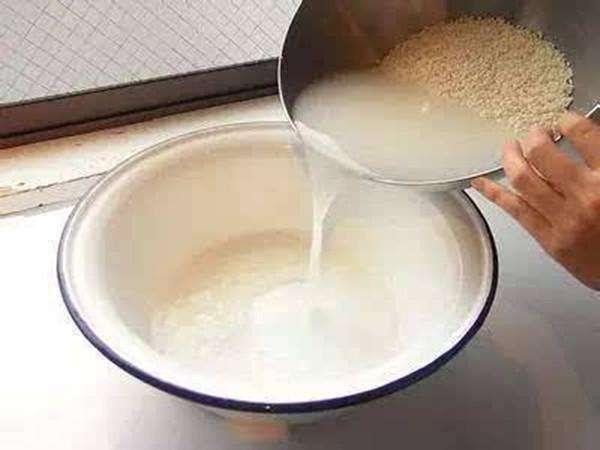
The more the pennywort grows, the more vigorous it gets, all because the wife waters it with rice water every day
Pennywort (Hydrocotyle vulgaris), as a very easy-to-grow foliage houseplant, is also very popular among flower lovers. This plant is super simple to care for, and normally needs no fertiliser, much like growing a pothos. Just water it and give it a bit of sunlight! Growing pennywort...
-
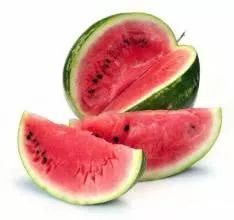
Make your own flower fertilizer from watermelon rinds, skip the pricey flower food, and your plants will still burst with growth
The fruit we love most in summer is watermelon. It quenches thirst and cools you down, and for just a few yuan you can buy one big enough for the whole family to eat. That cool, refreshing watermelon, well, we shouldn't just throw away the rind, if...
-
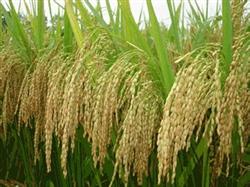
Applicability of insecticides in sustainable rice pest management
Based on a comprehensive analysis of toxicity, insecticide resistance, effects on beneficial organisms and other aspects, the applicability of insecticides in sustainable rice pest management can be divided into 5 categories. The first category is applicable insecticides, namely fipronil, chlorpyrifos and pymetrozine; the second category is insecticides suitable for mixed use, mainly abamectin, Bt...
-
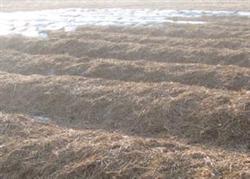
How to Make Organic Fertilizer from Rice Straw and Stalks
Not using chemical fertilizers and pesticides is one of the goals of modern organic agriculture. Through several years of practical experience, the author has found a method of making natural organic fertilizer from original ecological materials. Raw materials: 1500 kg of natural red soil. 150 kg of rice straw, stalks and garbage. Some human excrement and urine or pig, chicken and duck manure. Composting to obtain...
条件筛选