-

Introduction to the Guofeng No. 2 Rice Variety and Its Cultivation Key Points
Guofeng No. 2 was bred by the Guofeng Breeding Center. Its female parent is the high-quality, high-outcrossing-rate male-sterile line Zhong 9A, and its male parent is the self-bred gene X21 (bacterial blight-resistant), high-quality, high-combining-ability Zhonghui 218. From 2001 to 2002, it participated in the Jiangxi Province regional trial of new medium indica high-quality rice varieties, and when sown at the same time it matured 3--4 days earlier than "Shanyou 63". Its tillering ability is above average, with large panicles and many grains, and a high seed-setting rate, with 180--200 grains per panicle, a seed-setting rate of 86.5%, and a 1000-grain weight of 29 grams, with an average yield of 591.2 kg per mu, higher than
-
Demonstration and promotion of high-quality, high-yield rice for cold regions carried out in Heilongjiang
The National Agricultural Science and Technology Leap Program project "Integration and Demonstration of New High-Quality, High-Yield Rice Varieties for Cold Regions and Vegetative Matter Cultivation Technology" was officially launched on March 2 in Heilongjiang Province. The project is undertaken by the Heilongjiang Academy of Agricultural Sciences and Heilongjiang Bayi Agricultural University, and it is the first time that Heilongjiang Province's rice planting industry has been included in the National Leap Program. The project adopts three new high-quality, high-yield rice varieties of different maturity periods - Songjing No. 9, Longdao No. 5, and Longjing No. 14 - which were approved and promoted by the Heilongjiang Academy of Agricultural Sciences in the past two years and have passed national super rice acceptance, as well as vegetative matter pot seedling
-
Detailed introduction to the rice variety Hang 931
Hang 931 is a new high-quality early indica variety bred by the Hangzhou Institute of Agricultural Sciences in Zhejiang Province in 1986 through crossing Hongtu 31 with fragrant rice. Characteristics and traits: in the 1994 Zhejiang Province early rice breeding joint variety comparison, the yield was 421.2 kg per mu, 2.7% higher than the control Zhe 852; in the 1994-1995 Hangzhou regional trial, the average yields per mu were 413 kg and 351 kg, 7.97% higher than the control Zhe 852 and equal to it, and 2.49% higher than the high-quality control Zhou 903; in the 1996 Hangzhou production trial, it was higher than the high-quality control Zhou 903
-
Red rice paddy has been successfully cultivated in Hefei
After large-scale demonstration planting in Tongcheng, Huaining, Qianshan and other cities and counties, the new two-line hybrid rice (red rice) variety Wandao 129, independently bred by the Anqing Agricultural Science Research Institute, was recently examined and approved by the provincial crop variety approval committee; 9 of all 12 evaluation indicators reached the Ministry-issued first-grade high-quality rice standard, and it was decided to permit its promotion and planting as double-season late rice in the areas along the river and south of the river in our province. The newly bred red rice Wandao 129, also known as Peiliangyou 98, is a new rice variety that the Anqing Agricultural Science Research Institute began focusing on breeding in 1999
-
Detailed Introduction to Rice Variety Hejiang 23
Breeding institution: Rice Research Institute, Heilongjiang Academy of Agricultural Sciences. Approval status: approved by the Heilongjiang Provincial Crop Variety Approval Committee in 1986 and by the National Crop Variety Approval Committee in 1991. Variety registration number: GS01020-1990. Variety origin: Hejiang 20/Qian Song. Characteristics: a medium-maturity japonica rice variety. Plant height is about 85 cm, the stems are tough and relatively resistant to lodging. The plant type is compact, with a typical leaf-above-panicle type; tiller number per plant is about 12, and panicle length is about 15 cm.
-
New hybrid rice combinations achieve high yields in Hengxian
Recently, the new hybrid rice combinations "T You 551, Yue You 938, and Taixiang No. 5" introduced and trial-planted in Hengxian all achieved high yields upon expert inspection. The new hybrid rice combinations "T You 551, Yue You 938, and Taixiang No. 5" introduced in Hengxian were trial-planted on 140 mu across 3 villages and slopes in Nannan Township. Recently, the Hengxian Seed Company invited experts to conduct on-site inspection of the 3 new hybrid rice combinations. After experts randomly spot-checked 3 farming households on site, the inspection results showed: T You 551 rice had a wet grain yield of 650 kg per mu, and a dry grain yield per mu
-
Introduction to the Hongxiangjing Rice Variety and Its Cultivation Characteristics
Variety source: introduced from the Chinese Academy of Agricultural Sciences. Characteristics: growth period 130 days, plant height 70cm, panicle length 20cm, 1000-grain weight 30g, moderate tolerance to fertilizer and water, red rice, good taste, fragrant. Yield can reach 300kg. Cultivation points: choose plots with medium to high fertility levels for planting, maintain rational close planting, strengthen the application of phosphorus and potassium fertilizers, carry out good pest and disease control, manage the water layer well, and pay attention to preventing rice blast.
-
How to make fish, vegetable and rice cereal: recipe and detailed steps
Ingredients: rice cereal (or infant rice cake), 15-25 g each of fish and green vegetables, a pinch of salt. Method: soak the rice cereal in a little water until soft, stir into a paste, put it in a pot, bring to a rolling boil over high heat for about 8 minutes; wash the green vegetables and fish, chop each into a paste and add both to the pot, continue cooking until the fish is thoroughly cooked, season and it is ready. The secret of calcium supplementation: fish is rich in calcium, which not only helps your baby grow taller and supports bone development, but also promotes brain development and meets the body's need for a variety of nutrients, so you may want to regularly
-
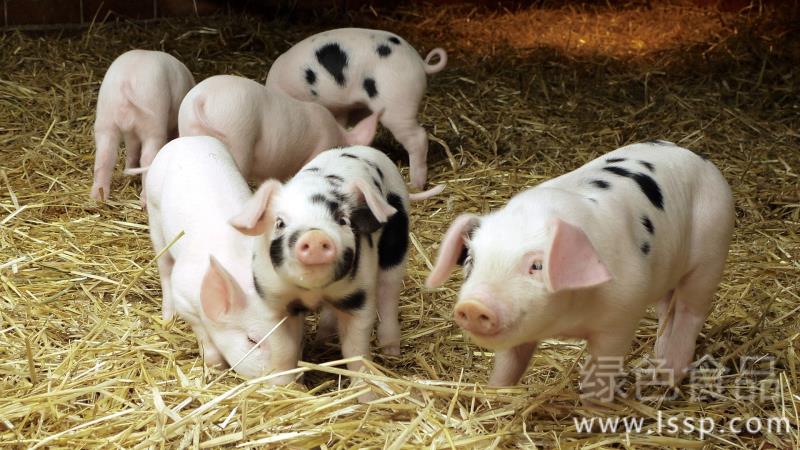
Pork prices are so high, so why is pig farming still not profitable?
Why is pig farming still not profitable when pork prices are high?
-
How to make watermelon rind taste good? The method for making licorice watermelon rind strips
Watermelon rind is rich in carbohydrates, minerals and vitamins, and has effects such as clearing heat and detoxifying, and promoting urination. The following introduces the technique for making licorice watermelon rind strips: Cut into strips. Thoroughly wash fresh watermelon rind with clean water, drain off the water, remove the green outer skin and the red flesh, then use a stainless steel knife to cut the watermelon rind into strips 0.2 cm wide and 6 cm long. Salting. First mix sodium benzoate and table salt, in amounts of 0.1% and 10% of the weight of the watermelon rind strips respectively. Then, in a container, salt in the order of one layer of watermelon rind and one layer of mixed salt, with a somewhat larger amount of mixed salt on the topmost layer. The salting time is generally 24 to 48 hours. Rinsing. Put the salted watermelon rind strips into a container holding clean water, changing the water once every 1 hour, until the salt content in the watermelon rind strips drops to 1% (the salt content is tested with a handheld salinity refractometer). Sugar processing. Put the rinsed watermelon rind strips into a bamboo basket and drain off the water. Then, in a container, process with sugar in the order of one layer of watermelon rind strips and one layer of sucrose. The amount of sucrose used is 20% of the fresh watermelon rind strips, and the sugar processing time is 24 to 48 hours. Baking. Take out the sugar-processed watermelon rind, drain off the sugar liquid thoroughly, arrange it evenly on a baking tray, send it into the drying room, and bake at 65 to 70 degrees C until the moisture content of the watermelon rind is 25%. Auxiliary ingredient formula. Calculated per 100 kg of fresh watermelon rind strips, prepare the auxiliary ingredients: sodium saccharin 0.05 kg, monosodium glutamate 0.2 kg, citric acid 0.05 kg, table salt 0.5 kg, potassium sorbate 0.01 kg. Soaking the auxiliary ingredients. Place the dried watermelon rind strips in a container. Dissolve the auxiliary ingredients according to the formula in licorice water, pour into the container, and mix the watermelon rind strips thoroughly from top to bottom. On the second day, mix from top to bottom another 1 to 2 times, leave for 2 days, take out the watermelon rind strips and bake them. The licorice aqueous solution is made by boiling 4 kg of licorice and 25 kg of water per 100 kg of fresh watermelon rind strips, and filtering it. Baking. Evenly arrange the watermelon rind strips that have been soaked with auxiliary ingredients on a baking tray, and send them into the drying room for baking. It is suitable to control the drying room temperature at 60 to 65 degrees C. During baking, turn them several times, and when the moisture content of the product drops to about 25%, the baking is finished. Mixing in licorice powder. Cool the watermelon rind strips at room temperature. Mix licorice powder (used in an amount of 0.1% of the fresh watermelon rind strips) into the watermelon strips, and mix evenly to obtain the finished product.
条件筛选