-

Planting Performance and Application Prospects of Different Simplified Rice Cultivation Methods
1 Planting performance of several simplified rice cultivation methods 1.1.1 Actual harvested yield. The actual harvested yield was highest for machine-transplanted rice, with an average yield of 9000 kg/hm2; followed by hand-transplanted rice, with an average yield of 8850 kg/hm2; third was seedling-throwing rice, with an average yield of 8700 kg/hm2; fourth was wheat-intercropped rice, with a yield of 8400 kg/hm2; direct-seeded rice had the lowest yield, averaging 8250 kg/hm2. 1.1.2 Number of panicles per unit. Direct
-
Introduction and Characteristics of the Kendao No. 9 Rice Variety
Yield performance: In the 1998-1999 regional trials, the average yield was 7415.3 kg per hectare, an average increase of 18.0% over the control variety Heijing No. 5; in the 2000 production trial, the average yield was 6869.0 kg per hectare, an average increase of 14.2% over the control variety Heijing No. 5. Characteristics: japonica rice, with a growth period of about 126 days and requiring an active accumulated temperature of 2393°C. Plant height 86.5 cm, panicle length 16.1 cm, about 95 grains per panicle, 1000-grain weight 28.1 g,
-
Cultivation Techniques for a Single-Season Rice Yield of 800 kg per Unit Area
I. Variety Selection: Select the best-quality varieties that have shown the best per-unit-area yield in actual production surveys over the past three years, such as "Chuanxiang No. 8." II. Main Recommended Techniques: Dry-raised seedlings, intensive cultivation techniques for single-season rice, soil-testing formula fertilization techniques, and integrated pest and disease control techniques. III. Specific Field Operations: 1. Dry-raised seedlings. (1) Before May 19, select fertile, loose vegetable garden field; at 6 sq m of seedling field per mu of main field, apply 5
-
Introduction to the Characteristics of the Shaojia 1 Early Indica Rice Variety
In 2001 and 2002, this variety had an average yield of 419.1 kg per mu over the two years, an increase of 5.41% compared with the control "Jiayu 948"; the average full growth period in the two-year regional trial was 108.5 days, 0.8 days longer than that of "Jiayu 948"; plant height was 82.4 cm, effective panicles per mu were 248,000, total grains per panicle were 96, filled grains per panicle were 78.7, seed setting rate was 82%, and 1000-grain weight was 25.7 g. According to the 2001 identification results of the Institute of Plant Protection, Zhejiang Academy of Agricultural Sciences, the average grade of leaf blast was 1.5, and the average grade of panicle blast was 6.
-
Control recommendations for the fourth generation of white-backed planthopper in rice issued, please carry out timely prevention and control
For the pesticide, use 40% chlorpyrifos (Xinnongbao, Saiben) 100 ml/mu plus 25% buprofezin (Puhsiling) 50 g/mu plus 5% jinggangmycin 200 ml/mu (or 30% Aimiao 15 ml/mu), mix with 30 kg of water for fine spraying.
-
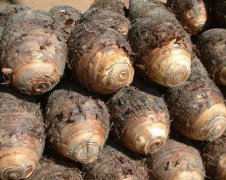
Organic rice costs too much, so is organic taro cultivation technology and yield better?
Do you know whether it is better to grow organic rice or organic taro? In fact, the organic rice market is now saturated. If you grow organic rice, you will not make much money. It would be better to try growing organic taro, which can bring high returns and is easier than growing
-
Introduction to the Characteristics and Traits of the Lidao No.1 Rice Variety
Characteristics and traits: The whole growth period is 170 days, belonging to a mid-to-late maturing variety, plant height 115 cm, panicle length 22 cm, average number of grains per panicle 120, seed setting rate around 90%, 1000-grain weight 28 g, large panicles and large grains, relatively strong tillering ability. Heading in early August, uniform heading, fast grain filling, can fully utilize the effective accumulated temperature and sunlight of September, flag leaves erect, mature with green stems and leaves. Tested by the Rice and Rice Products Quality Supervision and Inspection Testing Center of the Ministry of Agriculture, moisture 12.0%, crude protein 9.11%, amylose 17
-
Detailed Introduction to the Daoguang No.1 Rice Variety
I. Breeding Institution: Tonghua Academy of Agricultural Sciences. II. Variety Origin: Bred in 1988 by crossing "Qiuguang" as the female parent with "Jingyin 127" as the male parent. Original code name Tongjing 793. III. Characteristics: 1. Plant traits: plant height 110 cm, about 16 tillers per plant, medium tillering ability, light green leaf color, flag leaves held upright, thick and sturdy stems, rice ears in the field half drooping in a ring; 2. Ear traits: ear length about 21 cm, main tiller ears uniform
-
Moderate to slightly light occurrence of the second generation of rice stem borers in Suijiang County in 2007
Rice stem borers in our county include the yellow stem borer (Scirpophaga incertulas), the striped stem borer (Chilo suppressalis), and the giant stem borer (Sesamia inferens). In the riverside area, 3 generations occur per year; in the mid-mountain area, 2 generations occur per year. At present, the first generation in the riverside area has ended, and the second generation is beginning to occur successively. According to observations at our station's Fengchi pest and disease monitoring point, this year's second-generation moth flight began on June 10, 1 day earlier than last year and 2 days later than normal years, with the peak day on June 18, 1 day later than last year and 8 days earlier than the historical average; by June 25, a cumulative total of 234 moths had been trapped, with the yellow stem borer, striped stem borer, and giant stem borer accounting for 94.9
-
Introduction to the new late japonica rice variety Jia 991
Jia 991 was approved in March 2003 at the 27th variety approval meeting of the Provincial Agricultural Crop Variety Approval Committee. In the 2000 and 2001 Jiaxing municipal trials, the average yields per mu were 537.2 kg and 563.7 kg respectively, a decrease of 4.38% and an increase of 3.19% compared with the control Xiushui 63 (both differences not significant), with a two-year average decrease of 0.60% compared with the control. The two-year average whole growth period was 158.5 days, the same as the control Xiushui 63. In the 2002 municipal production trial, the average yield per mu was 563.03
条件筛选