Organic rice costs too much, so is organic taro cultivation technology and yield better?
Do you know whether it is better to grow organic rice or organic taro? In fact, the organic rice market is now saturated. If you grow organic rice, you will not make much money. It would be better to try growing organic taro, which can bring high returns and is easier than growing organic rice.
During the taro growing period, many pests and diseases will be encountered, causing the taro to rot at the head and develop soft rot later on. When tobacco cutworm larvae cause severe damage, they may eat the leaves until only the veins remain, and damaged leaves cannot carry out photosynthesis to produce nutrients. Red spider mites suck the leaves, causing white spots on the leaves, which likewise affects photosynthesis and will affect taro setting and taro size. Conventional pesticide spraying can easily kill pests, but organic cultivation must apply organic materials at the exact time points to achieve effective control.
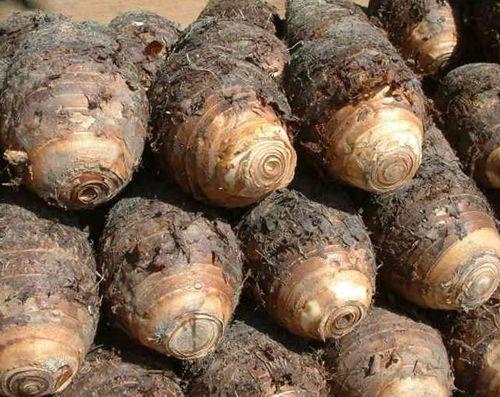
"The most important thing for organic taro is fertility management; in the early stage, the plants must be pushed to grow as large as possible." Shi Houzhong, who tested growing organic paddy taro, explained that in the early stage of planting, more base fertilizer must be applied, accounting for almost more than 60 percent of the total fertilizer use. After that, no more fertilizer is needed for the next two to three months, and in the later stage, fertilizer should simply be supplemented in a timely manner according to crop conditions. The nutrient release rate of organic materials is slower than that of chemical fertilizers and has a slow-release characteristic. When farmers coordinate with dry-wet field water management, fertilizer loss is smaller. 500 to 600 kg of organic nitrogen per hectare is enough to supply the nutrients needed for paddy taro growth.
Shi Houzhong himself grows organic rice and asparagus lettuce. He pointed out that more and more people are investing in organic rice, and sales are gradually running into difficulties. Therefore, he thought that no one was growing organic taro, and if successful, it could be sold at a high price and create another economic market. On one fen of land, 2,500 plants are grown, each about 400 grams, for a total harvest of about 1,600 jin. The market price of organic paddy taro is estimated at 120 to 130 yuan per jin, and one fen of land also has a output value of nearly 200,000 yuan.