-

Key Cultivation Techniques and Management Methods for American Plumcot
American plumcot, namely the new intergeneric hybrid cultivar of apricot and plum, is a new cultivar introduced from the United States by the Economic Forest Research and Development Center of the Chinese Academy of Forestry. This cultivar was developed through multiple generations of hybridization between apricot and plum. Its fruit has a unique rich and fragrant aroma, and its sugar content is much higher than that of any single apricot or plum cultivar, with soluble solids content reaching 18-20%. It is one of the emerging fruit varieties with the best market prospects. Currently, 7 cultivars have been introduced: Flavor Rosa, Flavor Queen, Flavor Delight, Flavor King, Dinosaur Egg,
-
Detailed Introduction to New American Red-Fleshed Plumcot Varieties
Plumcot is an emerging fruit obtained through a complex hybridization process between apricot and plum. Its fruit is richly aromatic with excellent flavor, and it also has fine characteristics such as large fruit, early fruiting, high and stable yield, a long harvest period, good storage tolerance, strong adaptability and high economic value. Red-fleshed plumcots are extremely rare on the market and bring very high cultivation returns. Three new American red-fleshed plumcot varieties with different ripening periods are introduced here. 1. Flavor Rose. The earliest-ripening new American red-fleshed plumcot hybrid variety; its fruit is flat in shape, turns purple-black when ripe, with a smooth and glossy, very attractive skin
-
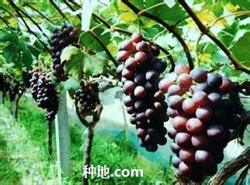
American Black Grape Cultivation Methods and Key Technical Points
How do you grow American Black Grapes? If you are looking for methods, the following methods can be referenced for growing American Black Grapes: Core tip: For orchard establishment and planting, a wind-sheltered, sunny slope is best, and the soil should be sandy loam or loam with strong fertilizer and water retention capacity. Before planting, dig planting trenches 100 cm deep and 80 cm wide. At the bottom of the trench, apply 4000-5000 kg of farmyard manure per 667 sq m. Select layered cuttings or stem cuttings from the previous year as seedlings, requiring many fibrous roots, robust vines, and plump buds. Before planting, soak the seedlings in clean water for 1-2 days so they absorb enough water. Then the roots
-
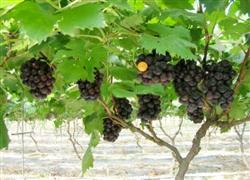
Detailed Explanation of Early-Fruiting Cultivation Techniques for American Black and Red Globe Grapes
I. Orchard Establishment Techniques: 1. Site selection: Grapes are best suited to loose, sandy loam soil rich in organic matter. 2. Trellis selection: To achieve earlier fruiting and increase early-stage yields, a trellis system should be chosen, mainly the single hedge trellis. Row spacing 2-2.5 m, trellis height 2-2.5 m, post spacing 4-5 m, on the posts at 50 cm above ground and then every 40-50 cm upward, stretch one wire each, for a total of 4 wires.
-
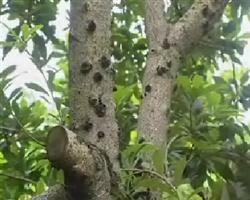
What are the common pests and diseases of Chinese bayberry (Myrica rubra)? These several will affect tree vigor
Pests and diseases such as canker, brown spot, leaf roller, and pine caterpillar have a huge impact on the vigor and yield of Chinese bayberry trees. In production, prevention should be the main approach, with integrated control. In addition to measures such as increasing the application of organic fertilizer and potassium fertilizer and doing a good job of winter orchard cleaning, during the growing season effective measures should be taken promptly according to the occurrence patterns of pests and diseases to...
-
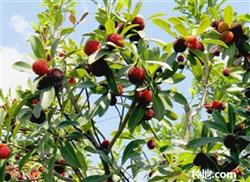
What are the key technical points for post-harvest management of Chinese bayberry (Myrica rubra)?
How should Chinese bayberry be managed during the harvest period? Please guide. June coincides with the plum rain season, with relatively concentrated rainfall across the province. June is also the season when Chinese bayberry ripens, so the following work is recommended: 1. Seize the fine weather and promptly harvest the ripe Chinese bayberry. As the saying goes: "At the Summer Solstice, Chinese bayberry turns the hills red; at Minor Heat, the Chinese bayberry needs..."
-

What should be noted during the process of planting bayberry (Chinese bayberry, Myrica rubra)?
Notes on planting bayberry
条件筛选