American Black Grape Cultivation Methods and Key Technical Points
How do you grow American Black Grapes? If you are looking for methods, the following methods can be referenced for growing American Black Grapes: Core tip: For orchard establishment and planting, a wind-sheltered, sunny slope is best, and the soil should be sandy loam or loam with strong fertilizer and water retention capacity. Before planting, dig planting trenches 100 cm deep and 80 cm wide. At the bottom of the trench, apply 4000-5000 kg of farmyard manure per 667 sq m. Select layered cuttings or stem cuttings from the previous year as seedlings, requiring many fibrous roots, robust vines, and plump buds. Before planting, soak the seedlings in clean water for 1-2 days so they absorb enough water. Then the roots
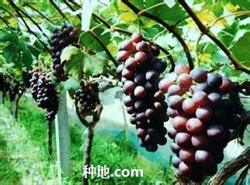
How do you grow American Black Grapes? Looking for methods
To grow American Black Grapes, you can refer to the following methods:
Core tip: For orchard establishment and planting, a wind-sheltered, sunny slope is best, and the soil should be sandy loam or loam with strong fertilizer and water retention capacity. Before planting, dig planting trenches 100 cm deep and 80 cm wide. At the bottom of the trench, apply 4000-5000 kg of farmyard manure per 667 sq m. Select layered cuttings or stem cuttings from the previous year as seedlings, requiring many fibrous roots, robust vines, and plump buds. Before planting, soak the seedlings in clean water for 1-2 days so they absorb enough water. Then the roots
Orchard establishment and planting
A wind-sheltered, sunny slope is best, and the soil should be sandy loam or loam with strong fertilizer and water retention capacity. Before planting, dig planting trenches 100 cm deep and 80 cm wide. At the bottom of the trench, apply 4000-5000 kg of farmyard manure per 667 sq m. Select layered cuttings or stem cuttings from the previous year as seedlings, requiring many fibrous roots, robust vines, and plump buds. Before planting, soak the seedlings in clean water for 1-2 days so they absorb enough water. Then, according to the size of the seedlings, dig holes and plant. Use a plant spacing of 1 m x 2 m, and planting 333 plants per 667 sq m is better; after planting, water thoroughly so the seedlings settle firmly.
Fertilizer and water management. In the year of planting, grapes can be topdressed 3 times to promote robust seedling growth.
(1) In early June, apply 50 g of diammonium phosphate and 50 g of urea per plant.
(2) In early August, apply 150 g of compound fertilizer per plant.
(3) Complete in early October, and apply 100 g of diammonium phosphate or 150 g of compound fertilizer per plant. After winter pruning in the first year, apply 3000 kg of organic fertilizer and 100 kg of compound fertilizer per 667 sq m. Afterward, according to growth characteristics, during periods with high fertilizer demand such as vigorous shoot growth and berry expansion, spray leaves with 0.3% potassium dihydrogen phosphate and 0.3%-0.5% urea solution. Black Grapes have a high water requirement. In addition to watering enough while fertilizing, water thoroughly at appropriate times and in appropriate amounts before grape sprouting, before inflorescences appear and before flowering, after flowering and before berry coloring, and before the soil freezes, according to soil moisture and rainfall.
Training and pruning
A single-trunk double-arm trellis form is preferable. That is, after the seedling sprouts, pinch the main vine at 60-80 cm to set the trunk; after pinching the trunk, keep the two upper lateral buds to form secondary shoots. When the secondary shoots grow to about 60 cm, pinch them at 50 cm and tie them horizontally to the first layer of wire to form two arms; the first layer of wire is about 60 cm above the ground. Secondary shoots growing on the two arms can be pinched after leaving 5-7 leaves, and when they grow again, pinch after leaving 1-2 leaves. In winter pruning each year thereafter, only the fruiting canes on the two arms need to be pruned. Generally, leave 4-6 fruiting canes per arm. Each year, prune the fruiting canes with short-spur pruning, and the remaining secondary shoots can hang naturally.
Flower and fruit management
Black Grapes have large clusters and tightly set berries, so flower and fruit thinning should be carried out as early as possible. During the inflorescence stage or the berry-setting stage after flowering, thin out especially large clusters, deformed clusters, and especially small clusters; it is preferable for each cluster not to exceed 1000 g, and remove the tip of overly long clusters. While carrying out summer pruning such as removing tendrils, bud rubbing, and branch thinning, remove secondary inflorescences, thin out small and deformed berries in the clusters, and for overly tight clusters, some berries can be thinned out.
Click to view more grape growing techniques
Click to view more fruit growing techniques