-
-
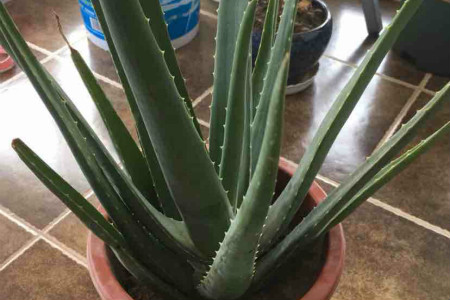
What are the effects and benefits of American Curaçao aloe?
The effects of American Curaçao aloe, what benefits does it have
-
How to grow Wrightia antidysenterica? A full guide to cultivation methods and precautions
Cultivation methods and precautions for Wrightia antidysenterica
-

A Detailed Guide to the Cultivation Methods and Care Techniques of African Jasmine
African jasmine easily adapts to unfamiliar environments and can be grown in courtyards and on balconies. Its branches are the color of jade, its leaves glossy and shining, and its flowers slightly fragrant, with an elegant shape, each having five petals, arranged in umbels clustered at the tips of the flowering branches. The flowering period is very long, blooming in both winter and summer, with the most splendid blooms in spring and summer. At dawn or dusk, a faint, elusive fragrance refreshes the heart and mind. African jasmine is an evergreen (climbing) shrub or small tree of the genus Fagraea in the family Loganiaceae, native to southern China and countries such as Southeast Asia. Its original name is Chinese Fagraea (see "Iconographia Cormophytorum Sinicorum"
-
Control Methods for the Giant African Snail on Impatiens
The giant African snail on impatiens, scientific name Achattna fulica Ferussac, synonyms A. couroupa Lesson, A. fulica Tiyon, order Stylommatophora, family Achatinidae, also known as the African snail. Native to the coastal regions of East Africa, it was introduced to Guangdong, Guangxi, Yunnan, Fujian, Hainan, Taiwan, China and other places in China in the 1830s. Its hosts include impatiens and many other flowers, as well as vegetables and fruit trees. Its damage characteristics: it is an omnivorous pest, and young snails are mostly
-
What are the common pest and disease control methods for African violets?
I. Diseases 1. Ringspot disease This is a disease caused by a virus, generally spread by the pest thrips. After the leaves are infected with the virus, ring-shaped markings appear. Preventing the occurrence of viral disease by controlling thrips is the main measure for controlling ringspot disease. Plants infected with the virus generally cannot be cured with medicine; the only option is to pull them out and destroy them. 2. Leaf spot disease This is a leaf disease caused by fungi, first appearing on the lower leaves of the plant, especially leaves that are damaged or in contact with the growing medium. In the early stage of the disease, necrotic
-
Detailed Guide to African Violet Care and Precautions
African violet, also known as Saintpaulia, is a perennial evergreen herbaceous plant in the genus Saintpaulia of the family Gesneriaceae. African violet is native to the tropical regions of East Africa and prefers a warm, humid, semi-shaded environment. If light is insufficient, it will bloom less with pale colors, or even only grow leaves without flowering; if light is too strong, it will cause leaves to turn yellow and scorch. It can be placed in a bright spot without direct sunlight for care. The optimal growing temperature is 16°C to 24°C, and in winter it must not drop below 10°C. During cultivation, avoid sudden rises and drops in temperature, otherwise the plant can easily die.
-
Are African violets and Saintpaulia the same plant?
Scientific name: Saintpaulia ionantha. Common name: African violet. Family and genus: Gesneriaceae, genus Saintpaulia. Type: evergreen herbaceous flowering plant. Morphological features: the plant is short, usually 15-20 cm tall, the whole plant is tender and fleshy and densely covered with white down, with a very short aboveground stem. The leaves grow flat in a whorl and form a rosette; the leaves are ovate, slightly pointed at the tip, about 6 cm long and about 5 cm wide, with entire margins. The flower stalks emerge from the leaf axils, the flower stem
-
Detailed Explanation of African Violet Cultivation Methods and Techniques
How can you grow African violets well? You need to understand their requirements for environmental conditions. Only by meeting their requirements can they grow well. Their light requirements are not high; a sunny windowsill indoors or a nearby desktop are both good placement locations. They require relatively high environmental humidity, above 50% is sufficient, but indoor air in the north is dry. In winter, humidity is only around 30%. How to solve this? Place a dish under the flower pot, fill it with water, put a few pebbles in it, and place the small flower pot on the pebbles without touching the water. Relying on the slow evaporation of the water in the dish
-
How to grow African violets? A detailed explanation of key cultivation techniques
For the potting medium, use a medium made from high-quality sphagnum peat moss. It is light in texture, well-draining, and fertile, making it most suitable for the growth and development of African violets. The pH of the medium is 5--6. As for pot size, for the standard size of African violets, 9 cm pots are commonly used. For large-crown varieties, 10--12 cm pots are recommended. For potting and planting, to make handling easier and reduce damage to the plants, water sparingly after planting, just enough to keep it moist. When planting, be careful not to press the potting soil too firmly; keep it loose.
条件筛选