-
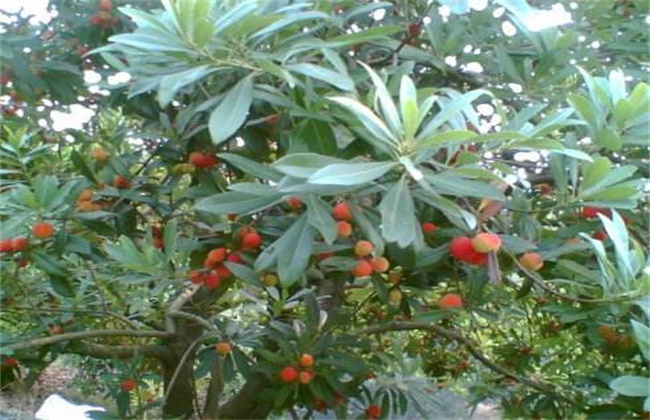
What are the reasons for the low survival rate of bayberry (Myrica rubra)?
Reasons for the low survival rate of bayberry
-

Detailed Explanation of Key Cultivation Techniques for African Roselle (Red Peach K)
"Red Peach K", whose proper name is roselle (Hibiscus sabdariffa), is a plant of the genus Hibiscus in the Malvaceae family, native to Africa. "Red Peach K" has been introduced and cultivated in China, with a fruit yield per plant reaching as high as 5 kg, a yield per mu (1 mu = 667 sq m, the same below) exceeding 3000 kg, and an output value per mu reaching over 30,000 yuan. The "Red Peach K" fruit is actually the calyx of roselle. The calyx and bracteoles are used to make fruit pulp, beverages, extract pigments, etc. "Red Peach K" also has pharmacological functions such as lowering blood pressure, quenching thirst, promoting bile secretion, aiding digestion and enriching the blood. After several years of cultivation practice, we have explored
-
What kind of specialty fruit is the South American longevity peach?
The longevity peach is an emerging subtropical specialty fruit in the world today. Japan and Australia have already developed and produced the longevity peach as a cash crop. The Waijinshan Farm in Yuhu, Jiedong, Guangdong Province was the first in the province to introduce and cultivate the longevity peach. Its plant height is 80-100 cm. The fruit shapes are ovate, elliptical, and spherical. When the fruit is ripe, the peel is pale yellow and shows purple or green stripes, very beautiful; the flesh is crisp, sweet, and juicy, with a refreshing fragrance and fine flavor. This fruit has many unique advantages. Specifically: low
-
Detailed Explanation of Characteristics and Key Planting Techniques of American Almond Varieties
American almond, also known as American big almond, the edible part is the kernel. Under ordinary management conditions, the kernel yield of American almond is about 300 kg per mu, with an output value of about 5,000-7,000 yuan. American almond has strong growth vigor, strong sprouting ability and branching ability. The longest annual branch can reach more than 2 m, with a diameter of 3 cm, and has 2-3 secondary shoots, with secondary shoots 40-50 cm long. Annual branches bear fewer flower buds. After being left unpruned, the short branches of 1-5 cm that sprout have strong flower-forming and fruiting ability. The fruiting branch is a terminal flower bud branch, and the fruiting
-
American almond is hailed as the king of dried fruits in the world.
The commercial name of American almond is American large almond. It is a world-class superior dried fruit tree species, and its yield and trade volume rank first among the world's six major dried fruits (chestnut ranks fifth). The edible part of the almond is the kernel, which is sweet, fragrant, crisp, and can be eaten directly. It is also a premium oil material. Almond oil is a premium health-care edible oil with good physicochemical properties, does not easily deteriorate during long-term storage, and is easy to digest and absorb after consumption. It has anti-cancer and cancer-preventive effects and is used to treat diabetes, epilepsy, and stomach diseases. Almond oil is also the most suitable skin moisturizing oil, massage oil, and sunscreen oil. Japanese original imported almond oil, each bottle 60 ml
-
Noteworthy specific germplasm of wild apricot (Prunus sibirica) in Chaoyang, Liaoning
Abstract: We surveyed apricot germplasm resources in Chaoyang City, Liaoning Province, and identified 11 specific germplasms, including 3 kernel-use germplasms, 4 landscaping germplasms, and 4 germplasms pending further identification. These new germplasms not only enrich the apricot germplasm resources of Liaoning Province, but also lay a material foundation for breeding new cultivars. Keywords: apricot germplasm, kernel use, landscaping. Chaoyang City, Liaoning Province is one of the main apricot production areas in China, with a long history of apricot cultivation. In the past, local wild apricots were mostly propagated by seed, and the genetic differences of wild apricot at the three levels of individual, stand and provenance were fully differentiated and accumulated.
-
Detailed Explanation of Key Techniques for Cultivating Wild Apricot (Prunus sibirica) Seedlings
Wild apricot (Prunus sibirica) is a plant in the rose family (Rosaceae), genus Prunus. It has strong drought tolerance and cold resistance. It can be planted both as an economic tree species and as a landscaping tree for greening along streets. The fruit of wild apricot can be eaten fresh or made into preserved fruit, while the seeds (kernels) are suitable for making beverages, cosmetics, or for medicinal use. 1 Botanical Characteristics Wild apricot is a small tree, with branchlets grayish-brown or light reddish-brown. Leaves are ovate or nearly round, with the apex long acuminate to caudate, the base rounded to nearly cordate, and the leaf margin with fine obtuse simple serrations. Flowers are white or pink, solitary; the fruit is oblate, yellow or orange-red, occasionally
-
What is the American pepino melon? An introduction to its variety characteristics
The pepino melon fruit is large (single fruit weight 100-250 grams), with the largest reaching 500 grams. The flesh is tender and refreshing, with extremely high nutritional value and great market promotion value. The pepino melon is a herbaceous plant with extremely strong adaptability, unaffected by region and climate. It can be planted on barren hills, in courtyards, and in open fields, and can also be intercropped with other crops. It can be planted and harvested in all four seasons. From sowing to harvest takes only two months, with a yield of up to 5000 kg per mu. The market retail price is 5-10 yuan/kg. Its fruit can be processed into canned goods, jam, preserved fruit, etc. This is undoubtedly another very large potential market among new high-yield fruits.
-
Introduction to American almond varieties and their main characteristics
The most important cultivated variety in the United States, accounting for more than half of total US almond production. It has been introduced and cultivated in China and many other countries around the world. Its flowering period is medium-early, and in years with mild winters and in areas prone to late frosts, the flowers are susceptible to frost damage, though the early bud stage has some frost resistance. It enters the fruiting stage 2-3 years after planting, with stable and high yields. The nuts are large and uniform, with an average single nut weight of 1.3 g-1.5 g. The kernel is smooth, uniform, and attractive in appearance, light brown in color, with a shell as thin as paper (kernel yield 60%-70%). The nuts mature early, generally in late August and September
-
American plumcot is the newest fruit variety internationally.
On December 11, 2003, the most authoritative science and technology newspaper with the largest national circulation, Hunan Science and Technology News, published a special feature on American plumcot, and interviewed expert Li Fangdong of the Chinese Academy of Forestry's "Plumcot Research Group" (a doctorate holder and researcher in non-timber forest products). Reporter: How was the American plumcot introduced? Dr. Li Fangdong: In August 1994, the State Council approved the establishment of the national "948" project, aimed at introducing excellent new farm product varieties and new
条件筛选