-
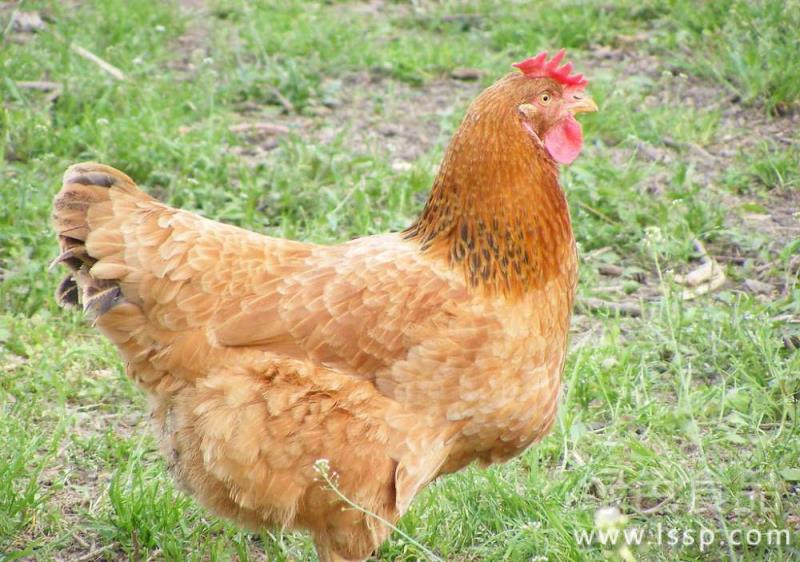
Chicken proventriculitis has many complications and a high mortality rate. How can it be comprehensively prevented and treated?
Proventriculitis has many complications and causes high mortality. Comprehensive prevention and treatment methods for chicken proventriculitis.
-

How to cultivate lion's mane mushroom (Hericium erinaceus) from spent mushroom substrate? Detailed new technique
Lion's mane mushroom is named for its resemblance to a monkey's head and its delicious flavor, and has long been known by the saying "monkey's head among mountain delicacies, bird's nest among sea treasures." During mushroom spawn production or transfer, contaminated spawn sometimes appears due to carelessness in sterilization, disinfection, inoculation, culturing and other steps. If contaminated spawn is discarded in the wild, it causes environmental pollution; if the substrate is dug out and the spawn bottles are washed for reuse, it wastes labor and time. But if contaminated spawn is used to cultivate lion's mane mushroom, waste can be turned into treasure with twice the result for half the effort. The specific method is as follows: 1. Collect contaminated spawn and sterilize. Promptly
-
Several New Methods for Reducing the Contamination Rate of Edible Mushroom Spawn
1. Bottled fermented substrate (1cm). The improved method is: above the culture medium, about 4cm from the bottle mouth, fill in 1-2cm of fermented substrate, then sterilize. Because the fermented substrate itself is sterile, after inoculating the spawn, the mycelium quickly covers the upper part of the whole bottle, and the mycelium feeds on the substrate at the same time. The advantage of this method is that contaminant microorganisms can hardly infect the culture medium, and the spawn age is uniform. The contamination rate can be reduced to below 3%. 2. Wheat grain germination method. The improved method is: let the wheat grains germinate before bottling and sterilizing. The storage substances of wheat grains are mainly starch, fat and protein,
-
Key Technical Points for Field Cultivation of Shiitake Mushrooms on Substitute Substrates
With the advancement of science and technology and the development of the market economy, shiitake mushroom cultivation is also continuously improving and innovating. Not long ago, the editor received phone calls from farmers such as Li Xiliang of Baigenli Village, Kele Town, Nenjiang County, asking about the techniques for field cultivation of shiitake mushrooms. We have specially selected and compiled the manuscript "Cultivation Techniques for Field Cultivation of Shiitake Mushrooms on Substitute Substrates," hoping it will be of help to you. 1. Preparation of the cultivation substrate There are many formulas for the culture medium used in field cultivation of shiitake mushrooms on substitute substrates. Two are introduced here: one is 80% hardwood sawdust, 10% wheat bran, 7% rice chaff, 1% gypsum powder, 2% soybean cake powder, and 0.1-0.2% 50% wettable
-
Detailed Explanation of Integrated Pest Management (IPM) Technology in Peach Orchards
The 6 core components of IPM technology in peach orchards: (1) Agricultural control measures for pests and diseases in peach orchards. During winter pruning, remove diseased and pest-infested branches and mummified fruit, and destroy them in a centralized manner; adjust the tree structure, improve ventilation and light penetration conditions, and strengthen tree vigor; (2) Frequency-vibration insect-killing lamp technology for trapping and killing pests. Install 1 insect-killing lamp per 3.3 hm2 of orchard, and use it from early April to mid-October, which can achieve a good insect-killing effect; (3) Sugar-vinegar basin technology for trapping and killing pests. Starting in mid-March, placing sugar-vinegar basins in the orchard has a clear effect on trapping and killing overwintering-generation adults of the peach leafminer moth; (4) Sex phero
-
Detailed Explanation of Key Techniques for Outdoor Substitute Substrate Cultivation of Shiitake Mushrooms
Shiitake mushroom (Lentinula edodes) is one of the important edible fungi, originally wild, and was first artificially cultivated in China over 800 years ago. Substitute substrate cultivation uses artificial mushroom logs made from sawdust, mulberry branch powder, cottonseed hulls, etc., to replace natural logs for cultivating shiitake mushrooms. This method has wide resource availability, high yield, a short production cycle and high economic returns, making it very suitable for farmers to cultivate. 1. Strain selection. There are many types of shiitake varieties, and the commonly used ones are of the medium-low temperature type. The optimal environmental conditions for the mycelial growth of this type of shiitake are an air temperature of 24-27°C, a substrate moisture content of about 60%, and no light or weak light. The optimal environmental conditions during the fruiting stage
-
Key Points for Integrated Prevention and Control of Infectious Canine Hepatitis
Infectious canine hepatitis is an acute infectious disease caused by canine adenovirus infection, characterized by mainly affecting puppies under 1 year of age, often causing acute necrotizing hepatitis, and clinically often co-infecting with canine distemper. This disease occurs almost worldwide and is a common infectious disease of dogs, but is often overlooked or misdiagnosed by owners; therefore, adopting integrated prevention and control measures for this disease is very important for the healthy development of the dog breeding industry. 1 Outbreak situation A dog-keeping household in Zhaoyuan County on 200
-
What to Do When the Survival Rate of Planted Sichuan Pepper Is Low? Cause Analysis and Solutions
Main Causes of and Countermeasures for the Low Survival Rate of Planted Sichuan Pepper Sichuan pepper grows fast, bears fruit early, and has relatively high economic benefits, making it a major tree species for poverty alleviation and prosperity in poor mountainous areas. In recent years, with the large-scale implementation of the Grain for Green Project, the area planted with Sichuan pepper has increased year by year, but the survival rate is not high. The reasons mainly include the following aspects. 1. Too little local seedling raising In recent years, Sichuan pepper seedlings have mostly been raised in river valley areas with better water and fertilizer conditions, resulting in pepper seedlings raised in river valley areas being planted in mountainous areas. The site conditions for Sichuan pepper differ greatly, and the seedlings cannot adapt all at once, which directly affects survival.
-
What to do when the white part of scallions is short, thin, and hollow? Control measures and integrated management
1. Select excellent long-white scallion varieties, such as Zhangqiu scallion, grain scallion (whip-pole scallion), etc. 2. Choose a plot with deep soil, fertile texture, and good drainage, and carry out deep plowing and fine harrowing; generally plow deeper than 30 cm, dig 20-30 cm deep, 15-30 cm wide or more, with ridges 70-80 cm wide between furrows to facilitate earthing up. Before planting, open furrows and apply fertilizer, applying 1000-5000 kg of farmyard manure per mu, then subsoil the furrows deeply so that manure and soil are combined. 3. Plant between Grain in Ear and Minor Heat; earlier is better than later. If planted too late,
-
Key Technical Points for Integrated High-Efficiency Duck-Pig-Fish Farming
Through integrated farming, ducks, pigs, and fish can make full and rational use of energy, achieving the goals of saving feed and attaining high yield and high efficiency. The integrated high-efficiency duck-pig-fish farming method is: 1. Select superior breeds. For ducks, Cherry Valley ducks are best; for pigs, crossbred Landrace pigs and other improved breeds; for fish, mainly silver carp, bighead carp, black carp, grass carp, etc. These breeds tolerate coarse feed and grow fast. 2. Management of duck pens, pig houses, and fish ponds. Duck pens, pig houses, and fish ponds should be concentrated and conveniently located for transport to facilitate management. Keep the
条件筛选