-
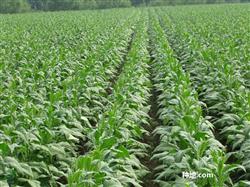
How to Grow Tobacco So It Tolerates Drought? An Introduction to Cultivation Methods
How can tobacco be grown to tolerate drought? Tobacco has high water requirements during its growing period, and drought stress will significantly affect tobacco leaf yield and quality. China is a country short of water resources, with an uneven distribution of water resources in time and space. In recent years, some tobacco-growing areas in China have suffered severe drought year after year, and the frequency and scope of impact of drought disasters have expanded, while their duration and the losses suffered have increased, exerting a great impact on China's tobacco leaf production. Solving the drought problem tobacco faces during the growing season by building water conservancy facilities for irrigation has a good effect, but the cost is too high, it is difficult to achieve supporting irrigation for all tobacco fields in the short term, and in some tobacco-growing areas it is not advisable. Therefore, at present, adopting relevant agronomic measures to improve the water demand conditions for tobacco plant growth is still the main approach.
-
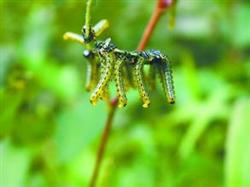
Integrated Control Techniques and Methods for Poplar Leaf-eating Pests
Poplar is deeply favored by people for its excellent characteristics such as fast growth, suitability for a wide range of growing sites, and outstanding economic benefits. However, as the planted area of poplar gradually expands, especially with the increasing development of pure stands, outbreaks of poplar leaf-eating pests continue to occur, so integrated control of poplar leaf-eating pests is very...
-

How to prune asparagus fern? Illustrated pruning methods for different stages
Illustrated pruning methods for asparagus fern at different stages
-

How to prune asparagus fern? With illustrated pruning methods
Pruning methods for asparagus fern with illustrations
-
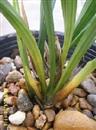
Integrated Pest and Disease Management Methods for Chinese Orchids
For orchids, rot diseases are extremely serious and spread rapidly. Orchid rot diseases mainly consist of two types: soft rot and black rot. In the early stages of soft rot, tiny brown water-soaked spots appear on the leaves, which then expand into dark moist patches; at this point the lesions rupture very easily and exude a foul-smelling...
-

Intercropping soybeans with yew can increase the survival rate
Recently, 2.46 million rooted cuttings of Maire yew (Taxus media) cultivated at a yew nursery in Youxian County, Zhuzhou, Hunan, have been growing rapidly in Tongshan Village, Yajiangqiao Town in that county, and passed expert inspection at the end of August. The nursery's new seedling-raising method of "intercropping with soybeans" has raised the survival rate of yew seedlings to more than 95%. It is reported that the successful introduction and propagation of Maire yew not only helps protect the precious wild Chinese yew (Taxus wallichiana var. mairei) resources, but also opens up broad prospects for developing this "golden plant." At present, the nursery is engaged in forestry
-
Variegated Confederate Jasmine: A Plant Introduction to the Apocynaceae Genus Trachelospermum
Morphological characteristics: An evergreen woody vine with inconspicuous lenticels on the stems. The branchlets, young petioles, and leaf undersides are covered with short pubescence, while the old branches and leaves are hairless. The leaves are leathery, elliptical to ovate-elliptical or broadly obovate, 2-6cm long and 1-3cm wide. The old leaves are nearly green or pale green, the first flush of new leaves is pink, a few have 2-3 pairs of pink leaves, the second to third pairs are pure white leaves, and between the pure white leaves and the old green leaves there are several pairs of mottled variegated leaves; the whole plant has rich leaf coloration, one might say brilliantly colorful. Biological characteristics: Variegated Confederate Jasmine is a light-loving, strongly shade-tolerant
-
Can African violets tolerate strong direct sunlight?
The native environment of the African violet is beneath large trees on high mountains, where the climate is stable and shady, and sunlight only reaches the leaves after being filtered through the foliage. Therefore, when growing African violets, you must take their own characteristics into account and must not treat them like ordinary flowering plants. Most flowering plants need more than 4 hours of direct sunlight each day in order to bloom. But the African violet is a rare exception: if you place it in a window with direct sunlight, the result is either yellowed, withered leaves or a blooming season with no flowers. Because the Af
-
A Detailed Guide to the Control Strategies and Methods for Lily Diseases
Control of Phytophthora blight (1) Adopt high-ridge, deep-furrow cultivation or ridge planting, and keep the bed surface level to facilitate drainage. When diseased plants are found, dig them out early and burn them in a centralized manner or bury them deep. (2) Adopt a balanced fertilization technique, appropriately increase the application of potassium fertilizer, and improve disease resistance. (3) At the early stage of the disease, spray 40% fosetyl-aluminum wettable powder at 250 times dilution, or 58% metalaxyl and mancozeb wettable powder, 64% oxadixyl and folpet wettable powder at 500 times dilution, 72% DuPont Curzate wettable powder at 800 times dilution.
-
Causes of Lily Disease Epidemics and Integrated Control Techniques
I. Symptoms: They appear on leaves, stems and bulbs. When leaves are infected, leaf blight results. At first the leaf tip turns brown, with a length of 1-2 mm, then gradually worsens, and the lesion expands into a nearly triangular shape, becomes thinner, and takes on a dried-up appearance with cloud-like patterns on it. Lesions are generally 17-28 mm long and 5-8 mm wide; the largest lesion is 56 mm long and 12 mm wide. Eventually the leaf dies. Some also occur at the leaf margin as semi-elliptical brown lesions, which can also cause leaf death. Ground
条件筛选