-
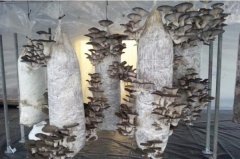
Can Coffee Grounds Be Used to Grow Mushrooms? A Detailed Guide to Substrate Recipes
Do you know what coffee grounds are good for? As far as we know, they can be used as a raw material for dehumidifying and deodorizing, and they are also rich in nutrients. Because of these rich nutrients, some people saw a business opportunity and started using coffee grounds to grow mushrooms,
-
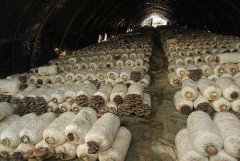
Using coffee grounds to grow mushrooms has many clever uses; how much is a ton of spent mushroom substrate?
What are some of the clever uses of coffee grounds? Coffee grounds are usually treated as waste, but they actually have many clever uses, such as being used to remove odors, and they can also be used as soil for growing mushrooms. Coffee grounds contain a large amount of antioxidants and are very suitable as a nutrient source in soil.
-
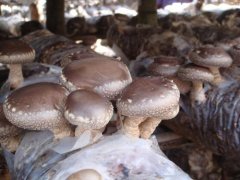
How to grow mushrooms on coffee grounds: cultivation and growing method, can spent mushroom substrate be reused?
Coffee shops today produce a fairly large amount of coffee grounds every day, so someone discovered that coffee grounds can be used to grow mushrooms, and this is a usable resource. Coffee grounds are an excellent medium for growing mushrooms (especially suitable for oyster mushrooms). Here we should thank the coffee brewing process
-
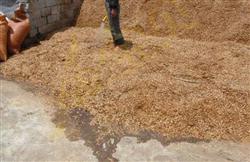
Detailed Guide to Preparing Substrate for White King Oyster Mushroom
How do you mix substrate for White King Oyster Mushroom? Is there anything to watch out for? We ask knowledgeable readers to help explain. If you want a good yield when growing White King Oyster Mushroom, the substrate ratio is crucial. Zhongdiwang has compiled the substrate preparation methods for White King Oyster Mushroom, listed in detail below for readers' reference. Substrate for White King Oyster Mushroom...
-
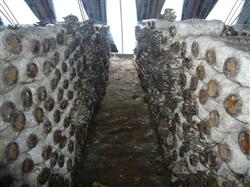
Why Should the Substrate Surface of Oyster Mushrooms Be Scraped? Detailed Explanation of Cultivation Techniques
Why should the substrate surface of oyster mushrooms be scraped? What benefits does scraping the substrate surface of oyster mushrooms bring? We hope experienced growers can help explain the reasons and methods. Reasons for scraping the substrate surface of oyster mushrooms: After harvesting two flushes, the substrate surface often becomes severely dry and compacted, with poor air and water permeability, and the mycelium becomes aged and weak, thereby...
-
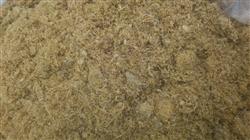
What are the points to note when preparing the substrate mix for tea tree mushrooms?
What should be noted in the substrate mix for tea tree mushrooms? I hope a fellow grower can give some guidance. Factors that easily lead to substandard substrate mix in the tea tree mushroom formula: the bioconversion rate of the tea tree mushroom (Agrocybe aegerita) can reach 133%, meaning that 100 kg of substrate (dry material) can produce 133 kg of fresh mushrooms. Although there are many factors behind substandard yields, one very important reason is improper culture...
-
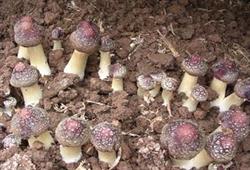
Wine Cap Stropharia Cultivation Tips: How to Case the Substrate Better When Planting?
How should you case Wine Cap Stropharia during cultivation? Here is a method to follow. You can case Wine Cap Stropharia using the following method: spread pre-prepared loam soil over the mushroom bed to a thickness of 2 to 4 cm, no more than 5 cm at most, with about 0.05 cubic meters of soil needed per square meter of mushroom bed. After casing, the moisture of the casing layer must be adjusted, requiring the soil to have a water-holding capacity of 36% to 37%. A simple way to test soil water-holding capacity is to squeeze a soil granule by hand; if the granule flattens but does not crumble and does not stick to your hand, it means the moisture content is suitable.
-
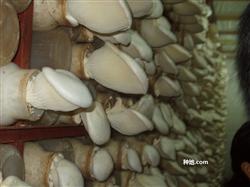
How to mix the substrate for white beech mushroom (Pleurotus nebrodensis)? Detailed method explained
How to mix the substrate for white beech mushroom (Pleurotus nebrodensis)? What should be noted? The white beech mushroom is a newly emerging mushroom species, and there are still many problems in its cultivation technology, especially the yield, which has been difficult to increase. Practice has found that the nutritional ratio of the substrate plays a vital role in increasing the yield of white beech mushroom. The nutrients added to the substrate...
-
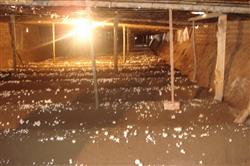
Key Technical Points for Integrated Pest and Disease Control in Button Mushrooms (Agaricus bisporus)
1 Competing fungi, diseases, and insect pests and their control 1.1 Competing fungi and their control methods 1.1.1 Coprinus comatus, commonly known as the wild mushroom, morphological characteristics: the cap is initially bullet-shaped or oval, jade white, grayish white, or yellowish white, mostly with scales on the surface, and the stalk is slender and hollow. When mature, the cap expands, and the gills gradually turn from white to black, finally autolyzing together with the cap into an ink-like liquid.
-
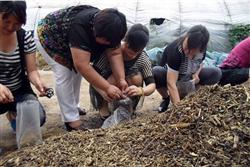
How to mix the cultivation substrate for white king oyster mushrooms? Detailed cultivation techniques
How to mix the cultivation substrate for white king oyster mushrooms? Please give guidance. The cultivation substrate for white king oyster mushrooms can be mixed according to the following method: the added nutrients should be mainly organic nutrients, supplemented by inorganic nutrients, which is very helpful for enhancing the stamina of white king oyster mushrooms after fruiting. Organic nutrients are generally based on bran, cornmeal, rice...
条件筛选