-
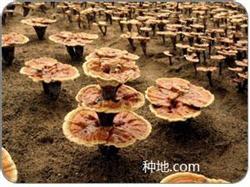
Lingzhi (Ganoderma lucidum) cultivation technique: How do you grow lingzhi using short-log sterilized substrate?
How do you grow lingzhi using short-log sterilized substrate? Please explain the method. For the short-log sterilized substrate cultivation method of lingzhi, you can refer to the following method: 1. Lingzhi cultivation season. Lingzhi belongs to the medium-to-high temperature type of fungi, and its yield is related to the tree species of the logs, cultivation time and cultivation technique. Inoculation time can be arranged from late October to December, or from early February to early March. Logs buried in the same year can all produce 2-3 flushes of fruiting bodies. For those inoculated before early to mid-December, the logs can be arranged and buried in March of the following year, and the yield in that year accounts for more than 70% of the total yield. For those inoculated in early February, the logs are arranged and buried in April, accounting for 55% of the total yield in that year.
-

How to Improve the Survival Rate of Bletilla striata Planting? Master These Methods
How to Improve the Survival Rate of Bletilla striata Planting
-
What to Do When Mint Gets Rust Disease? A Detailed Guide to Integrated Control Techniques
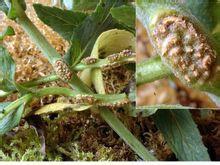
Mint is a medicinal plant renowned both in China and abroad, with the whole herb used as medicine. It is produced in Jiangsu. In recent years, with the adjustment of the rural planting structure and market demand, the planting area of mint in various parts of Jiangsu has expanded somewhat, but during its growth and development, it often suffers severe damage from rust disease, which not only causes serious yield reduction but also affects...
-

What are the methods to improve the survival rate of Schisandra chinensis seedlings
How to improve the survival rate of Schisandra chinensis seedlings
-

Methods to Improve the Germination Rate in Licorice Cultivation
Methods to Improve the Germination Rate of Licorice
-

Occurrence and Integrated Control Methods of Gummosis in Goji Berry
Brown lesions appeared on the branches and trunks after 15 d, along with a grayish-white mold layer, while no disease developed from the other inoculated fungi. This result is consistent with the findings of the Ningxia Academy of Agricultural Sciences. Based on the field symptom characteristics and isolation results, it is considered that Clonostachys is the pathogenic fungus causing gummosis, while Alternaria and Fusarium are saprophytic fungi of secondary infection. 3 Disease occurrence patterns 3.1 Overwintering of the pathogen and transmission routes In November, diseased goji branches and trunks with lesions were placed on the field surface and in soil at 20 m-30 cm underground respectively, then retrieved in April of the following year for isolation and culture.
-
Production technology of wolfberry (goji) juice concentrate powder and wolfberry juice powder containing wolfberry polysaccharides
1. Technology introduction: The use of solubilization and filter-aid technologies has made the industrial production of wolfberry (goji) extract a reality. The wolfberry extract product has good instant solubility, and the solution is crystal clear and transparent with no precipitation or layering, solving technical problems such as turbidity, precipitation and layering of wolfberry juice and raising the product quality grade. Low-temperature vacuum concentration and two-stage vacuum low-temperature drying technologies give the product excellent color, aroma and taste, with very little loss of nutrients during processing. Enzyme hydrolysis technology is adopted to improve extraction efficiency and moderately adjust the viscosity of the slurry, ensuring product
-
Detailed Explanation of High-Yield Cultivation Techniques for Ganoderma lucidum Using Short Logs with Sterilized Substrate
Short-log sterilized-substrate cultivation is a relatively fast-developing new technique for cultivating Ganoderma lucidum (reishi) in recent years. On average, more than 20 kg of dried mushrooms can be harvested per cubic meter of wood, with high yields reaching more than 30 kg, a 20% increase over conventional cultivation methods. The reishi produced is firm and thick in texture, glossy, and higher in acid content than bag-cultivated reishi, with more than 90% of the product meeting export requirements. 1. Cultivation season: Ganoderma lucidum belongs to the medium-to-high temperature type of fungi, and its yield is related to the tree species of the logs, cultivation time, and cultivation techniques. Inoculation time can be arranged from late October to December
-
Key Technical Points for Improving the Survival Rate and Yield of Sexual Propagation of Gastrodia elata
Tuyan is one of the main Gastrodia elata production areas in Hubei, with wild Gastrodia elata widely distributed, and both the climate and soil within its boundaries are suitable for sexual propagation of Gastrodia elata. Combining local environmental conditions and based on practical experience, the author has summarized the key techniques for sexual propagation of Gastrodia elata suited to the local natural environment. 1. The quality and quantity of fungal inoculum are the foundation for ensuring the germination and growth of Gastrodia elata seeds. (1) The germination rate of Gastrodia elata seeds depends on the quality and quantity of the seed germination fungus. Practice has shown that sowing Gastrodia elata with No. 8104 seed germination fungus mixed in gives a high germination rate and fast germination speed.
-
Preliminary Report on the Results of Substrate Replacement Cultivation Trials of Gastrodia elata
Artificial cultivation of Gastrodia elata mainly uses the trunks of broadleaf trees such as oak, birch, hazel, elm, willow, jujube, pagoda tree, and wild cherry, and requires a diameter of more than 5 cm. For a long time, this has caused severe damage to forest resources, which are now on the verge of exhaustion. Therefore, research on substrate replacement cultivation techniques for Gastrodia elata has gradually become a hot topic. There are already precedents for substrate replacement cultivation using corn cobs, shrub stems, corn cobs, corn pith, branches, and straw, but no reports on the cultivation of Gastrodia elata with cottonseed hulls have been seen. For this reason, this trial was conducted, and the preliminary results are reported as follows: 1 Materials and
条件筛选