-
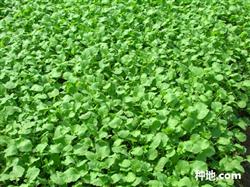
What technical points should be noted when raising rapeseed seedlings?
How do you raise rapeseed seedlings? The following techniques can be used for raising rapeseed seedlings: 1. Seedbed preparation: Choose a plot with fertile soil, deep soil layers and convenient drainage and irrigation as the rapeseed seedbed. The ratio of seedbed area to field area is 1:7--8. For seedbed fertilization, organic fertilizer should be the main input, with additional phosphorus and potassium fertilizer. Generally, each mu of seedbed should be applied with decomposed human and livestock manure...
-
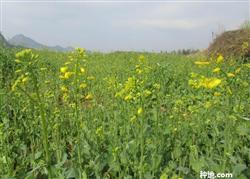
How to Apply Base Fertilizer to Rapeseed Reasonably? Key Points Explained
How to Prevent Rapeseed from Blooming Early? Here is an introduction to the methods that can be used to prevent rapeseed from blooming too early: First, intertillage and loosening the soil: intertillage and loosening the soil can cut off part of the root system, which has a certain inhibitory effect on rapeseed growth, thereby delaying the growth and development process of rapeseed. Loosening the soil can also cut off soil capillaries, reducing water evaporation,...
-
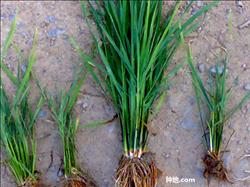
How to manage rapeseed cultivation? Key technical points explained in detail
How to prevent and control rice "sitting stump" disease? Please help. Rice "sitting stump" disease, namely rice red blight, is a common physiological disease in rice production. It generally begins to develop about 15 days after transplanting. If a cold wave occurs after transplanting, in cold-waterlogged fields, muddy fields, deep-water fields, fields where undecomposed organic fertilizer has been applied, fields with one-sided application of single-element chemical fertilizers, or fields lacking potassium...
-
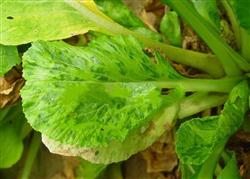
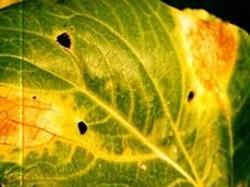
What are the control methods for rapeseed viral disease?
How to control rapeseed viral disease? Please advise. Rapeseed viral disease symptoms occur in all rapeseed production areas nationwide, with especially severe incidence in the winter rapeseed areas of North China, Southwest China, and Central China. The symptoms of this disease vary slightly depending on the type of rapeseed. Brassica rapa and Brassica juncea mainly develop chlorosis along both sides of the leaf veins, with leaves showing a yellow-green mosaic pattern, and the veins appearing translucent; in severe cases, the leaves shrink, curl, or become deformed, and diseased plants are markedly stunted, mostly dying before or at the bolting stage. Plants with mild infection and late onset may still bolt, but the flowering stems are curved or stunted, flowers and pods are densely packed, pods are shrunken and thin, and maturity is advanced. Brassica napus, by contrast, develops systemic necrotic spots, with symptoms appearing early and conspicuously on old leaves, then spreading to newly emerged leaves. At the initial stage of infection, needle-tip-sized transparent spots appear, which later expand into nearly round 2-4 mm yellow spots with dark brown necrotic centers, and the necrotic spots are surrounded by an oil-soaked appearance. On the stems and bolts, purplish-black spindle-shaped to elongated lesions appear, spreading from the middle-lower part toward the branches and fruit stalks; in the later stage, the stem lesions mostly split longitudinally or transversely, and the flowers and pods tend to wilt or die. The pods develop black necrotic spots and are mostly deformed.
-
What are the key points to note in rapeseed cultivation and management?
How to prevent and control black rot in rapeseed? Please advise. The symptoms of black rot in rapeseed mainly affect leaves, stems and siliques. Both seedlings and mature plants can be affected. Infected leaves show yellow "V"-shaped spots, dark brown veins, and dark green water-soaked petioles, sometimes with yellow bacterial ooze, and the lesions expand until the leaves dry up. After bolting, the main axis...
-
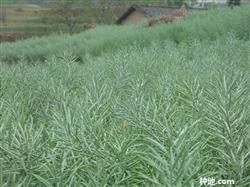
What are the key points of high-yield fertilization methods for rapeseed?
How should rapeseed be fertilized for high yield? Please introduce the following methods that can be referenced for fertilizing rapeseed: 1. Apply seedling fertilizer early. Seedling fertilizer should be applied appropriately early, and the application amount should account for 10%-15% of the total fertilization amount. Generally, apply 500 kg of decomposed human manure and urine per mu, plus 5-7 kg of urea or 10-15 kg of ammonium bicarbonate. When applying chemical fertilizer, it is best to dilute the fertilizer with clean water...
-
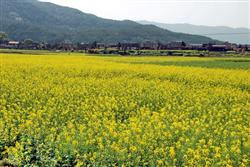
What should be paid attention to when growing rapeseed for high yield?
What should be paid attention to when growing rapeseed for high yield? Please explain seed treatment: choose excellent disease-resistant varieties, sow at the right time, dress seeds with New High Lipid Film (can be mixed with seed coating agents), which can repel underground pests and diseases, isolate virus infection, does not affect the germination and imbibition function, strengthens respiration intensity, and improves seed germination rate and seedling emergence rate....
-
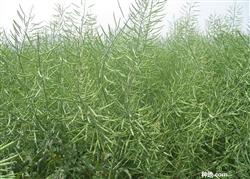
How to grow rapeseed for high yields? Master these planting techniques
How can rapeseed be planted for high yields? Please advise. To achieve high yields when planting rapeseed, you can refer to the following cultivation techniques: 1. Variety selection: choose Huayou series or Yunyou series varieties suited to local cultivation. 2. Fine land preparation: after ploughing, harrow the soil clods fine so the soil is loose and crumbly, then open furrows and make beds about 2 m wide, with furrows...
-
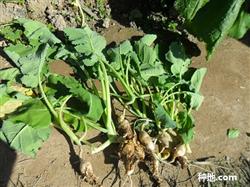
Control Methods and Technical Key Points for Clubroot of Rapeseed
How to control clubroot of rapeseed? Please explain. Clubroot of rapeseed occurs on the roots. The pathogen generally invades through root hairs or young roots, forming galls on the main root or lateral roots. It is commonly known as "big head disease." In the early stage, the surface is smooth and white; later it turns brown, rough and cracked. It is easily infected by other pathogens and rots...
-
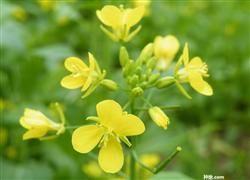
What are the key management techniques during the flowering stage of rapeseed?
How should rapeseed be managed when it blooms? Please note that during the flowering period of rapeseed, the following methods can be used for management: 1. Control aphids and spray boron fertilizer on the leaves. At present, controlling aphids is beneficial for field operations and effectively controlling the damage to rapeseed by aphids later on. The pesticide should be selected from those with stomach, contact, or fumigant action such as "..."
条件筛选