How to grow rapeseed for high yields? Master these planting techniques
How can rapeseed be planted for high yields? Please advise. To achieve high yields when planting rapeseed, you can refer to the following cultivation techniques: 1. Variety selection: choose Huayou series or Yunyou series varieties suited to local cultivation. 2. Fine land preparation: after ploughing, harrow the soil clods fine so the soil is loose and crumbly, then open furrows and make beds about 2 m wide, with furrows...
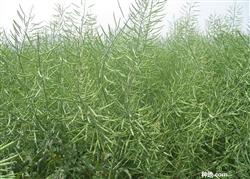
How can rapeseed be planted for high yields? Please advise.
To achieve high yields when planting rapeseed, you can refer to the following cultivation techniques:
1. Variety selection
Huayou series or Yunyou series varieties suited to local cultivation.
2. Fine land preparation
After ploughing, harrow the soil clods fine so the soil is loose and crumbly, then open furrows and make beds about 2 m wide, with furrows 20 cm wide and 20 cm deep.
3. Sowing period and sowing rate
Sowing from mid-October to late October is preferable; 0.3-0.4 kg per mu.
4. Timely transplanting and rational close planting
Transplant promptly when the seedlings reach 30-35 days old, with a row spacing of 1.2 chi and a plant spacing of 0.6 chi, planting about 10,000 plants per mu. After raising seedlings and transplanting, check the plants and fill in gaps promptly.
5. Scientific fertilisation
① Apply sufficient basal fertiliser: per mu, apply 1000-2000 jin of farmyard manure, 20 kg-25 kg of phosphate fertiliser, and 25 kg of compound fertiliser or 10 kg of urea.
② Apply seedling fertiliser early: for directly sown rapeseed, once 3 true leaves have grown, apply a seedling-promoting fertiliser together with thinning and final thinning, applying 6 kg-8 kg of urea per mu. For seedling-raised and transplanted rapeseed, apply 8 kg-10 kg of urea per mu at the green-up stage.
③ Apply bolting and flowering fertiliser promptly: when rapeseed shows buds and begins bolting, apply about 10 kg of urea per mu and 6 kg-8 kg of nitrogen-phosphorus-potassium compound fertiliser.
④ Foliar topdressing: at the seedling stage and the full-flowering and pod-setting stage, spray the leaves with 0.2% borax solution or potassium dihydrogen phosphate respectively to improve the seed-setting rate.
6. Intertillage and weeding
For directly sown rapeseed, carry out intertillage and weeding together with thinning and final thinning. For seedling-raised and transplanted rapeseed, carry out intertillage and weeding together with fertilisation 20-30 days after transplanting. 7. Scientific drainage and irrigation: rapeseed growth suffers from both drought and waterlogging, so water management should ensure irrigation in drought and drainage in waterlogging, keeping the bed furrows and surrounding ditches unobstructed to facilitate drainage and irrigation. Water demand is high during the bolting and flowering stages, so the water supply should be ensured. At the seedling stage and the flowering and pod-setting stage, take care to prevent waterlogging in the field.
8. Pest and disease control
The main insect pests of rapeseed include aphids, leaf-mining leafhoppers and diamondback moths, which can be controlled with pesticides such as dichlorvos, dimethoate and pyrethroids. The main diseases include sclerotinia rot and downy mildew, which can be controlled with pesticides such as thiophanate-methyl, carbendazim and mancozeb.
9. Timely harvest
About 30 days after the end of the full-flowering stage of rapeseed, when about 2/3 of the pods have turned yellow and most of the seeds inside the pods have changed from green to yellow or red, it can be harvested.
Click to get more rapeseed cultivation techniques
Click to get more grain crop cultivation techniques