-

Lantang Pig Urgently Needs Conservation, Protection of Local Fine Breeds Is a Pressing Task
Lantang Pig: A Local Fine Breed Urgently in Need of Conservation. China's only inbreeding-tolerant local fine breed, priced as high as 8 yuan/jin. The Lantang pig originated in Lantang Town, Zijin County, Heyuan City, and has excellent characteristics such as early maturity and easy fattening, a docile temperament, tolerance of coarse feed, strong adaptability, strong reproductive capacity, thin skin, delicious meat, and a high degree of inbreeding tolerance. It is a local fine breed of China and has been included in the national-level livestock and poultry breed resource protection scope. However, due to changes in market demand in recent years, the number of Lantang pigs has dropped sharply, and the breed is in danger of extinction.
-
How to protect your dog's eyes: good daily eye care
An animal's eyes largely reflect its state of health. So you should regularly check your dog's eyes. When a dog is infected with certain infectious diseases such as canine distemper, it often causes inflammation, redness and swelling of the eyes, with the eye sockets filled with purulent mucous secretions, and can even make the dog unable to open its eyes; at this point you need to strengthen treatment and care of the eyes. The best method is to dip a cotton ball in medical chloramphenicol eye drops and gently wipe from the inner corner of the eye outward until the area around the eye is wiped clean. Then instill an appropriate amount of
-
A nationally authorized protected variety - Longting Apricot-Plum
Longting Apricot-Plum is a new fruit tree variety discovered by forestry science and technology personnel in Longting Town, Xintai City, Shandong Province. It belongs to the Rosaceae family and is an accidental hybrid bud sport of apricot and plum. The State Forestry Administration has authorized protection, with authorization number 20030002. The Longting Apricot-Plum tree has grayish-white bark, many branches, the sunny side of the outer new shoots is red, elliptical leaves, white flowers, a high proportion of complete flowers, a flowering period of about 7 days, tolerance to low temperatures, resistance to late frost, and a high natural fruit-setting rate. The fruit is nearly spherical, with a smooth top, a shallow suture, and symmetrical sides. The average single fruit weight from natural fruit set is 47.5
-
Correct methods for using cotton seedling protection agent
I. Methods for using cotton seedling protection agent The cotton seedling protection agent consists of three bags: large, medium and small. The specific seed soaking steps are: 1. Soak 5 kg of cotton seeds in clear water mixed with three parts hot (about 70°C) and one part cold for 5 minutes, remove the cotton seeds and squeeze out excess water. 2. Dissolve the small bag of reagent in 0.5 kg of clear water, pour it into the cotton seeds soaked in the three-hot-one-cold clear water, stirring while pouring, and after thorough stirring leave for 24 hours (stirring 2~3 times during this period). 3. Dissolve the medium bag of reagent in 1.54 kg of clear water, pour it into the cotton seeds soaked with the small bag of reagent
-
Technical Guidelines for Protecting Cotton Seedlings in Spring Planting
"Half the yield comes from good seedlings." Since late March, cotton sowing has been rolled out across the country. Because cotton prices opened high and kept rising last year, cotton production has shown a recovery trend this year, seed markets in various places started early, and seed sales have rebounded noticeably. In view of last year's abnormal climate, with rainy and low-temperature autumn weather, many rotten bolls and generally poor seed quality, plus the low temperature and drought of last winter and this spring, preparations must be made in advance and active responses taken to unfavorable weather of low temperature, drought or high humidity. According to forecasts from the Central Meteorological Observatory, there is a high probability of high temperature and drought this spring, so it is even more necessary to lay a
-
What are the key points for choosing peach varieties for protected cultivation?
The correctness of variety selection is the key to successful protected cultivation. The purpose of protected cultivation of peach trees is to bring them to market early, so when selecting varieties, priority should be given to early-maturing and extremely early-maturing varieties with a short development period. A fruit development period of 60 to 70 days is appropriate, and no more than 80 days. Varieties should also have a short natural dormancy period and a low chilling requirement (cumulative chilling below 7.2°C of less than 850 hours), abundant pollen, a high self-fruitfulness rate, high yield, large fruit, good fruit quality, and tolerance for storage and transport. If they can
-
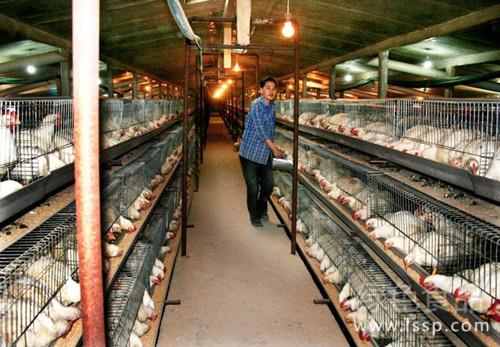
How to prevent and control broken eggs in caged broiler breeders? Reduce hatching egg breakage and protect poultry farming profits
Hatching egg breakage affects poultry farming profits: how to prevent and control broken eggs in caged broiler breeders
-
Detailed Explanation of the Seedling Raising Method for Schisandra chinensis Under Protected Cultivation
In places with a short frost-free period, direct sowing and seedling raising in the open field generally requires two years before the seedlings can leave the nursery. If the method of raising seedlings in nutrient pots under protected cultivation and then transplanting them into an open-field nursery is adopted, the goal of raising seedlings and having them leave the nursery in the same year can be achieved. In early April, set up a plastic greenhouse or a medium-sized arched shed similar to those used for rice seedling raising. Before sowing, water the nutrient soil in the paper cups thoroughly. When sowing, mix Dimiaoling into the bottom soil and the covering soil. After sowing, together with watering, spray 800-1000 times diluted Amobam. Sow 2-3 seeds per paper cup, cover with soil 2 cm thick, and maintain humidity after sowing. Generally
-
Five practical methods to protect wheat seedlings from freezing and cold
When the severe winter comes, doing a good job of protecting overwintering crops such as wheat from the winter cold and taking preventive measures is an important guarantee for obtaining a bumper harvest. According to different field plots, the following five methods can be used to prevent freezing and protect seedlings. First, spreading grass to protect seedlings. Some varieties with strong spring habit are sown relatively late, emerge sparsely, and have fewer tillers. For such field plots, cover them with crop straw such as wheat straw and rice straw to keep them warm, promote tiller growth, prevent freezing and strengthen seedlings, so that the wheat seedlings can safely overwinter. Second, applying fertilizer and water to the roots. For field plots where wheat seedlings have shallow roots and few tillers
-
Key technical points for preventing five hazards and protecting three types of seedlings in cotton seedling beds
Common problems in cotton nutrient bowl seedling beds are mainly manifested as drought, waterlogging, disease, fertilizer, pesticide and frozen seedlings, burned seedlings, and spindly seedlings. 1. Prevent the "five hazards" 1. The water content in the bowls should be moderate. The nutrient bowl seedling bed should be selected in a place convenient for both drainage and irrigation. The water content in the bowls is best when the soil can be pinched into a ball by hand and falls apart upon hitting the ground; 2. After sowing cotton and covering with soil. Water thoroughly in one application, and water until it slowly infiltrates downward; 3. After covering with film, ensure sufficient soil moisture. Do not uncover the film at will, and do not uncover the film until the seedlings emerge completely; 4. Around the seedling bed, drain surface water and filter waterlogged water
条件筛选