-
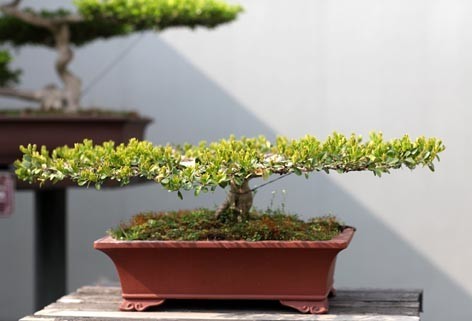
How should Yangzhou-style bonsai works be protected?
The Yangzhou Yangpai Bonsai Museum in Yangzhou, China, houses a collection of ancient surviving bonsai works. They are living artifacts; despite centuries of change, they still maintain their original vibrant form, which is likewise inseparable from the use of Yangpai bonsai techniques for maintenance, management and re-creation.
-
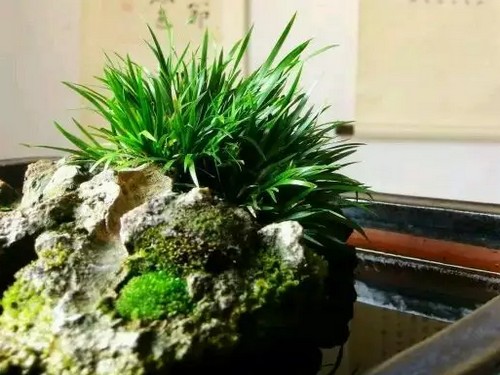
What eye-moistening and eye-protecting benefits do Acorus calamus bonsai have?
Nowadays, many people sit in front of computers for long periods every day, and young people especially like to play on their phones constantly, so dry eye caused by excessive eye fatigue has become very common. Ancient scholars who bent over their desks reading and writing also suffered from damage to their eyesight. In response to this situation, traditional life invented a very ingenious solution
-

Aspirin does more than treat illness - it can also be used to grow and protect flowers
Aspirin is a painkiller and fever reducer with a very long history. If it expires, do not throw it away. Dissolve aspirin in water, where it breaks down into salicylic acid and acetic acid. Because salicylic acid has preservative properties, dissolving it in the water for cut flowers can kill bacteria and prevent the ends of the flower stems from rotting. At the same time
-
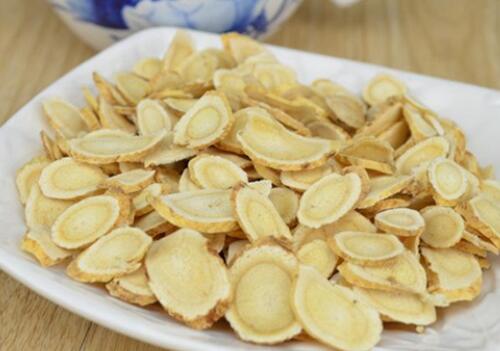
When is the nationally third-class protected plant Astragalus membranaceus planted? About how many years until harvest? What is the investment and profit per mu? (
Astragalus membranaceus, also known as Mianqi, Huangqi, Dushen, Shuzhi, Baiben, Baiyaomian, Huangshen, Xueshen, Renxian, etc., is a perennial herb, 50-100 cm tall. So when is Astragalus membranaceus planted? About how many years until harvest? What is the investment and profit per mu? According to grower Old Liu
-
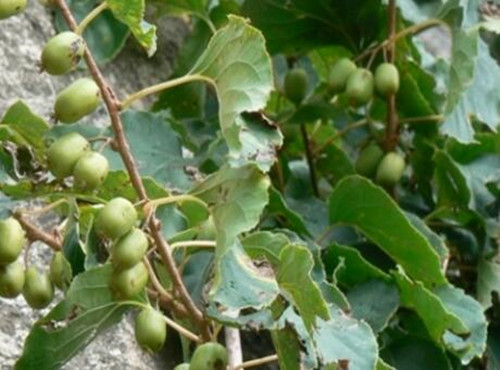
Appearance, Planting Methods, and Benefits and Effects of the National First-Class Key Protected Wild Plant Vitis balansana
Vitis balansana, an endangered species. Also known as bitter jujube, a woody vine. It is only scattered within a small area of Jinghong in greater Xishuangbanna, growing at the edge of seasonal rainforest in low mountain valleys at an altitude of 620 m. China has only this one genus and one species. So, what does Vitis balansana look like? How is it planted? What benefits and effects does it have? What does Vitis balansana look like
-
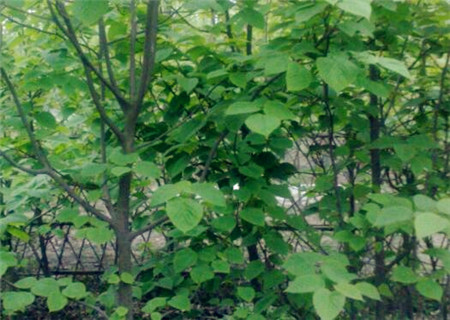
At what time does the national first-class protected plant "dove tree" (Davidia involucrata) bloom? Where are its main places of origin? What are its cultivation prospects? (
Davidia involucrata has been listed as a national first-class key protected wild plant. It is a monotypic genus endemic to China, a relict plant, and also a world-famous ornamental plant. So at what time does the dove tree bloom? Where are its main places of origin? What are its cultivation prospects? The blooming time of dove tree flowers. Dove tree flowers usually bloom in April.
-
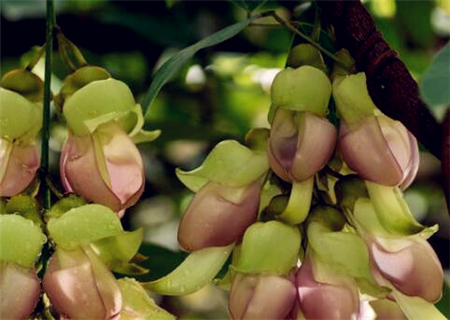
How many years does the nationally second-class protected plant Mucuna birdwoodiana take to bloom after planting, and when does it bloom?
Mucuna birdwoodiana, also known as white flower oil hemp vine, flower oil hemp vine, and sparrow flower. It is a nationally second-class protected plant and is cultivated throughout southern China. When in bloom, the flowers hang in clusters like sparrows in flight, giving it considerable ornamental value. So how many years after planting does Mucuna birdwoodiana bloom? When does it bloom?
-

Analysis of Cotton Production Misconceptions and Ways to Increase Yield Through Plant Protection (Part 5)
For more than a decade, with the widespread promotion of genetically modified insect-resistant cotton, cotton bollworm is no longer enough to make cotton farmers turn pale at the mention of pests. However, Fusarium wilt and Verticillium wilt have always been the "tightening band" giving cotton farmers headaches, aphids and red spider mites "stir up trouble" every year, cotton stink bugs and tobacco whiteflies have become increasingly rampant in recent years, and together with cotton bollworm suddenly breaking out in certain years, pesticide control of cotton is still an unavoidable matter. At the same time, there are also the following two serious problems in pest and disease control, which directly lead to
-
Correct methods for using cotton seedling protection agent
I. Methods for using cotton seedling protection agent The cotton seedling protection agent consists of three bags: large, medium and small. The specific seed soaking steps are: 1. Soak 5 kg of cotton seeds in clear water mixed with three parts hot (about 70°C) and one part cold for 5 minutes, remove the cotton seeds and squeeze out excess water. 2. Dissolve the small bag of reagent in 0.5 kg of clear water, pour it into the cotton seeds soaked in the three-hot-one-cold clear water, stirring while pouring, and after thorough stirring leave for 24 hours (stirring 2~3 times during this period). 3. Dissolve the medium bag of reagent in 1.54 kg of clear water, pour it into the cotton seeds soaked with the small bag of reagent
-
Technical Guidelines for Protecting Cotton Seedlings in Spring Planting
"Half the yield comes from good seedlings." Since late March, cotton sowing has been rolled out across the country. Because cotton prices opened high and kept rising last year, cotton production has shown a recovery trend this year, seed markets in various places started early, and seed sales have rebounded noticeably. In view of last year's abnormal climate, with rainy and low-temperature autumn weather, many rotten bolls and generally poor seed quality, plus the low temperature and drought of last winter and this spring, preparations must be made in advance and active responses taken to unfavorable weather of low temperature, drought or high humidity. According to forecasts from the Central Meteorological Observatory, there is a high probability of high temperature and drought this spring, so it is even more necessary to lay a
条件筛选