How to prevent and control broken eggs in caged broiler breeders? Reduce hatching egg breakage and protect poultry farming profits
According to feedback from most caged broiler breeder farmers, when broiler breeders are kept in cages, the hatching eggs are prone to breakage, which seriously affects poultry farming profits. To address this problem, it is recommended that farmers can prevent and control it through the following methods.
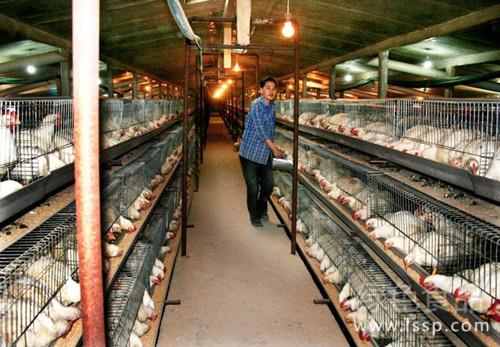
Caged broiler breeders
First, various minerals, vitamins and trace elements in the diet must meet the standards.
1. Add an appropriate amount of calcium, phosphorus and vitamin D3 to the diet to improve eggshell strength. The optimal calcium content in broiler breeder diets is 3.3%-3.6%. Experiments show that feeding breeders large-particle bone granules can produce harder hatching eggshells than feeding fine bone meal; supplementing calcium at 4 p.m. produces greater eggshell strength than supplementing calcium at 8 a.m. It is advisable to supplement calcium 2 weeks before the start of laying; supplementing calcium too early can easily cause gout and affect egg production. Phosphorus is related to eggshell elasticity. Low phosphorus is beneficial to eggshell quality, but if phosphorus is too low, the calcium-to-phosphorus ratio becomes unbalanced, which not only affects calcium absorption but also reduces hatching egg production and quality. The optimal calcium content in the diet is 0.4%-0.7%; during the laying period of breeders, the optimal calcium-to-phosphorus ratio is 4:1. When the calcium-to-phosphorus ratio is balanced, an appropriate amount of vitamin D3 should also be added to the diet; generally, adding 1000-1500 international units of vitamin D3 per kilogram of diet can promote the body's absorption of calcium and phosphorus and improve hatching egg quality and the rate of first-grade eggs.
2. Add an appropriate amount of trace elements such as manganese, zinc and magnesium to the diet to improve eggshell quality. The contents of manganese, zinc and magnesium in the diet are 200 ppm, 50 ppm and 400 ppm respectively. Low manganese can reduce eggshell specific gravity and increase cracked eggs. High magnesium can reduce broiler breeder feed intake and increase hatching egg breakage. Therefore, an appropriate amount of trace elements must be added to the diet. Ensure the qualification rate of hatching eggs.
Second, start with breeder management to improve the qualification rate of hatching eggs.
1. Carry out epidemic prevention and disease elimination in a timely manner to improve the qualification rate of hatching eggs. Some diseases, such as egg drop syndrome, Newcastle disease, infectious bronchitis, chronic respiratory disease and salpingitis, can damage the ovary and oviduct, and can also cause calcium and phosphorus metabolism disorders, increasing thin-shelled eggs and soft-shelled eggs and raising the hatching egg breakage rate. Therefore, disease prevention and control must be done well to improve the laying rate and qualification rate of hatching eggs.
2. Reduce various stress factors to lower the hatching egg breakage rate. For example, sudden fright, water deprivation, changes in feed composition, feed deprivation, vaccination, large temperature differences between day and night, and disrupted lighting can all directly affect the normal metabolism of broiler breeders and lead to hatching egg breakage. Therefore, avoid stimulating breeders with stress factors as much as possible to ensure the qualification rate of hatching eggs.
3. Control the temperature and humidity of the chicken house to improve eggshell hardness. High temperatures lead to reduced feed intake and lower nutrient intake in chickens, while also affecting calcium salt deposition, reducing eggshell hardness, increasing scorched eggs and lowering the qualification rate of hatching eggs. Eggshell hardness is also related to humidity. The higher the humidity, the lower the eggshell hardness and the higher the breakage rate.
4. Timely cull older chickens. After a certain period, the physiological functions of breeders degenerate, calcium deposition ability decreases, and deformed eggs such as soft-shelled eggs, sand-shelled eggs and double-yolked eggs increase, while the first-grade rate declines. Therefore, after breeders reach the specified service limit, they should be culled in a timely manner to ensure the laying rate, qualification rate and hatchability of hatching eggs and improve the benefits of the breeder farm.
5. Frequently inspect the chicken cages, bottom nets and egg guard plates to prevent and reduce mechanical damage. The bottom net of breeder cages should tilt about 10° toward the egg collection trough. If the slope is too small, eggs cannot roll out easily and are easily stepped on or pecked by chickens; if the slope is too large, eggs roll too fast and are easily broken by collision. The condition of the bottom net should be checked frequently; if the bottom net is damaged, it can easily puncture hatching eggs or let them fall through and break. If the egg guard plate is missing, deformed or collapsed, it can allow breeders to peck and break eggs or cause the egg guard plate to break them. Therefore, inspect in a timely manner and repair or replace immediately when problems are found. In addition, increasing the number of egg collections and shortening the time hatching eggs remain in the cage can also reduce breakage.