Prevent early defoliation in peanuts and take timely control measures
Peanut net blotch diseased leaves. Early defoliation in the late stage of peanut growth can seriously affect peanut yield. The main causes of early defoliation in the late stage are premature senescence of the plants and damage from leaf spot diseases (net blotch, brown spot, etc.). Peanuts sprayed with paclobutrazol and regulators containing this ingredient shed leaves earlier and more severely. Therefore, preventing early...
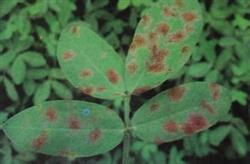 The main causes of early defoliation in peanuts are: nutrient deficiency and premature senescence, which is more severe in sandy soil; damage from leaf spot diseases, especially black spot and brown spot, which spread rapidly once they occur and often cause massive leaf drop within a few days; and spraying regulators too early and excessively, especially daminozide and paclobutrazol and regulators based mainly on these ingredients, which makes it more severe. To prevent early defoliation, corresponding measures can be taken according to the different causes. The main measures are:
1. Prevent leaf spot diseases. Peanut leaf spot diseases are mainly black spot and brown spot, and both diseases mainly damage leaves. When peanuts develop the disease, symptoms first appear on the lower leaves, then gradually spread to the upper leaves. In the early stage of the disease, small brown spots appear and gradually develop into round or irregular lesions. Brown spot lesions are larger and have a yellow halo around them, while black spot lesions are smaller, lighter in color than brown spot, with neat edges and no obvious halo. In humid weather or during prolonged rainy periods, the lesions can merge with each other into large irregular spots, causing the leaves to scorch and severely affecting photosynthesis. If it occurs on leaf stalks, stems, or pegs, it produces oval dark brown or brown lesions in mild cases, and in severe cases the entire stem or peg turns black and dies, causing a sharp drop in peanut yield. In the late growth stage of peanuts, there are many leaf spot diseases that damage leaves and cause early defoliation, and the main ones that are more damaging and difficult to control are brown spot and net blotch. In the early stage of the disease, spray 3 to 4 times at 8-10 day intervals with 80% mancozeb or Daconil 600-800 times dilution, or spray 70% thiophanate-methyl 800-1000 times dilution or other new fungicides.
2. Foliar fertilization. In the late growth stage of peanuts, the ability of the root system to absorb nutrients from the soil and the ability of root nodules to fix nitrogen both begin to weaken, while the ability of the leaves to absorb nutrients increases. Foliar fertilization to supplement nutrients has many advantages such as fast absorption, rapid action, high utilization rate, and good returns, and is a relatively good measure to prevent early defoliation caused by premature senescence. Foliar topdressing is a fertilization method often used in production. The fertilizers suitable for foliar topdressing of peanuts and their application methods are introduced here: a 1% urea solution can be used for foliar spraying. Peanut leaves have a relatively strong ability to absorb phosphorus. In the middle and late stages of growth, use 60 kg of 2%-3% superphosphate extract per 667 sq m and spray once every 7-10 days, for 2-3 consecutive sprays, which can accelerate the rate at which photosynthetic products are transported to the pods. Potassium dihydrogen phosphate. Use 150-200 g of potassium dihydrogen phosphate per 667 sq m, add 50 kg of water, and after it is fully dissolved, spray in the evening or on a cloudy afternoon, preferably for 3 consecutive sprays with a 7-day interval each time; if rain occurs within 8 hours after spraying, spray again once, which can increase yield by 18.2%-26.9%. Applying iron fertilizer on iron-deficient soil can increase yield by more than 10%. Generally, during the flowering and pegging stage, pod-setting stage, or when iron deficiency symptoms appear in the plants, spray with 0.2% ferrous sulfate solution once every 5-6 days, for 2-3 consecutive sprays.