-
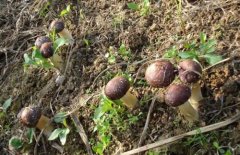
The Latest Cultivation Techniques, Formulas and Planting Times for Wine Cap Stropharia (Stropharia rugosoannulata): A Detailed Guide
Do you know how to grow wine cap stropharia? Would you like to grow it yourself? Below we introduce a simple yet high-yielding cultivation method. Let's take a look. 1. Substrate preparation: rice straw 100%, plus wheat bran or rice bran 10%, cornmeal 5%, gypsum powder 2%,
-
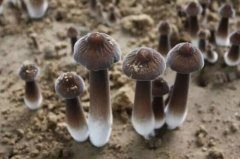
A Detailed Guide to Black-Skin Chicken-Foot Mushroom Cultivation Techniques, Price per Jin, and Investment per Mu
Large-scale artificial cultivation of the black-skin chicken-foot mushroom has low production costs, a short cycle, and high yields, and can meet people's market demand for the black-skin chicken-foot mushroom. So how do you grow the black-skin chicken-foot mushroom? The price of the black-skin chicken-foot mushroom is 35 yuan per jin, and prices vary somewhat from region to region.
-
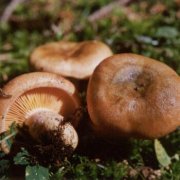
Chongyang mushroom planting methods, price per jin, and detailed explanation of its benefits and nutritional value
Chongyang mushroom is a fungus that currently cannot be cultivated artificially and is a purely natural fungus species. It is very particular about its growing environment, so artificial cultivation is very difficult to achieve, and it may be impossible to grow, which would result in significant losses. How much is Chongyang mushroom per jin? This depends on
-
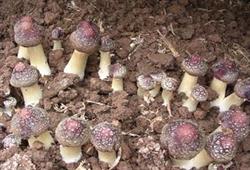
Wine Cap Stropharia Cultivation Tips: How to Case the Substrate Better When Planting?
How should you case Wine Cap Stropharia during cultivation? Here is a method to follow. You can case Wine Cap Stropharia using the following method: spread pre-prepared loam soil over the mushroom bed to a thickness of 2 to 4 cm, no more than 5 cm at most, with about 0.05 cubic meters of soil needed per square meter of mushroom bed. After casing, the moisture of the casing layer must be adjusted, requiring the soil to have a water-holding capacity of 36% to 37%. A simple way to test soil water-holding capacity is to squeeze a soil granule by hand; if the granule flattens but does not crumble and does not stick to your hand, it means the moisture content is suitable.
-
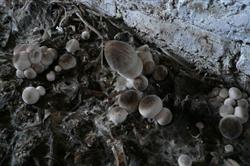
Straw Mushroom Summer Planting Methods and Technical Key Points
How to grow straw mushrooms in summer? Here are the methods. The straw mushroom is a high-temperature type of mushroom, suitable for cultivation in summer. Its flesh is tender and young, its taste is delicious, and its nutritional value is high, containing abundant protein, carbohydrates, vitamins, and so on. Among the many edible fungi, the straw mushroom has the simplest cultivation method, the shortest production cycle (around 20 days...
-
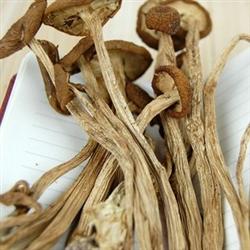
Corn intercropping with tea tree mushroom: planting methods and technical key points
How to intercrop tea tree mushroom with corn? Please refer to the following methods for corn intercropping with tea tree mushroom: 1. Choose a plot with flat land, sheltered from the wind and facing the sun, with convenient water sources, suitable for intercropping in a corn field. 2. Cultivation season. Meet the requirements for tea tree mushroom mycelium growth temperature of 10°C-35°C, optimum temperature 22°C-27°C; fruiting...
-
Tea tree mushroom (Agrocybe aegerita) bag-culture planting methods and key technical points
How do you grow tea tree mushroom (Agrocybe aegerita) in bags? Here are the planting methods. For bag-culture planting of tea tree mushroom, you can refer to the following methods: 1. Season selection. The tea tree mushroom has a relatively wide growth temperature range; the mycelium can grow at 8-34°C, but 22-26°C is optimal; the fruiting body differentiation temperature is 13°C-32°C, with 20°C-28°C being most suitable. According to...
-
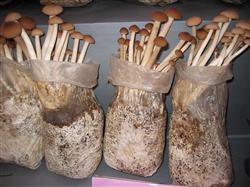
What are the planting seasons and cultivation methods for the tea tree mushroom?
Which season is suitable for planting the tea tree mushroom, and what cultivation methods are there? Please introduce 1. Arrangement of the cultivation season. In the Jiangxi region, bag-making in the two periods of March to April or September to November is better; at this time the temperature and humidity are favorable for mycelial growth, and contamination by foreign molds is low. 2. Cultivation site. Besides a standard mushroom house, choose a site that is bright but can be shaded, well ventilated and close to a water source. In rural areas, idle open land or rice fields can also be used to build simple greenhouses, requiring clean and hygienic surroundings, with no garbage or manure piles, and no weeds or insect pests; if conditions permit, a spawn-running room can be set up.
-
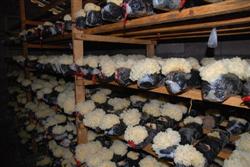
How to Cultivate Tremella Properly? Detailed Explanation of Planting Methods and Techniques
What method is best for cultivating Tremella? Please give an introduction. There are several methods for cultivating Tremella: First, the culture medium formula used for Tremella slant-rack cultivation is: 50 kg cottonseed hulls, 10 kg wheat bran, 0.5 kg gypsum powder, 0.5 kg white sugar, 0.25 kg magnesium sulfate (98% content), 0.25 kg monopotassium phosphate (98% content, agricultural fertilizer grade...
-
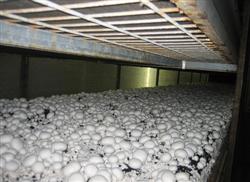
What precautions should be taken for topdressing after mushroom planting?
What should be noted for topdressing after mushroom planting? Please explain that mushrooms need relatively more nutrients to grow. If nutrients cannot be supplied in time, the fruiting bodies will grow poorly, especially in the later stage, and premature senescence may also occur. Especially when the compost quality is poor, with little manure and much straw, and the casing layer is thin, this will significantly affect yield...
条件筛选