-

Control Methods for the Silver Y Moth Pest on Perilla
Perilla leaf can disperse exterior cold and has a relatively strong diaphoretic effect. It is used for wind-cold exterior syndromes presenting with aversion to cold, fever, and absence of sweating, and is often used together with ginger; if the exterior syndrome is accompanied by qi stagnation, it can also be used together with cyperus rhizome and dried tangerine peel. For moving qi and relieving fullness in the middle, perilla leaf is used for spleen-stomach qi stagnation, chest tightness, and nausea. Native to
-
The Harmful Characteristics and Control Methods of the Cabbage Moth, a Pest of Mustard Greens
Mustard greens (Brassica juncea) is an annual or biennial herbaceous plant of the genus Brassica in the family Cruciferae (crucifers). It is a famous specialty vegetable of China, originating in China, and is a commonly cultivated vegetable throughout the country, mostly distributed in the provinces south of the Yangtze River. Mustard greens (original variety)
-
Introduction to Control Methods for the Bamboo Shoot Pest, the Noctuid Moth
Bamboo shoots have been regarded in China since ancient times as a rare delicacy among vegetables. Bamboo shoots are a traditional Chinese delicacy, fragrant in taste and crisp in texture, with a very long history of consumption and cultivation. In the Classic of Poetry there are verses such as "the fruits added to the beans, pickled bamboo shoots and minced fish," and "what is that sound? It is the bamboo shoots and cattails," indicating that the people have a history of eating
-
How to Plant the Kalanchoe (Mother of Thousands) Succulent? Growing Methods and Precautions
Everyone, do not be scared off by the name of the Kalanchoe (Mother of Thousands) succulent. In fact, "immortal" only means that its vitality is relatively tenacious; its appearance is actually quite attractive. It is also a succulent that many people choose to grow. Regarding its cultivation
-
How to Fix Curled and Leggy Leaves on Mother of Thousands
Mother of thousands (Kalanchoe daigremontiana) is something everyone has probably seen, because it is a fairly common succulent plant with extremely strong vitality and fast growth. But many people find that the leaves curl when growing mother of thousands, so why does this happen? Below
-
Kalanchoe delagoensis (Mother of Thousands): Cutting Propagation Methods and Growing Techniques
Kalanchoe delagoensis (Mother of Thousands) is a succulent with very strong vitality and easily forms clusters. Its leaves are large and thick, usually green, and its ornamental value is also very high, so many people like to grow it. Before planting, what everyone most wants to know is surely its growing techniques.
-
How to increase the fruiting rate of loquat? Reduce humidity, cultivate fruiting mother branches, shape and prune, and apply additional fertilizer reasonably
Loquat is a fruit with high nutritional value. It is not only delicious and good in texture, but its leaves can also be combined with other medicines to make drugs. Therefore, loquat is welcomed by the market and people. In order to meet the needs of people and the market, the planting area of loquat is also becoming ⟦4 <p>Loquat is a fruit with high nutritional value. It is not only delicious and good in texture, but its leaves can also be combined with other medicines to make drugs. Therefore, loquat is welcomed by the market and people. In order to meet the needs of people and the market, the planting area of loquat is also becoming wider and wider. So how should the fruiting rate of loquat trees be increased? Next, I will share some methods for increasing the fruiting rate of loquat trees.</p><p></p><p><strong>Reduce humidity</strong></p><p>During the flower bud differentiation stage, loquat greatly needs a dry environment with high temperature and sufficient light. The flower branch bud differentiation stage of loquat occurs in summer, and there is more rain in summer, so drainage work must be done well at this time. In order to prevent water accumulation, drainage ditches must be made in low-lying areas with many pits. If the humidity in some orchards is too high, then when the leaves turn green, dig open the base of the loquat tree, expose the roots, and then cut about 80 percent of the branch roots into sections, thereby controlling nutrient dispersion, speeding up the greening of the leaves, and increasing the fruiting rate of loquat.</p><p></p><p><strong>Cultivate fruiting mother branches</strong></p><p>Because the fruiting branches of young loquat trees are all formed from summer shoots, the time, quantity, and growth capacity of summer branch bud sprouting are closely related to the fruiting rate of loquat. Therefore, a healthy and strong mother branch is the key to the number of fruits set, so in spring, after the new branches mature, fertilize in time to promote the sprouting of summer branch buds. During the fertilization stage, attention must also be paid to the amount, avoiding improper fertilization affecting the growth of loquat. Fertilization should be based on the growth stage of loquat, and the fertilizer is generally mainly phosphorus and potassium fertilizer.</p><p></p><p><strong>Shaping and pruning</strong></p><p>The pruning period of loquat is different from that of other fruit trees. Loquat is an evergreen fruit tree, so it cannot be pruned in winter like other fruit trees. Loquat pruning should be carried out in summer, immediately after the fruit is harvested. Because the summer branch bud sprouting is the most important one for loquat, it cannot be too late, otherwise it will affect the growth of flower buds. Autumn pruning of loquat is only an auxiliary pruning, carried out before the flower buds open in autumn. Fruit tree pruning can reduce the occurrence of pests and increase the nutritional development of the fruit tree, thereby improving the fruiting rate of loquat.</p><p></p><p><strong>Apply additional fertilizer reasonably</strong></p><p>Loquat needs sufficient nutrients, so during the fertilization process, the demand for phosphorus and potassium is relatively high. Therefore, the proportion of phosphorus and potassium fertilizer can be increased in fertilization, and the use of nitrogen fertilizer can be reduced. Because excessive use of nitrogen fertilizer will cause loquat to grow too fast and have excessive nutrients, seriously affecting the production volume of loquat. Therefore, use fertilizer reasonably, increase the proportion of phosphorus and potassium fertilizer, and improve the fruiting rate of the fruit tree.</p>
-
How does the cocklebur mother spread its seeds? A detailed explanation of cocklebur's dispersal methods
Cocklebur is an annual herbaceous plant. Its seeds can be pressed for oil. Cocklebur seed oil has properties similar to tung oil and can be blended with tung oil to make paint. It can also be used as a raw material for ink, soap and linoleum, and can be made into hardened oil and lubricating oil. Its fruit is used medicinally. So, how does the cocklebur mother
-
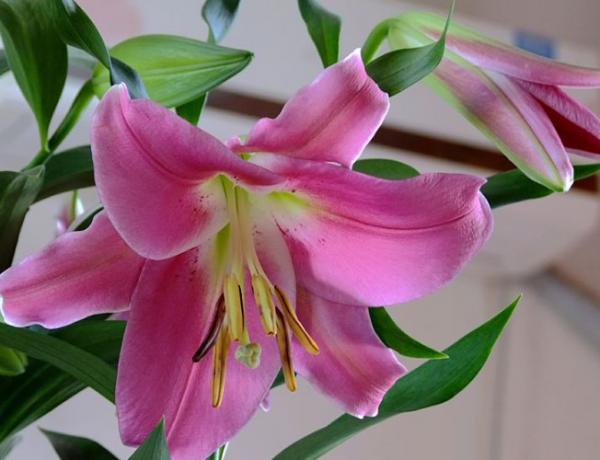
What flower is most suitable to give to Mom for Mother's Day?
What flower is most suitable to give to Mom for Mother's Day?
-
条件筛选