-
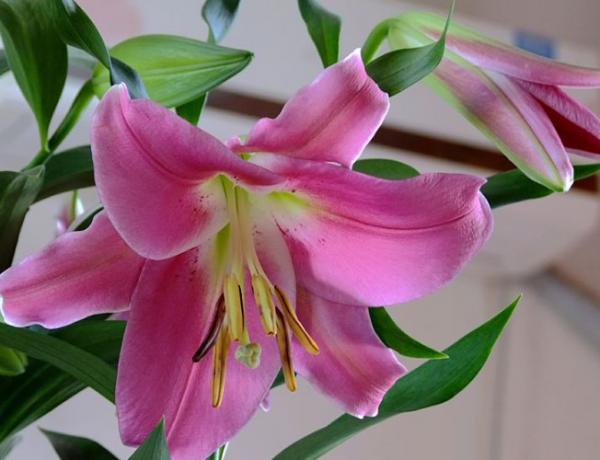
What flower is most suitable to give to Mom for Mother's Day?
What flower is most suitable to give to Mom for Mother's Day?
-
How to Grow the Mother of Thousands Succulent? A Detailed Care Guide
How to Grow the Mother of Thousands Succulent
-

What to Do About Slug Moth Caterpillars Harming Cherry Blossoms? A Detailed Guide to Prevention and Control Methods
What harm do slug moth caterpillars do to cherry blossoms? How can they be controlled? Slug moth caterpillars mainly cause damage by their larvae chewing on cherry blossom leaves. Newly hatched larvae gather in groups to gnaw the leaf flesh, leaving the epidermis behind; after growing larger they disperse and cause damage, and in severe cases they can eat all the leaves on an entire branch. There are many species of slug moths that harm cherry blossoms, including the brown-edged green slug moth, the Chinese green slug moth, the camphor slug moth, and the small black slug moth. Adult slug moths are mostly densely covered with scales and hairs, generally yellow-brown to green, with simple red or brown markings. Their larvae are commonly known as stinging caterpillars, with branched spines and venomous hairs on their bodies that can irritate
-
What are the control methods for the cherry leopard moth borer?
The leopard moth borer, also known as the six-spotted wood leopard moth, belongs to the order Lepidoptera, family Zeuzeridae. Distribution and damage: it is found in Henan, Hebei, Shaanxi, Shandong and other provinces in China. The larvae bore into and feed on the twigs and shoots of many kinds of fruit trees and ornamental trees and shrubs. Damage symptoms: between the xylem and phloem at the base of the affected branch there is a ring-shaped feeding hole, along with a tunnel running from bottom to top. There are several frass-expelling holes on the branch, with large amounts of long oval frass pushed out. The upper part of the affected branch turns yellow and withers, and breaks easily in the wind. Morphological characteristics - adult: female moth body length 20-38 mm, male moth 17-30 mm.
-
Identification and Control Methods of the Box Tree Moth
The box tree moth Diaphania perspectalis (Walker), also known as the box tree black-margined pyralid moth, belongs to the order Lepidoptera, family Pyralidae. [Distribution and damage]: It is distributed in Shaanxi, Hebei, Jiangsu, Zhejiang, Shandong, Shanghai, Hubei, Hunan, Guangdong, Fujian, Jiangxi, Sichuan, Guizhou, Xizang and other places. It damages boxwood, littleleaf boxwood, Lushan boxwood, Korean boxwood, etc. The larvae often connect surrounding leaves with silk to form a temporary nest, in which they feed; when the infestation is severe,
-
What are the control methods for the box tree moth (Glyphodes perspectalis)?
Lepidoptera, Pyralidae (snout moths). It is one of the leaf-eating pests on hedge plants such as Japanese boxwood (Buxus microphylla) and Chinese boxwood (Buxus sinica). It mainly damages the top shoots and leaves of hedge plants, causing bare branches and leaves, greatly reducing their greening and ornamental value. In recent years, the damage has been increasing year by year across the country. Distribution and damage: distributed in Sichuan, Guizhou, Hubei, Hunan, Guangdong, Fujian, Jiangxi, Zhejiang, Shanghai, Jiangsu, Shandong, Hebei, Shaanxi, Qinghai, and Xizang; it damages boxwood (Buxus), Chinese boxwood, box-leaf euonymus (Buxus bodinieri), holly (Ilex), and winged euonymus (Euonymus). The larvae spin silk to bind leaves together into nests and feed on
-
Identification and Control Methods of the Impatiens Hawk Moth
The scientific name of the impatiens hawk moth is Deilephila elpenor lewisil Butler. It is a major pest of impatiens and is distributed in Northeast, North, East and Northwest China. Besides impatiens, its host plants also include autumn orchids, herbaceous flowers and others. Damage characteristics: this insect feeds on leaves in the larval stage, affecting the growth and development of the plant, and is a major pest of impatiens. Morphological characteristics: the adult body length is 33-40 mm, and the wingspan is 55-70 mm. The wings and body are red
-
How to control the Euonymus leafroller moth at the right time?
The Euonymus leafroller moth, also known as the Euonymus moth, is one of the earlier leaf-eating pests to harm garden plants. After several years of observation, the author found that in the Xi'an area its larvae appear in late March, mainly harming plants such as Euonymus japonicus (evergreen euonymus), Euonymus bungeanus (winterberry euonymus), and Euonymus fortunei (climbing euonymus). In severe cases they eat all the leaves, affecting the ornamental effect. When low-instar larvae are found causing damage, spray evenly with 50% phoxim emulsifiable concentrate or 40% omethoate emulsifiable concentrate at 1000 times dilution, or with 2.5 deltamethrin emulsifiable concentrate at 2000 times dilution; the control effect is very good.
-
Control Methods for the Pryeria sinica Moth on the Ornamental Landscape Tree Euonymus japonicus
Distribution and Damage The Pryeria sinica Moore, also known as the Euonymus japonicus long-haired moth and the Euonymus japonicus moth, belongs to the order Lepidoptera, family Zygaenidae. It is distributed in Shanghai, Nanjing, Wuxi, Suzhou, Hangzhou, Wuhan, Lianyungang and Hefei, among other places. It damages Euonymus japonicus, silver-edged Euonymus japonicus, golden-heart Euonymus japonicus, Euonymus grandiflorus, Euonymus fortunei and Euonymus bungeanus, among others. The larvae feed on the host leaves, and when the infestation is severe they eat all the leaves, affecting the normal growth of the plants. Morphological characteristics The adult is flat and round, with a black body dorsum and thoracic dorsum
-
How to control the box tree moth? Pest control methods for garden ornamental trees
Distribution and damage The box tree moth Diaphania perspectalis Walker, also known as the boxwood black-edged pyralid moth, belongs to the order Lepidoptera, family Pyralidae. It is distributed nationwide. The larvae damage large-leaved boxwood, boxwood (Buxus sinica), Lushan boxwood, common boxwood, Korean boxwood, Japanese boxwood, holly and Euonymus, etc. This pest occurs suddenly; in mild cases it affects normal growth, and in severe cases the leaves wither and drop, leaving bare branches and causing young plants to die. Morphological characteristics The adult is about 23 mm long, with a wingspan of about 48 mm. Apart from the dark brown broad bands on the costal, outer and inner margins of the forewings and the outer margin of the hindwings
条件筛选