-

How to pinch back a mother of thousands? Learn the correct pinching method
The method for pinching back a mother of thousands
-

Reasons and Solutions for Yellowing and Softening Leaves of Phalaenopsis (Moth Orchid)
What to Do When Phalaenopsis Leaves Turn Yellow and Soft
-
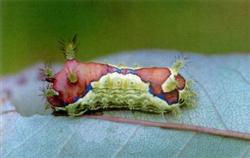
Occurrence Characteristics and Control Methods of the Yellow Slug Moth on Chinese Rose
Morphological characteristics: The adult is orange-yellow, with filiform antennae and brown diagonal lines that meet at a single point at the wingtip, forming an inverted V shape; the hindwings are grayish-yellow, the legs are brown, and the eggs are flat and oval, pale yellow. The larva is roughly rectangular, slightly larger at the front end, brightly colored, with a large purple patch on the back of the body and a dark brown head. The cocoon is oval,. 12m...
-
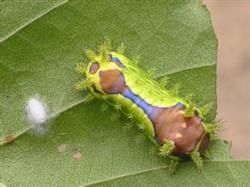
How to control the yellow-tailed moth (Monema flavescens) on roses
Morphological features: The adult is orange-yellow, with filamentous antennae and brownish diagonal lines that converge at a single point on the wingtips. Forming an inverted V shape, the hindwings are grayish-yellow, the legs are brown, and the eggs are flat and oval, pale yellow. The larva is slightly rectangular, somewhat larger at the front end, brightly colored, with a large purple patch on the dorsal side of the body, and a dark brown head. The cocoon is oval. 12m...
-

Occurrence Patterns and Control Methods of the Euonymus Leafroller Moth
The Euonymus leafroller moth belongs to the order Lepidoptera, family Zygaenidae. Its larvae damage the tender leaves and shoots of host plants, feeding on the foliage; in severe cases they strip the branches bare, or even cause entire stands to wither and die. In the Jining region, the Euonymus leafroller moth has one generation per year and overwinters as eggs on the host's branches and shoot tips. The overwintering eggs mostly hatch in mid-to-late March; in sheltered, sunny spots they can hatch 5-7 days earlier, and the hatching peak generally occurs around March 20. A single egg mass can finish hatching in 2-3 days, which coincides with the emergence of new leaves on the Euonymus. From late April to early May, the mature lar
-
Identification and Control Methods of the Pryeria sinica Moth on Japanese Euonymus
Scientific name: Pryeria sinica Moore. Morphological characteristics: The adult moth has a body length of about 12 mm and a wingspan of about 30 mm. The head, thorax and antennae are dark brown. The male moth's antennae are feathery, while the female's are pectinate. There are long orange-yellow hairs on the thorax dorsum and both sides of the abdomen. The forewings are semi-transparent, but the basal 1/3 of the wing is yellow, the rest is dark gray, and the veins are dark brown. The hindwings are yellow at the base. The eggs are oval and flat, initially yellowish-white, gradually turning light brown. The larva is about 20 mm long, with a small dark brown head and a yellow-green body, with sparse white fine hairs on the sides and back.
-
Biological Characteristics and Control Methods of the Black-spotted Looper Moth on Black Locust
Black-spotted looper moth on black locust. It belongs to the family Geometridae, order Lepidoptera, and is also known as the black locust looper. It is distributed in the black locust forest areas of the old course of the Yellow River in Anyang, Puyang, Xinxiang and Kaifeng cities of Henan Province, mainly damaging black locust (Robinia pseudoacacia), and in outbreak years it can also damage jujube trees and crops. This insect is voracious, and in a short time it can eat all the leaves of entire branches and entire trees. In hot and dry years, it can strip the leaves bare 2 to 3 times a year, causing the upper parts of the trees to die and new shoots to sprout from the middle and lower parts of the trunk, causing serious harm to tree growth. Control methods: (1) Establish
-
What are the morphological characteristics of the Privet Hawk Moth?
The Privet Hawk Moth is also called the Soybean Hawk Moth. It mainly damages black locust (Robinia pseudoacacia), and also harms soybeans, wisteria, and so on. The larvae feed on the leaves, and in severe cases can strip the trees bare. Adult: body length 40-50 mm, wingspan 100-120 mm, body and wings yellow-brown, head and pronotum dark purple; near the center of the forewing costa there is 1 pale white semicircular spot, the wing surface has 6 wavy transverse lines, and the wing apex has 1 dark brown oblique line dividing the apex angle into two parts; hindwings dark brown, with the middle part deep brown. Egg: oval, yellow-white. Larva: final instar about 80 mm long
-
What are the occurrence patterns of the privet hawk moth (Clanis bilineata)?
Occurrence patterns of the privet hawk moth (Clanis bilineata): In Hebei, Shandong, Jiangsu, Anhui and other places, 1 generation occurs per year, and the mature larvae burrow into the soil at a depth of 10 to 15 cm to overwinter. In early to mid-June of the following year, pupation begins. The pupal stage lasts 10 to 15 days. In early to mid-July, adults emerge, with mid-month being the peak emergence period. During the day, adults rest quietly among branches and leaves, and begin activity in the evening; adults are phototactic. Generally, egg laying begins 3 hours after mating, with eggs mostly laid on the underside of leaves and a few on the upper side. Each female lays an average of about 350 eggs. Adults live 7 to 10
-
What are the characteristics and control methods of the black locust moth?
The black locust moth is commonly known as the black locust bark borer. It mainly damages black locust (Robinia pseudoacacia). Its larvae bore into and feed on the bark of the trunk; the affected areas develop hyperplastic swelling, the bark splits and cracks, the tissue beneath the bark becomes filled with rotting matter, and the bark crevices are strung together with frass; this can weaken the tree and even kill the whole plant. Adult: female moth body length 7-10 mm, wingspan 17-22 mm, male moth slightly smaller; body grayish white or dark brown, thorax and wing base plates grayish white; forewings grayish white mixed with grayish brown or dark brown scales, with an upright tuft of dark brown scales at the wing base, and 2 oblique rows of scale tufts on the wing surface
条件筛选