-
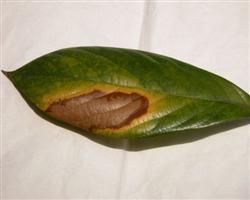
How to prevent and control magnolia leaf blight? Master these practical methods
How to prevent and control magnolia leaf blight? Please give an introduction. The main symptoms of magnolia leaf blight occur on the leaves, and in severe cases can spread to the petioles and flower buds. The lesions mostly occur at the leaf margins, initially appearing as faded green yellow spots, water-soaked, with numerous lesions joining together into patches, expanding outward in a fan shape, with dark brown edges and grayish-yellow interiors, which can cause...
-
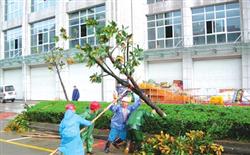
What are the methods to prevent Southern magnolia (Magnolia grandiflora) from falling over?
What methods can prevent Southern magnolia from falling over? Please give an introduction. The Southern magnolia tree is an excellent urban street tree, with pure white and large flowers, a tall and straight trunk, a beautiful crown, dark green leaves, and strong resistance to pollution and dust absorption. Measures to prevent Southern magnolia from falling over include: 1. In terms of purchasing Southern magnolia trees, choose...
-
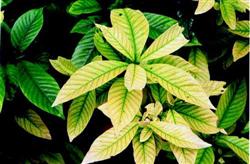
How to prevent and treat magnolia chlorosis? A detailed guide to the methods
How to prevent and treat magnolia chlorosis? Please give an introduction. Magnolia chlorosis, also known as chlorosis disease, is a common disease of magnolia, and it occurs even more commonly in areas where the soil is on the alkaline side. In the northern regions of our country, the disease is relatively severe. Symptoms: The diseased plant first begins to develop the disease at the young tender leaves at the tip of the shoots. The mesophyll tissue of the diseased leaves turns...
-
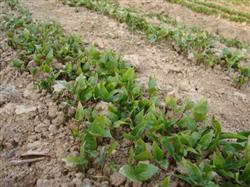
Detailed Explanation of Magnolia grandiflora Propagation Methods and Techniques
How to propagate Magnolia grandiflora? Here is an introduction. Magnolia grandiflora propagation can be done by referring to the following methods: Magnolia grandiflora propagation mainly relies on grafting, using Magnolia liliiflora and Magnolia aromatica as rootstock, performing cleft grafting, side grafting or bud grafting, etc. Cuttings can be taken in early June when the lateral buds on new shoots are plump. Layering is suitable for preserving and developing famous and superior varieties...
-
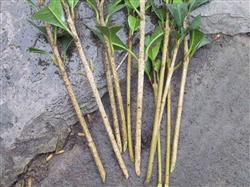
Detailed Explanation of Camellia Cutting Propagation Methods and Steps
How to propagate camellias by cuttings? Please provide an introduction to the method. Camellia is one of the ten traditional famous flowers of our country. It likes a warm environment, with an optimum growth temperature of 18-25 degrees. It prefers semi-shade, environments with relatively high air humidity, and deep, fertile, loose, well-drained soil. It dislikes strong sunlight and dryness. Cuttings...
-
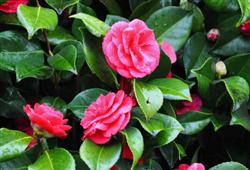
Common Pests and Diseases of Camellias and Their Control Methods
Which pests and diseases of camellias need to be controlled? The pests of camellias include aphids, scale insects, red spider mites, rust mites, and leaf-rolling moths. Except for rust mites, they can be controlled with ordinary insecticides. The most serious are rust mites and mite pests, which are powdery white, very small, and hard to spot, attacking specifically the young leaves and tender shoots of camellias, causing the undersides of the leaves to turn yellow as if rusted, twisting the leaves, and preventing new shoots from growing...
-
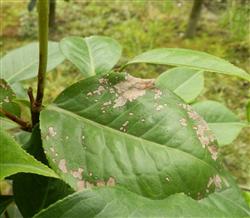
Control Methods for Camellia Twig Blight and Flower Rot
How to control camellia twig blight and flower rot? Please provide an introduction to the methods. To control camellia twig blight and flower rot, you can refer to the following methods: Twig blight is caused by pathogenic fungi infecting the young or old twigs of camellias. The affected twigs become necrotic, the leaves change from green to pale yellow, gradually dry up and fall off from the top downward, and finally the entire...
-
What are the seed-scion grafting methods for potted camellias?
How do you graft potted camellias using seed scions? Here is an introduction. For seed-scion grafting of potted camellias, you can refer to the following methods: 1. Sprout the seeds and cut the scion: first sprout the seeds. When the seed sprouts emerge above the surface of the sand bed, grafting can begin. Take the sprouted seeds, rinse them clean, and use a grafting knife to cut off the root end, keeping a length of 6-9 cm...
-
How to Take Camellia Cuttings in Spring: Detailed Methods and Steps
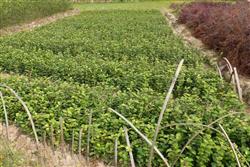
How do you take camellia cuttings in spring? Here is an introduction to the method. The best time for taking camellia cuttings is from early April to May. Choose current-year, semi-lignified, brown branches and cut them into 10 cm to 15 cm cuttings with 3 buds, cutting at the point just below a basal node. Keep 1 to 2 leaves on each cutting. After cutting, immediately place the base...
-
What are the common pests of camellias? Detailed control methods
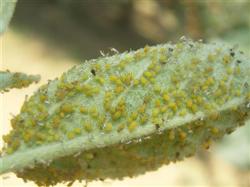
What pests of camellias need to be controlled? Here is a detailed introduction. Camellias have the following pests that need to be controlled: Aphids [Appearance and damage] Aphids are divided into two types: winged aphids and wingless aphids. The winged viviparous female aphid has transparent wings and a dark brown body; the wingless viviparous female aphid has no wings and a dark brown body. In addition, the nymph resembles the adult in appearance, has no wings, and is light yellow. Adults and nymphs gather on the young shoots of camellias to suck sap, causing the buds and leaves of the affected camellias to shrivel and severely affecting growth. The excrement of aphids can cause sooty mold.
条件筛选