-
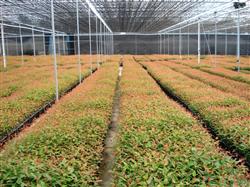
What are the eucalyptus seedling-raising methods? Detailed explanation of the key techniques
How to raise eucalyptus seedlings? Here is a detailed guide. Eucalyptus seedling raising can refer to the following methods: 1. Small seedling cultivation 1.1 Seedbed preparation (1) Seedbed specifications the bed bottom width is 1.2 m, the length is generally under 5 m, and the path width is 5 cm. (2) Making the bed After removing the weeds and topsoil from the bed surface, use 50...
-
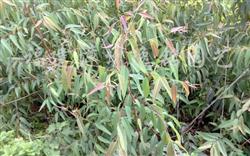
How to prevent and control eucalyptus purple leaf spot? Detailed explanation of prevention and control methods
How to prevent and control purple leaf spot in eucalyptus? Please explain the methods. Eucalyptus purple leaf spot is a relatively common leaf disease in eucalyptus planting areas. It affects various species of the genus Eucalyptus. It occurs in Yunnan and Guangdong in China. Symptoms: In the early stage of the disease, scattered or relatively densely clustered spots appear on both sides of infected leaves. The lesions are polygonal or irregular, purple...
-
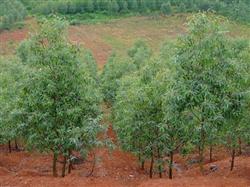
How to prevent and control eucalyptus leaf blight? Detailed control methods
How to prevent and control leaf blight in eucalyptus? What does eucalyptus leaf blight look like after it develops? Eucalyptus leaf blight is distributed throughout South China. It damages Eucalyptus exserta, Eucalyptus grandis, Eucalyptus rudis, and Eucalyptus torelliana, among others. Symptoms: The disease often occurs at the leaf tip and leaf margin. In the early stage of the disease, chlorotic spots appear on infected leaves, then gradually expand into...
-
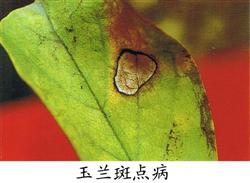
What are the control methods for Magnolia leaf spot disease?
How do you control Magnolia leaf spot disease? Please give guidance. Magnolia leaf spot disease: 1. Symptoms: Also known as brown spot and leaf spot, it mainly damages leaves. It first appears as small yellow to light brown round spots, then expands into nearly round to irregular large spots, with reddish-brown line patterns at the edges and grayish-white centers; in the later stage, small black dots are scattered on the diseased areas...
-
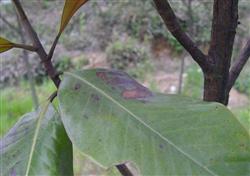
What are the control methods for southern magnolia leaf blight?
How do you control southern magnolia leaf blight? Please give guidance. Southern magnolia leaf blight: 1. Symptoms: The leaf blight pathogen mainly infects leaves. On the surface of diseased leaves, light brown or yellow small spots first appear, which later expand into round or irregular lesions, 5-12 mm in diameter, with dark brown edges and grayish-white centers, on which many small black dots are borne...
-
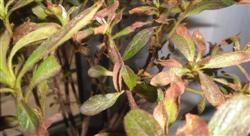
What are the control methods for azalea leaf spot disease?
How do you control azalea leaf spot disease? Please explain azalea brown spot disease: in the early stage of the disease, brown spots appear on the leaf margins, the boundary between diseased and healthy tissue is not obvious, showing a transition of light green?brown?rust red; as the disease spreads, the spots enlarge or the entire leaf turns brown, causing the leaves to drop prematurely, and even the whole plant...
-
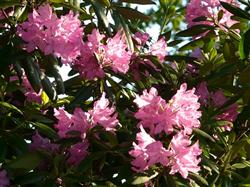
What Is Rhododendron Leaf Spot? Symptom Identification and Control Methods
What is rhododendron leaf spot? How to control it. Please introduce rhododendron leaf spot: Symptoms: It mainly infects the leaves. In the early stage of the disease, small reddish-brown spots appear on the leaves and gradually expand into round lesions, or irregular polygonal lesions, dark brown, 1mm-5mm in diameter. In the later stage, the tissue in the center of the lesion turns grayish white...
-
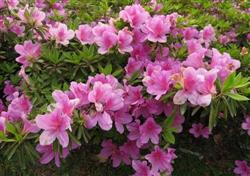
What fertilizer is best for azaleas? Fertilizer selection and application methods
What fertilizer is best for azaleas? Please give guidance. Azaleas are fertilizer-loving plants. In addition to the main nutrients nitrogen, phosphorus and potassium, they also need trace elements such as boron, copper, molybdenum and zinc. For azaleas, fertilizers with mild strength and long-lasting effect are suitable. For home azalea growing, ox horn, ram horn and animal hoof pieces can be used; these fertilizers contain 12%-15% nitrogen and 0.2%-8% phosphorus, and also contain a small amount of potassium and trace elements. Thin hoof pieces take effect 1 month after application, while thick hoof and horn pieces show fertilizer effect after 2 months, and the fertility can last 6-8 months. When using them, they can be buried at the edge or bottom of the pot along with repotting or changing pots. Cake fertilizer is also a relatively complete fertilizer in terms of nutrition. The nutrients in cake fertilizer generally contain 2.1%-7.6% nitrogen, 0.54%-3.3% phosphorus and 0.5%-2.7% potassium. Generally speaking, soybean cake and peanut cake contain more nitrogen, while rapeseed cake and cottonseed cake contain more phosphorus. They must be fully fermented before application. Fertilizer made by composting livestock manure and tree leaves can be mixed into the growing medium when repotting.
-
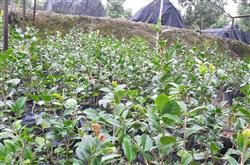
What are the propagation methods for camellias? A detailed guide to common propagation methods
What propagation methods are there for camellias? Please give a detailed introduction. There are many propagation methods for camellias; both sexual and asexual propagation can be used, among which cutting and approach grafting are the most common. The following propagation methods are for reference: 1. Cutting method. This method is the simplest. The best time for cutting is September, and spring is also acceptable. Choose well-grown...
-
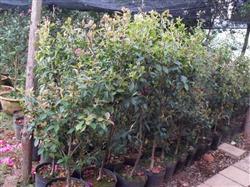
A Detailed Guide to Camellia Propagation Methods and Planting Techniques
How do you propagate and plant camellias? Here is an introduction to the methods. Camellia propagation and planting can be done by referring to the following methods: Propagation techniques 1. Cuttings. In the rainy season from May to June, select a young mother plant, cut a one-year-old softwood shoot about 10cm long from the tip, remove the lower leaves, trim flat below the node with a blade, and keep at the tip...
条件筛选