Control Methods for Camellia Twig Blight and Flower Rot
How to control camellia twig blight and flower rot? Please provide an introduction to the methods. To control camellia twig blight and flower rot, you can refer to the following methods: Twig blight is caused by pathogenic fungi infecting the young or old twigs of camellias. The affected twigs become necrotic, the leaves change from green to pale yellow, gradually dry up and fall off from the top downward, and finally the entire...
How to control camellia twig blight and flower rot? Please provide an introduction to the methods for control
Camellia twig blight and flower rot can be controlled by referring to the following methods:
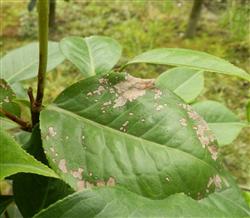
Twig blight is caused by pathogenic fungi infecting the young or old twigs of camellias. The affected twigs become necrotic, the leaves change from green to pale yellow, gradually dry up and fall off from the top downward, and finally the entire branch tip dries up and dies.
Control methods: In winter, prune off diseased and dead branches and burn them in a centralized manner; remove excess adventitious buds and weak slender branches to reduce breeding sites for pathogens; before the camellia plant buds and sprouts new shoots, spray 50% thiophanate-methyl 800-fold solution, or 50% thiram 800-fold solution, or 50% chlorothalonil 600 to 700-fold solution, focusing on spraying the wound areas of the branches; after disease onset, promptly spray the above agents alternately; pay attention to applying an appropriate amount of phosphorus and potassium fertilizers and less nitrogen fertilizer.
Flower rot is a disease caused by camellia flower rot fungi infecting the petals. The affected flowers first develop small brown spots, which then gradually expand until the entire flower turns brown and withers.
Control methods: Promptly remove infected camellias when found, and during the flowering period promptly sweep up diseased flowers that fall on the ground and bury them deeply or burn them in a centralized manner; before flowering, spray the flower buds with 50% thiophanate-methyl 500-fold solution, or 50% carbendazim 500-fold solution, once every 7 days for three consecutive sprays; choose to plant varieties that bloom in autumn, or treat mid- and late-blooming varieties with gibberellin to make them bloom in autumn, so as to avoid the peak period of flower rot pathogen occurrence.
Click to get more camellia cultivation techniques
Click to get more flower and tree cultivation techniques