Diagnosis and Control Methods of Sorghum Smut
1. Sowing depth The sowing depth of sorghum is generally 3-5 cm. If sown too deep, the seedlings encounter great resistance when emerging, and the emergence time is prolonged. If sown too shallow, the surface soil loses much moisture, and the seeds are prone to drying out, which is equally unfavorable for emergence. Determining the sowing depth should also take into account conditions such as soil texture, moisture status, variety and temperature. Clay...
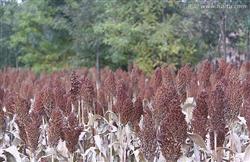 Sorghum often suffers from smut during its growth process, with yield reductions usually ranging from 5% to 10%, and in more severely affected cases reaching up to 80%. Smut is a disease of key importance for control in sorghum production.
1. Symptoms There are 3 types of sorghum smut, namely loose smut, covered smut and head smut.
In loose smut, the diseased panicle, its grains and both glumes all turn into black powder, covered on the outside by a layer of dark gray membrane. In the later stage the membrane breaks easily, and after breaking it releases the black powder, leaving an elongated central axis. Diseased plants are slightly shorter than healthy plants, and head earlier than healthy plants.
In covered smut, the diseased panicle and its grains are gray, oblong, filled inside with black powder, with an outer membrane that is very hard and not easy to rupture.
In head smut, the entire diseased panicle becomes a gray gall, covered on the outside with a white membrane. When the pathogen matures, the gray gall ruptures easily, releasing a large amount of black powder and leaving black tangled filaments like hair.
2. Infection pathways Covered smut and loose smut are mainly transmitted by seed, while head smut is mainly transmitted by soil. All 3 pathogens infect the seedlings after sowing, and as the plant grows, they invade the panicle at the heading stage, forming diseased panicles. Generally, low temperatures after sowing and slow emergence make infection likely, and continuous cropping fields or the application of infected fertilizer result in severe disease.
3. Control methods (1) Crop rotation, selecting disease-resistant varieties: implement crop rotation for more than 3 years, select disease-resistant varieties, cultivate at the proper time, and when diseased plants are found during the heading period, pull them out with roots before the black powder is released, and burn or deeply bury them promptly. (2) Seed dressing. For every 100 kg of seed, one may choose: 25% triadimefon wettable powder 0.4 kg, or 20% carboxin emulsifiable concentrate 1.25 L, or 50% carbendazim wettable powder 0.7 kg, add an appropriate amount of water, and then dress the seed. The seed dressing must be uniform; after dressing, generally pile and cover for 4 hours, then dry in the shade before sowing.