Detailed Explanation of Planting Methods and Techniques for Large Meat-Filled Heart Mustard
How to plant large meat-filled heart mustard? Please advise. Large meat-filled heart large mustard, also known as Chaozhou mustard, has a long history of cultivation. Its juice is abundant and its texture is crisp, with excellent quality. Besides being eaten fresh, it is also suitable for pickling into salted vegetables. It is an excellent vegetable variety for generating income by fully utilizing idle winter land after the late rice harvest. The cultivation techniques are as follows. 1. Sowing in winter...
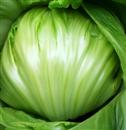
How to plant large meat-filled heart mustard? Please advise
Large meat-filled heart large mustard, also known as Chaozhou mustard, has a long history of cultivation. Its juice is abundant and its texture is crisp, with excellent quality. Besides being eaten fresh, it is also suitable for pickling into salted vegetables. It is an excellent vegetable variety for generating income by fully utilizing idle winter land after the late rice harvest. The cultivation techniques are as follows.
1. Sowing: For winter planting, large meat-filled heart large mustard should be grown by raising seedlings and then transplanting. You can prepare 0.04 mu of seedling land in advance for each mu of field. The sowing rate is 500 grams of seed per mu. After 25 days of sowing, when the seedlings have 3-4 leaves, they can be transplanted. Spray the seedbed once with an insecticide before transplanting.
2. Transplanting: 7-10 days before transplanting, plow and prepare the land, open furrows, and apply base fertilizer deeply. The amount of base fertilizer used is 2500 kg of decomposed pig and cattle manure, 25 kg of compound fertilizer, and 50 kg of ammonium bicarbonate per mu. After preparing the land, form beds. The beds should run north-south, generally 1-1.1 m including the ditch, with double-row planting, and the bed height should be 25-30 cm. The planting spacing is 43 cm x 40 cm, with about 3000 plants transplanted per mu.
3. Field management
1. Watering: Large meat-filled heart large mustard likes a moist environment, is not tolerant of drought, and is also not tolerant of waterlogging. Before transplanting, the seedling land should be thoroughly watered, then select good seedlings and dig them up with soil to plant in the main field. After transplanting, water thoroughly to settle the roots and ensure the survival of the planted seedlings.
2. Topdressing: Fertilization mainly uses nitrogen fertilizer to promote growth, but phosphorus and potassium fertilizers should also be applied appropriately to enhance the plant's disease resistance. The amount of fertilizer applied depends on soil fertility and plant growth vigor. Start topdressing after the plants survive. Generally, topdress once about every 10 days, for a total of 3-5 topdressings, with the fertilizer concentration increasing from light to strong. Generally, 1000 kg of 20% human and animal urine water per mu, or a mixture of 5 kg of urea and 10 kg of compound fertilizer, can be used for topdressing.
3. Pest and disease control: Frequently check the field, and when pests and diseases are found, apply the right remedy at the right time. The main disease is viral disease, and the pests include aphids, striped flea beetles, and others.
4. Harvesting: The harvest period should follow the requirements for fresh eating or processing. For fresh eating, harvest while the plant is still young and tender; for processing, it is better to harvest when slightly more mature.
Click to get more mustard cultivation techniques
Click to get more vegetable cultivation techniques