-
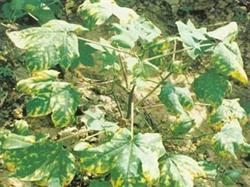
Scientific prevention and control methods for cotton Fusarium wilt and Verticillium wilt
Cotton Fusarium wilt and Verticillium wilt are the main diseases affecting high yield and high efficiency of cotton. Only by correctly identifying the symptoms and taking corresponding measures can yield and quality be improved and benefits increased. I. Cotton Fusarium wilt: This disease can occur at the cotyledon stage, with the first peak of incidence appearing at the squaring stage. At the seedling stage, the symptoms of Fusarium wilt are complex and varied...
-

-

A Detailed Guide to Pleurotus pulmonarius Cultivation Techniques and Management Methods
Pleurotus pulmonarius Cultivation Techniques
-
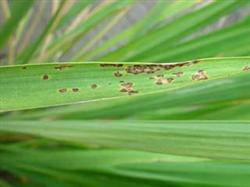
Identification Methods and Control Techniques for Rice Sheath Blight in Water Bamboo
[Symptom Characteristics] Water bamboo blast, also known as water bamboo gray heart disease, mainly infects the leaves. Leaf lesions fall into 3 types: acute, chronic and brown spot. Acute-type lesions are round-dot shaped, dark green, with a grayish-green mold layer (conidiophores and conidia) on the back of the lesion that is relatively obvious; their appearance is a precursor to a water bamboo blast epidemic. Chronic-type lesions are nearly spindle-shaped, ...
-
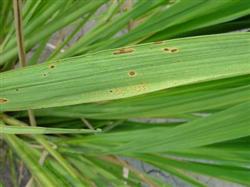
Symptom Identification and Control Methods of Rice Blast Leaf Spot on Water Bamboo
Rice blast leaf spot is a major disease of water bamboo, widely distributed and commonly occurring, found in all water bamboo growing areas, with more severe incidence in summer and autumn, diseased plants often reaching 80%-100%, significantly affecting water bamboo production. [Symptoms] This disease mainly affects the leaves. The lesions initially appear as small brown necrotic spots, which later develop into nearly oval to spindle-shaped...
-
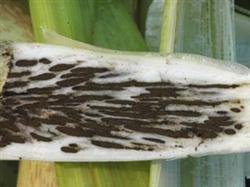
Occurrence and Integrated Control Methods of Water Bamboo Smut
Water bamboo smut is a major disease of water bamboo (Zizania latifolia), mainly affecting the leaf sheaths and the edible swollen stems, leading to reduced yield and quality of water bamboo. The main symptoms and integrated control methods of this disease are briefly described below: 1. Main symptoms: In the early stage of leaf sheath infection, the lesions appear as small dark green round spots, which later develop into oval tumor-like protrusions; in the later stage, the leaf sheaths are filled with black spore masses, causing the leaf sheaths to turn black. When the edible swollen stem is infected, the smut fungus fills the water bamboo tissue, causing the middle to swell and protrude, the edible stem strips to become shorter, and the outer surface to have many longitudinal grooves. It becomes rough, and in severe cases the edible stem is unfit for consumption.
-
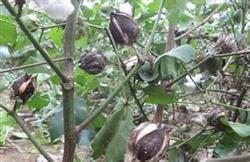
What are the control methods for cotton boll rot?
1. Clear the ditches. Before and after rain, promptly clean the drainage ditches in the cotton field. The ditches must be unobstructed to ensure there is no standing water in the cotton field when it rains and no blockage in the ditches, so that surface water can be drained quickly after rain and the groundwater level in the cotton field can be effectively lowered. 2. Prune branches and remove leaves. Pruning branches and removing leaves in the late growth stage of cotton can not only reduce nutrient consumption and save nutrients...
-
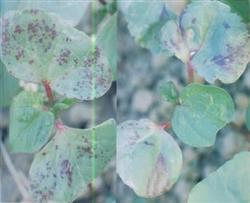
What are the control methods for cotton bacterial angular leaf spot?
I. Agricultural measures. 1. Prepare the soil carefully, apply sufficient base fertilizer, ensure adequate pre-planting soil moisture, and select disease-resistant varieties. 2. Practice rational crop rotation, deep plowing and winter irrigation to promote the decomposition of diseased plant residues. 3. During the seedling stage, strengthen intertillage, reduce soil moisture, apply less nitrogen fertilizer, apply more phosphorus and potassium fertilizer, and cultivate strong seedlings. 4. Strengthen cotton field management, drain promptly after rain...
-

What causes white heads in wheat? Detailed explanation of causes and control methods
Causes of white heads in wheat and control methods
-
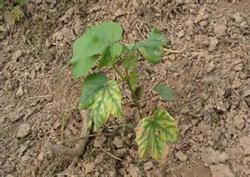
What to Do When Insect-Resistant Cotton Gets "Cancer"? A Full Analysis of Mitigation Methods
Cotton fusarium wilt is what farmers habitually call "cancer." In any field where this disease has appeared, planting cotton again often easily brings the "cancer" back, and it may even become more severe year after year. This is because once such pathogens lurk in the soil, they are difficult to eradicate, and when suitable climatic conditions occur, they easily flare up again....
条件筛选