Two Methods for Poisoning and Killing Underground Pests of Sweet Potato
When sweet potatoes are damaged by underground pests, they become riddled with pest entry holes and tunnels, cannot be processed or eaten, and rot more quickly, causing reduced yields. In production, the following methods can be promptly adopted for poisoning and control to improve yield and quality. 1. Spray Lorsban. During the growth and development period of sweet potatoes, spray the leaves once every 10-15 days with a 1000-fold Lorsban aqueous solution...
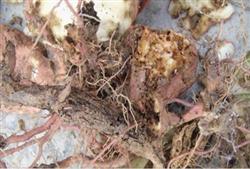
When sweet potatoes are damaged by underground pests, they become riddled with pest entry holes and tunnels, cannot be processed or eaten, and rot more quickly, causing reduced yields. In production, the following methods can be promptly adopted for poisoning and control to improve yield and quality.
1. Spray Lorsban. During the growth and development period of sweet potatoes, spray the leaves once every 10-15 days with a 1000-fold Lorsban aqueous solution, evenly wetting all the leaves, until water droplets begin to run down the stems and leaves toward the roots. Spray continuously 3-5 times. Lorsban is an insecticide with very strong penetrative power. It is conducted to the underground parts through the vines, killing the underground pests and protecting the underground tuberous roots.
2. Drench with tea seed cake liquid. During the period of rapid tuber expansion of sweet potatoes, drench the root zone once every 7-10 days with a 40-50-fold tea seed cake aqueous solution, applying continuously 2-3 times, with 10-15 kg per sq m each time. Tea seed cake liquid can kill underground pests, and can also promptly supplement high-quality organic fertilizer, promote tuber expansion, increase starch accumulation, and significantly raise yield and improve quality.