-

Detailed Explanation of Key Techniques for Autumn Management of Greenhouse Apricot Trees
I. Soil, Fertilizer and Water Management 1. Apply base fertilizer early. The time for applying base fertilizer to greenhouse apricot trees should be earlier than that for open-field cultivation, preferably between late summer and early autumn. Applying base fertilizer at this time, due to the high soil temperature, coincides with the peak period of apricot root growth, so damaged roots heal easily, which can promote photosynthesis of aboveground leaves and promote flower bud differentiation. The fertilizer should be mainly organic fertilizer, and the application rate should be 20%-30% more than that for open-field cultivation, applying 3000-4000 kg of decomposed organic fertilizer per mu. Soil fertilization can be combined with autumn deep plowing, and the earlier the better. Usually the strip trench fertilization method is used, at the outer edge of the tree canopy projection
-
A Complete Analysis of the Key Points of Large Flat Apricot Cultivation and Management
1. Planting method Before planting, soak the seedling roots in water for 24 hours, take them out and dip them in a water-retaining agent, then plant them. After planting, irrigate thoroughly, and once the water has seeped down, cut the trunk back to a height of 80-100 cm. With the main trunk as the center of the planting hole, cover with 1 m x 1 m plastic film, press the edges of the film down firmly with soil, and leave the area around the planting pit slightly higher. Years of practice have proven that covering with plastic film after planting both retains water and raises soil temperature, causing the tree to sprout early and grow quickly. One week after planting, slip a plastic bag over the trunk, with a bag length of 40 cm and a width of 10 cm. To prevent
-
Cultivation Techniques and Planting Management Key Points for Scorzonera sinensis
Scorzonera sinensis Lipsch. et Krasch. is a perennial herbaceous plant in the Asteraceae family. The plant height is 5-10 cm, with milky sap. The root is thick and sturdy, the root system is dense and substantial, fibrous, brown. The stem is solitary or 3-4 clustered together, hairless, with a white powdery coating. The basal leaves are lanceolate or broadly lanceolate, 5-15 cm long, hairless, with a white powdery coating, the margins are deeply wrinkled and curved, the apex is obtuse or gradually acuminate, the base gradually narrows into a winged petiole, the base is broadly sheathing and stem-clasping; the cauline leaves are 2-3 small leaves, scale-like, nearly
-
How to prevent single-clove garlic? Garlic farmers need to master these management methods
1. For autumn-planted garlic, plow and turn the land immediately after the previous crop is harvested, with a plowing depth of more than 28 cm, plow finely and harrow thoroughly, level the land and make beds. The bed width should preferably be 1.5-2 m, and the bed length generally should not exceed 30 m. For convenience of watering, 20-25 m is preferable. Garlic is a shallow-rooted crop, with shallow roots and weak fertilizer uptake capacity, and it has relatively high requirements for the quality of base fertilizer. Choose a complete-effect, high-quality organic fertilizer and apply it fully in one application. For night soil, do not use raw manure; before application it must be fully decomposed, crushed and mixed evenly, to prevent fermentation in the field, which can cause garlic maggot damage and affect seedling growth and development.
-
Cultivation and Management Techniques for Triticale and Rye in Shunyi
Triticale and rye belong to the grass family (Poaceae) as forage crops, and are recognized both domestically and internationally as high-quality feed crops for herbivores. Harvesting at the end of May can solve the problem of insufficient green feed in spring, with fresh grass yield reaching 2000-2500 kg per mu. Our district has been planting them for 3 years and has selected several excellent varieties, among which triticale varieties are 1890 and Fan 3, and the rye variety is Wintergrazer 70. Their cultivation techniques are basically similar to traditional winter wheat. The main cultivation technique points are as follows: 1. Pre-sowing seed treatment: First ensure seed quality, sun the seeds 2-3 days before sowing
-
Key Points of Feeding and Management Techniques for Suckling Piglets
The feeding and management of suckling piglets mainly involves grasping the three feeds (colostrum feeding, starter feeding, and vigorous feeding) and passing the three critical stages (the newborn stage, the supplementary feeding stage, and the weaning stage). 1. Grasp colostrum feeding well and pass the newborn stage well (1) Implement attended farrowing, do a good job of delivering the piglets, prevent piglets from being crushed to death, freezing to death, or dying in the womb due to dystocia, and reduce piglet mortality; (2) Promptly rescue "apparently dead piglets"; artificial respiration may be performed, or the "apparently dead piglets" may be immersed in warm water at 35-40°C with their heads above the water surface, or iodine tincture, alcohol, or ammonia water may be applied to the piglets' nostrils for medicinal
-
Key Feeding and Management Points for Raising Pregnant Sows Well in Summer
Pregnant sows are extremely sensitive to external stimuli. The heat stress brought by high temperatures can easily cause miscarriage and stillbirth in sows. The first 20 days of pregnancy and the 30 days before farrowing are the danger periods for stillbirth and miscarriage, so feeding and management must be strengthened to ensure the safe farrowing of pregnant sows. Create a cool environment by thickening the roof with materials such as straw curtains that have good insulation performance, so as to block the sun's heat radiation, which can reduce radiant heat by more than 40%. At noon when the temperature is above 30°C, water can be sprayed on the roof to cool it down. In addition to opening the north and south
-
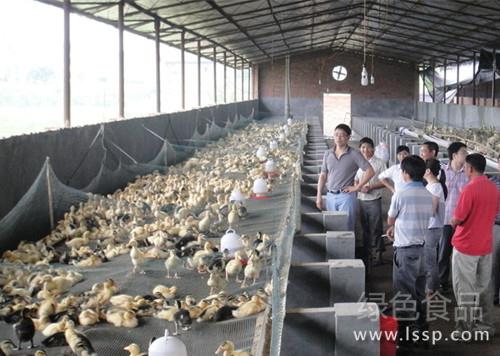
Raising Ducks in Confinement Can Save Labor: Key Management Techniques Explained
Raising Ducks in Confinement Can Save Labor: Key Management Techniques for Confined Ducks
-
Key Cultivation Techniques and Management Methods for White Tea
White tea is a precious new tea tree variety introduced to Huangjiabu Town, Yuyao, Zhejiang. The rare white tea made from the buds and leaves of this tea tree as raw material is beautiful in form, excellent in quality and unique in style; the tender buds and leaves are like jade and orchids, and the finished dry tea has a emerald green color with golden edges; when brewed, it is like jade dancing; after brewing, the aroma is elegant and lasting, the taste is sweet, mellow and refreshing, the liquor color is clear and bright, the infused leaves are white as jade with emerald green veins, and the buds form clusters like newly opened orchids, which is very peculiar. The cultivation techniques for white tea in our town are introduced as follows: I. Cultivation techniques for white tea (1)
-
Key Technical Points for Disaster Resistance and Mitigation and Spring Management of Edible Fungi
1. Clear away ice and snow, dig ditches for drainage. Promptly remove accumulated ice and snow from the top and surroundings of mushroom sheds (houses) to prevent them from collapsing. Dig drainage ditches around the mushroom sheds (houses) to keep drainage smooth and avoid rain and snowmelt attacking the mushroom substrate. 2. Stop spraying water and keep the substrate surface as dry as possible. Because at low temperatures the mycelium of edible fungi enters a dormant state, and spraying water can easily cause death. 3. Strengthen heat preservation management of mushroom sheds (houses). Small arched tunnels can be set up inside the greenhouse, and coverings such as plastic film and straw curtains can be added outside the shed for insulation and dehumidification. Use plastic
条件筛选