-

Planting Techniques and Care Management Methods for Picea aurantiaca
Family: Pinaceae. Common name: Morphological characteristics: Evergreen tree, up to 25 m tall, diameter at breast height 50 cm; bark white or grayish-white, splitting into irregular, relatively thick, oblong block-like plates; 1- or 2-year-old branches orange-red or pale yellowish-brown, with short hairs or nearly hairless, slightly glaucous; old branches pale gray; winter buds conical, brown, slightly resinous, bud scales persistent, apex recurved. Leaves subulate, more or less curved, 1-2 cm long, 1.5-2 mm wide, apex acute, cross-section rhombic, with 4-6 stomatal lines on each side. Cones long
-
Phalaenopsis cultivation and management methods and technical key points
1. Growing medium: When planting, place growing medium at the bottom of the pot, at least 1/2 of the pot volume. For the medium, sphagnum moss (suitable for small and medium seedlings), all tree-fern fiber, a mix of tree-fern fiber and sphagnum moss, or a half-and-half mix of tree-fern fiber and charcoal granules works very well. Others such as vermiculite, peat soil, tree-fern roots, and coconut husk chips can also be used as growing medium. 2. Watering: Phalaenopsis is native to primeval forests with relatively high humidity. It also has no thick pseudobulbs to store nutrients and water. Therefore, Phalaenopsis should be cultivated and cared for in a ventilated, high-humidity environment. The optimum humidity during the day is
-
Detailed Explanation of Key Techniques for the Cultivation and Management of Phalaenopsis Test-Tube Plantlets
I. Acclimatization and Removal from Flask for Planting of Test-Tube Plantlets 1. Acclimatization To increase the survival rate of Phalaenopsis test-tube plantlets, the plantlets must first be strong. Before removing the plantlets from the flask, they must first undergo acclimatization. When the plantlets have three leaves, place them in diffused sunlight and expose them evenly for about 20 days, so that the test-tube plantlets grow more robustly and can adapt more quickly to external environmental conditions after being removed from the flask. 2. Removal from Flask Great care must be taken when removing the plantlets from the flask. First pour a small amount of water into the culture flask, then gently shake the flask. After the solid culture medium is loosened, use long tweezers to take out the orchid plantlets, minimizing damage to the orchid
-
Detailed Explanation of Phalaenopsis Cultivation Techniques and Management Methods
Narration: Phalaenopsis is a type of orchid, named for its petals that resemble butterflies. As a flower variety with extremely high ornamental value, Phalaenopsis cultivation areas have spread all over the world. When cultivating Phalaenopsis under greenhouse conditions, the main tasks are proper management of temperature, humidity and light. Lu Guilin (technician at the Flower Research Laboratory, Institute of Horticulture, Shanxi Academy of Agricultural Sciences): Phalaenopsis is known as the queen of orchids and generally has relatively high temperature requirements, mostly controlled between 15 and 35 degrees. When cultivated in greenhouses, heating is needed in winter.
-
Post-Bloom Management Methods and Care Tips for Azaleas
The warm spring has arrived, and most of the Chinese New Year flowers placed in your home have finished blooming. Are you worrying about how to deal with these flowers that no longer look their best? Are you asking around for advice on how to care for them? If you hope they will bloom beautifully again next year, then please pay attention here. Starting with this issue, we have carefully prepared a series of articles on "Post-Bloom Management of Chinese New Year Flowers" for you, and we hope they will be helpful. If you have care experience in this area, please also write to us and share it with flower lovers everywhere! 1. Pruning and shaping
-
Key Management Techniques for Jujube Orchards in Late Autumn and Early Winter
Clean the jujube orchard. Before winter arrives, after the jujube leaves fall, promptly sweep up fallen leaves, diseased and mummified fruit, weeds, and so on in the orchard, gather them together and burn them, so as to burn to death overwintering disease spores, mycelium, and insect eggs. Plow and turn the jujube orchard. For jujube groves practicing jujube-grain intercropping, deep plow the soil between the plants and under the tree canopy; for those not practicing jujube-grain intercropping, plow and turn the entire orchard, and in particular the soil within the projected area under the tree canopy must be deep plowed. The closer to the trunk, the shallower the plowing should be; the farther from the trunk, the deeper the plowing, generally 15-30 cm is appropriate. In this way, the overwintering
-
How to manage Xuezao jujube? Key points of fine management techniques
Xuezao jujube is favored by people for its excellent quality, and in recent years the planting area has grown considerably in various places. However, problems exist in production such as relatively small fruit size, size variation, poor coloring, and weak flavor. Taking the following measures can effectively improve the situation. 1. Increase organic fertilizer application. Every year in late September (around fruit harvest), apply 100 kg of farmyard manure and 2 kg of calcium magnesium phosphate fertilizer per fruiting tree, by hole application or trench application. 2. Mulch the tree base with grass in mid-September (fruit enlargement stage), with a mulch thickness of 15-20 cm, and thereafter add new grass each year to maintain
-
Early winter management of Sichuan pepper brings better fruiting next year
Shaping and pruning: Winter is a great time to prune Sichuan pepper trees. When pruning, you must remove the "seven branches," namely: water sprouts, dead branches, diseased and pest-infested branches, overly dense branches, crossing branches, overlapping branches, and weak slender branches. Then gather the removed branches and burn them, which can eliminate pests and pathogens overwintering on the branches. Scraping off rough bark: Many insect eggs overwinter in the cracks of the rough bark of pepper trees, and mulberry white scale parasitizes the trunk. Scrape off the rough bark and gum oozing spots, gather and burn them, then apply a protective agent, and finally smear thin mud to cover the wounds, which can eliminate pathogens and insect eggs.
-
Detailed Explanation of Key Management Techniques for Prickly Ash in Autumn and Winter
Prickly ash harvesting is gradually coming to an end. This is the critical period for controlling pest and disease damage and reducing the overwintering population of pests. Therefore, the following management techniques should be carried out well: 1. For prickly ash orchards with severe damage from prickly ash leaf-mining flea beetles, scale insects, rust disease, etc., spray the trees 1-2 times with a mixed solution of 15% triadimefon 800 times + 40% isocarbophos 1000 times + 5% beta-cypermethrin 1000 times. 2. Timely clear away dead wood, fallen leaves and weeds, and burn them in a centralized manner to eliminate sources of pests and diseases.
-
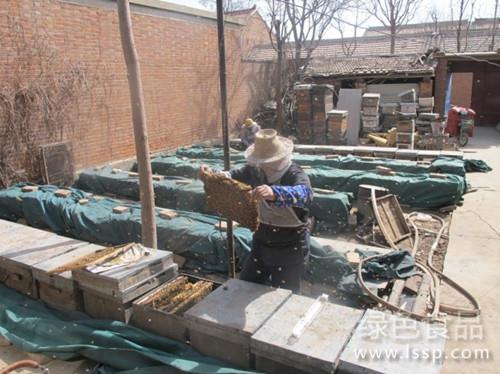
Key points for spring bee management: how to restore colony strength and make use of nectar sources
How to restore colony strength and make use of nectar sources: key points for spring bee management
条件筛选