-
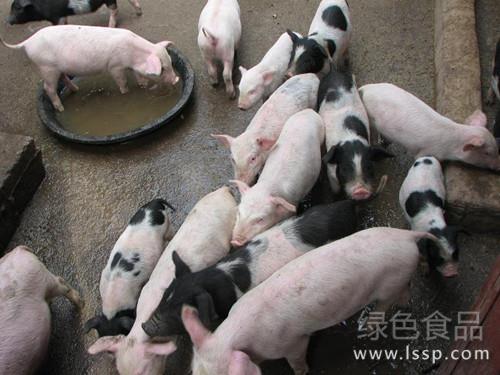
Why is it hard to raise finishing pigs in winter yet still profitable, and how can management be done well?
Raising pigs in winter is difficult but profitable; how to best manage finishing pigs
-

Targeted measures should be taken for cotton management in the middle and late stages
This year, cotton was affected by unfavorable weather such as low temperatures, cloudy and rainy days, and insufficient sunlight in the early stage, resulting in weak growth and delayed development of plants over large areas. In addition, severe natural disaster weather such as heavy rain and typhoons has occurred frequently recently, making the cotton production situation very serious. Cotton is currently in a critical growth period, and all localities should adopt targeted technical measures, strengthen cotton field management, promote the transformation of seedling conditions, and strive to achieve a bumper cotton harvest. 1. Fertilizer management. Focus on the application of topdressing fertilizer and the mixed spraying of pesticides and fertilizers in the later stage. Generally, apply 5-7.5 kg of urea per mu to increase bolls and boll weight and prevent premature senescence. For cotton fields with late boll setting, few bolls in the middle and lower parts, or sufficient flower and boll fertilizer with late application timing, where cotton plants are still growing vigorously at the Beginning of Autumn, fertilizer should mainly be applied by spraying, with supplementary application in fertilizer-deficient areas. For cotton fields deficient in potassium and boron, promptly spray potassium fertilizer and boron fertilizer in combination with pest and disease control.
-
Detailed Explanation of Current Field Management Measures for Cotton
Recently, our region has experienced consecutive moderate to heavy rain, with local torrential rain, causing waterlogging in some cotton fields. Currently, cotton is about to enter the flowering and boll-setting stage. Because waterlogging accelerates the aging of cotton roots, it will affect normal flowering and boll-setting, resulting in reduced cotton yield and quality. Therefore, the following management measures should be taken to ensure a bumper cotton harvest. 1. Drain water promptly. Use every possible method to drain the waterlogged cotton fields as soon as possible, ensure the cotton fields dry out and are aerated, and strive as much as possible to restore normal root growth and promote flowering and boll-setting. 2. Topdress
-
Key Points of Current Technical Management Measures for Cotton
I. Do a good job in seedbed stage management 1. Ventilate in a timely manner to reduce humidity, thin the seedlings and remove weeds. After the cotyledons of the cotton seedlings flatten and turn green, ventilate slightly in a timely manner for 1-2 days to reduce humidity; take advantage of sunny and warm weather to sun the boards and reduce humidity, thin the seedlings and remove weeds. 2. Do a good job in chemical regulation of cotton seedlings. When the cotton seedlings form a heart and begin to produce true leaves, chemical regulation should be carried out in a timely manner. For each standard seedbed per mu of field, use 1 bag of the seedbed-specific biochemical preparation Cu Zhuang Su, mix with 2 kg of water, and spray evenly to prevent the cotton seedlings from shooting up and forming leggy seedlings. 3. Scientifically regulate temperature. Pay attention to two points in bed temperature regulation: first, persist in
-
Detailed Explanation of Key Field Management Techniques for Angelica sinensis
1. Thinning and final thinning: When the seedlings are 3 cm tall, carry out the first thinning, and after another half a month carry out the second thinning. When the seedlings are 10 cm tall, carry out final thinning. For hole sowing, keep 2-3 strong seedlings per hole. 2. Cultivation and weeding: Angelica sinensis grows slowly at the early stage of emergence, while weeds grow rapidly, so weeding should be done in a timely manner. From emergence to row closure, weeding should be done 3-4 times in stages. The first weeding is carried out when the seedlings are about 5 cm tall, the second after final thinning, and the third when the seedlings are 20-25 cm tall, that is, before row closure. Loosen the soil while hoeing to prevent soil compaction and improve
-
Key Field Management Techniques for Dry Pinellia (Ban Xia) Planted in Winter
After the Chinese medicinal herb dry Pinellia is planted in early winter, it enters the winter management stage. If overwintering management is poor, it will directly affect its yield and quality. Therefore, strengthening its winter management is very important. Based on production experience, growers should do the following four things during the overwintering period of dry Pinellia: Check the seed tubers. Normally, dry Pinellia tubers begin to take root and sprout about half a month after planting. Sometimes low temperatures cause tuber rot, so the growth of seed tubers should be checked in time. For spots where sprouts have still not emerged, use your hands or a bamboo strip or wooden stick to gently push the soil aside. Any seed tubers that have not rooted or whose rootlets are yellow-black are inferior seeds and should be dug out and replanted in time.
-
What are the winter management measures for edible fungi?
In winter, temperatures are low, mycelium and fruiting bodies grow slowly, respiratory intensity is low, and mushroom yields are small, but the mushroom flesh is thick and the quality is good. Mushroom growers should seize the good opportunity of the Spring Festival period, when market demand is large and winter mushrooms sell well at high prices, and decisively take measures to strive for more mushrooms and good mushrooms, so as to achieve better economic benefits. There are three specific management measures: raise the temperature of the mushroom bed and create conditions for mushroom growth. Winter is cold, so one can only rely on natural air temperature combined with artificial regulation. For shiitake (Lentinula edodes) sheds, remove the coverings on the shed; except when mushrooms must be harvested and the film on the mushroom bed has to be lifted, keep it tightly covered the rest of the time.
-
Cultivation Methods and Management Key Points for the Chinese Parasol Tree
The Chinese parasol tree, also known as qingtong, is a deciduous tree of the genus Firmiana in the family Sterculiaceae. Its crown is oval, the trunk is straight, the bark is smooth and green, and the lateral branches are thick and emerald green. The Chinese parasol tree is a sun-loving species that prefers a warm, humid climate. It is widely distributed in China, has weak cold tolerance, and can grow in acidic, neutral, and calcareous soils. It has a deep root system and is prone to root rot when waterlogged; during the high-temperature season, 3 to 5 days of flooding can kill it. It grows fairly quickly and has a long lifespan. It leafs out late and sheds its leaves early. The leaves, flowers, roots, and seeds can all be used as medicine, and the seeds can also be roasted for eating and pressed for oil. It is commonly propagated by sowing.
-
Detailed Explanation of Key Techniques for Field Cultivation and Management of Firmiana simplex
1. Site selection and land preparation: Choose a sunny, warm and humid site with good drainage, deep soil layers, and fertile soil for planting. 2. Propagation methods: Propagation commonly uses seed propagation, cuttings, root division, etc. After the seeds mature, harvest them for autumn sowing and spring sowing. Sow immediately after harvest; because the seed germination rate is uneven, the seeds can also be stored until spring sowing the following year. Before sowing, stratify with wet sand or soak the seeds in warm water to promote germination. Before sowing, prepare the seedbed, open shallow furrows at a row spacing of 30 cm, then drill or dibble the seeds in the furrows, with a sowing rate of 75-120 kg per hectare. After sowing, cover
-
Feeding and Management Methods and Technical Key Points for Newborn Dogs
The most important thing right after a dog is born is keeping it warm. Generally speaking, most mother dogs will take care of their nursing puppies themselves. After the dog is born, the temperature of the whelping room should be kept at about 20°C to 25°C. Mother dogs must increase their nutrient intake during lactation. As long as the mother dog's nutrition and the puppies' development are good, weaning can usually take place 30 to 35 days after birth. For the nutritional needs of puppies after weaning, when based on metabolic body size units, they should reach twice the amount for adult dogs. In addition to increasing nutrient density, the food fed at this time should be low in fiber and highly digestible.
条件筛选