-

Characteristics of the Japanese Black Sweet Potato Variety and Its Cultivation and Management Methods
This variety was developed by crossing Japanese Chuanshanzi with Yushu Wang. The vines grow to about 1.5 m long, and the tubers are spindle-shaped with red skin. The flesh is red-purple with white streaks and turns bright red when cooked. It tastes fragrant, soft and sweet, with an excellent mouthfeel, making it a good variety for eating and processing. The yield is 3000-5000 kg per mu, with 3000-3500 plants planted per mu.
-
Detailed Explanation of Key Technical Points for Feeding and Management of Lactating Sows
1. Sows enter the farrowing house 7 days before farrowing; keep the farrowing room dry, clean and hygienic, and gradually reduce the feed amount; for those in poorer body condition, reduce the feed less or not at all; 2. Before farrowing, wash the sow's udder and vulva, then scrub and disinfect with a 0.1% potassium permanganate aqueous solution; after farrowing, inject one dose of penicillin and streptomycin to prevent perinatal diseases; in high-temperature seasons, one week before farrowing, give the sow an intramuscular injection of cod liver oil-antibiotic mixture to prevent high-temperature syndrome; 3. During the farrowing process, the sow must be carefully attended by a dedicated person, and during delivery assistance
-
Technical Points and Management Methods for Pasture Fattening of Thin Cattle
Pasture fattening of cattle is a fattening method that mainly uses natural pasture. The pasture fattening method has the advantages of low feeding cost, good fattening results, and easy promotion in vast agricultural and pastoral areas. During the pasture fattening period of about 150 days, thin cattle of local breeds gain 0.5-0.7 kg per day, beef crossbred cattle gain 0.8-1.2 kg per day, each head of cattle gains a total of 100-180 kg, increasing economic benefit by 300-400 yuan. The pasture fattening technique for cattle is introduced as follows. 1. Selection of fattening cattle
-
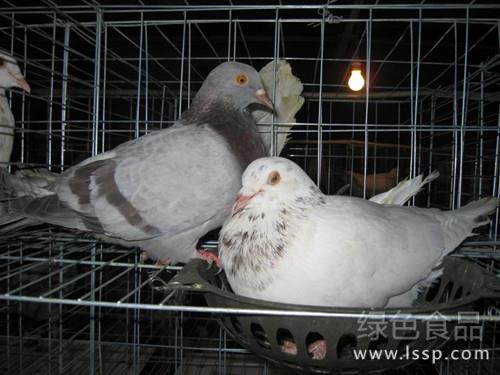
Pollution-free squab farming and management methods make green food more popular with the public
Green food is more popular with the public: pollution-free squab farming and management methods
-
Detailed Explanation of Baiya Qilan Tea Planting Techniques and Management Methods
The tea plant is a perennial crop. Building a new tea garden is the foundation of tea production; as long as it is planted well, long-term economic benefits can be obtained. Therefore, quality must be seriously ensured, starting from the basic work, carefully selecting sites and opening up the garden, in order to achieve long-term high yield and high quality. The growth and development of Baiya Qilan and the external environment form a unified whole. The quality of the garden site is extremely closely related to quality and character. Therefore, when selecting a garden site, emphasis should be placed on assessing whether conditions such as climate, soil, water quality, and terrain are suitable for cultivation. According to Baiya Qi
-
Detailed Guide to Sweet Tea Cultivation: Planting Methods and Management Key Points
I. Growth Characteristics Sweet tea sprouts new buds when the temperature stabilizes above 13°C in February to March, and new shoots grow from the perennial roots. The sweet tea plant has a clumping growth habit, with a relatively narrow crown and many upright shoots. In July, when the temperature in high-altitude mountainous areas is around 25°C and in low-altitude areas around 30°C, the plant stops growing upward, the branches and leaves basically take shape, and it begins to enter the leaf nutrient accumulation period and sugar conversion period. After November, when the temperature drops to 13-14°C, the leaves gradually turn yellow, then wither and fall, and most of the lateral branches
-
Detailed Explanation of Key Tea Plant Cultivation and Management Techniques for August
1. Judging the plucking of third flush tea. This year's spring tea was slightly later than usual, so a somewhat delayed growth of the third flush tea is within expectations. For third flush tea plucking, if the tree vigor is strong and growth is good, plucking can begin in early August. A delay in the timing of third flush tea plucking means that the autumn buds at the time of autumn pruning cannot harden sufficiently, causing reduced yield and income for next year's spring tea. Thirty days after new leaves unfold, leaf area reaches its maximum, after which they fully harden; this process takes about 90 to 100 days. In tea gardens where the third flush is not plucked, in August
-
Detailed Explanation of Key Cultivation and Management Techniques for Goji Berry
Cultivation Methods and Seasons: The fine-leaf and large-leaf goji berries grown as vegetables do not flower or set seed, and are propagated every year by cuttings. In South China, cuttings are usually taken between August and September; in the Yangtze River basin and North China, cuttings can be taken in March, either planted directly in the field or first rooted together in a nursery and then transplanted. In South China, harvesting is done in stages during the cool weather season from November of the current year to April of the following year. In the Yangtze River and Yellow River basins, protected cultivation may be used in winter and spring to bring the tender stems and leaves to market earlier. Key cultivation points for goji berry
-
Detailed Explanation of Key Cultivation and Management Techniques for Goji Berry
Goji berry (Lycium chinense) belongs to the genus Lycium in the Solanaceae family. It is a deciduous trailing shrub with slender, thorny branches and small five-petaled purple flowers. Goji varieties include common goji, Ningxia goji, yellow agate goji, and amber goji. The first and last two can be grown in pots and made into bonsai. I. Propagation: Can be done by seed, cuttings, or division. For seed propagation, soak the harvested dried fruit in water for 1-2 days, select the seeds after they soften and dry them in the sun, choose plump seeds free of pests and diseases, sow in late March of the following spring, and transplant the next spring. Cuttings are taken before the adult plant buds, selecting vigorous one-year-old branches and cutting them into 12-
-
Winter Management Methods and Technical Key Points for Mushroom Beds
After the autumn mushroom harvest is finished, if no heating measures are taken and winter mushroom production continues, then the mushroom bed will enter the winter management stage. How well the winter management of the mushroom bed is carried out has a tremendous impact on the spring mushroom harvest of the coming year. Therefore, the winter management work of the mushroom bed must be done well. 1. Do a good job of heat preservation and ventilation in the mushroom house. In winter, the room temperature of the mushroom house is best kept above 3°C, so that the interior does not freeze, in order to prevent the mycelium from being damaged by freezing. In order to maintain this temperature in the mushroom house, before entering winter, the air-leaking areas on the four walls of the mushroom house
条件筛选