-
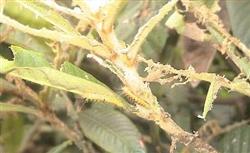
Timely Control Methods for the Loquat Yellow Hairy Caterpillar
The adult of the loquat yellow hairy caterpillar is commonly known as the "upside-down butterfly." Its larvae feed on buds and tender leaves, and during outbreaks they also damage old leaves, the bark of tender stems, flowers and fruit. On damaged leaves, only the upper epidermis and veins remain. First-instar larvae of this pest are gregarious. From the second instar they begin to disperse and cause damage, and after the third instar their food consumption increases greatly. This pest is one of the most common and serious...
-
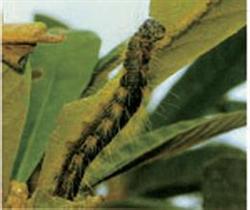
Key points for winter management of loquat, teaching you how to strengthen care
The loquat yellow hairy caterpillar Melanographia flexilineata Hampson, also known as the nodule moth, belongs to Lepidoptera, Noctuidae. In China it is distributed in production areas such as Nanjing, Anhui, Jiangxi, Hubei, Sichuan, Taiwan, China, Hainan, Guangdong, Guangxi and others. Besides damaging loquat, it also damages plants such as white fig and jackfruit. Damage characteristics...
-
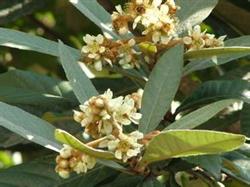
How to apply pre-flowering fertilizer to loquat? Only with proper application can high yields be achieved
The flowering period of loquat trees lasts as long as 3 months, with flowers blooming from October to February of the following year. Generally, the flowering period of loquat trees is divided into 3 stages. The first flowers open from October to November, and the fruit they bear is larger with good quality, but is susceptible to cold; the second flowers open from November to January of the following year, and the fruit quality is inferior to that of the first flowers, but the cold resistance is stronger, and the fruit-setting rate...
-
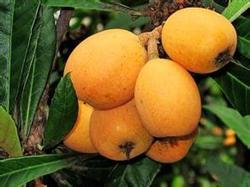
It is the right time to apply heat-preserving fruit-strengthening fertilizer to loquat
Loquat is the earliest fruit variety to ripen in the year. High-quality loquat fruits are large, with few seeds, bright orange-red skin, soft and juicy flesh, moderate sweetness and acidity, a unique flavor, and rich nutrition, with effects such as clearing heat, moistening the lungs, relieving cough, and strengthening the stomach. In recent years, high-quality loquat has quietly entered the high-end fruit market, not only with prices...
-
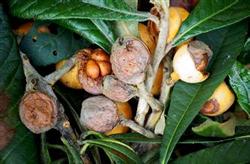
What are the symptoms of loquat sunscald
Symptoms of loquat sunscald: Sunscald can occur on branches and fruit. In the early stage of branch sunscald, the bark becomes shriveled and sunken, drying, cracking and lifting; later the affected area expands into a scorched patch, reaching deep into the xylem, resembling fire scorch. After fruit sunscald occurs, the flesh on the sunny side of the fruit is scorched and shriveled, and the affected area shows dark brown sunken, dried-up lesions, completely losing...
-
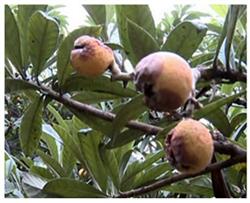
How to fertilize loquat to prevent fruit cracking and increase sweetness?
The fruit-swelling and ripening period of loquat coincides with the rainy spring season, making fruit cracking more likely, reducing sugar accumulation, lowering the sugar content of the fruit, making the fruit taste bland and the quality poor. If organic fertilizer, phosphorus and potassium fertilizer and calcium fertilizer are applied additionally during this period, fruit cracking can be effectively prevented, and sugar synthesis and accumulation can be promoted, raising the sugar content of the fruit...
-
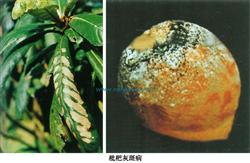
Detailed Guide to Controlling Sooty Mold Disease in Loquat
Loquat gray leaf spot mainly damages leaves and also damages fruit, and is a major disease of loquat. When leaves are affected, the initial lesions appear as pale yellow round spots, which then rapidly expand and merge into irregular large lesions with a distinct black ring at the edges. When fruit is affected, round, purplish-brown lesions form, soon become sunken, and later on the lesions grow...
-
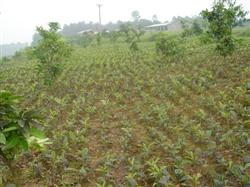
Detailed Explanation of Key Technical Points for Spring Management of Loquat
(1) Land preparation: When building a loquat orchard on flat land, planting trenches should be dug, generally 0.80-1.0 m wide and about 0.80 m deep, with the distance between planting trenches generally about 3 m, and the length of the planting trenches determined by the size of the orchard plot or the length of the slope. When digging the trenches, place the topsoil and subsoil separately, with the topsoil placed on the upper edge; when backfilling, backfill the topsoil first, and divide it into 3-...
-
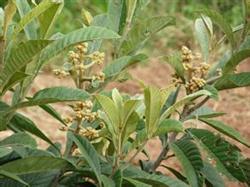
For mature loquat trees, apply spring shoot fertilizer in time in spring
Loquat trees prefer a warm and humid climate, bloom in autumn and winter, and their fruit ripens in late spring and early summer. Since last autumn, various parts of Guangdong have experienced drought with little rain. Fruit growers should actively water and fertilize loquat trees, especially mature trees, which should be given spring shoot fertilizer in time to strive for a bumper harvest this year. 1. Fertilizing young trees (1-3 years) Loquat young trees...
-
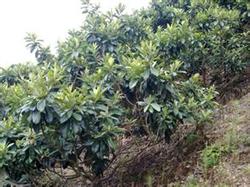
Detailed Explanation of Key Post-Harvest Management Techniques for Loquat
To overcome the alternate bearing phenomenon in loquat caused by poor management, post-harvest management must be strengthened to prepare for a good harvest next year. 1. Strengthen fertilizer and water management (1) In April-May after fruit harvest, apply fertilizer by the ring trench method around the perimeter beneath the tree canopy, applying 100 kg of decomposed human manure or cattle and pig pen manure per tree, ...
条件筛选