-
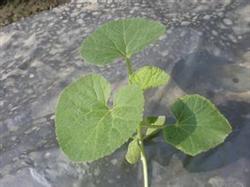
How to grow cantaloupe with soilless cultivation? Detailed explanation of methods and technical key points
In recent years, the area of off-season cultivation of cantaloupe using economical greenhouses in Hainan has gradually expanded. Compared with open-field cultivation, it is a high-input, high-output cash crop. Cantaloupe seeds are expensive, and seedling-stage diseases are relatively serious. The causes of cantaloupe seedling death are described separately below, and control methods are proposed....
-
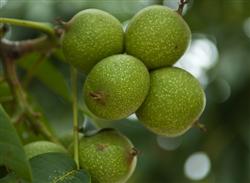
Applying supplemental fertilizer to walnut trees during the rainy season: better to apply less than more
Choose high-quality seedlings for planting. High-quality seedlings refer to robust grafted seedlings with pure varietal characteristics, well-healed graft unions, and no damage or pests and diseases. Choose plots with a soil layer more than 1 m thick, a pH of 7.5-8.0, a soil salt content below 0.25%, and a groundwater level below 2 m for planting. When planting, apply a 600-fold dilution of Xin Gaozhi Mo...
-
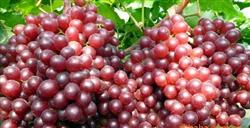
Detailed Guide to Seedless Early-Ripening Cultivation of Grapes
I. Selection of vines for treatment: Choose vines with normal growth and strong vigor, as this gives a high success rate, good fruit set, a high seedless rate, large berries and good market quality. Treating weak or over-vigorous vines gives unstable results, small berries and uneven berry size. It is necessary to investigate the vine's development in the previous year to see...
-
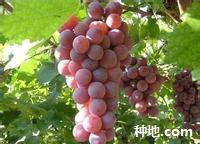
What are the cultivation methods for Ruby Seedless grapes?
How do you grow Ruby Seedless grapes? What cultivation method is best? Ruby Seedless grapes have a high fruit-setting rate and a high berry-set rate, uniform berries, easy coloring, firm and crisp flesh, good flavor, early maturity and high yield, and strong adaptability. 1. Basic situation. The planting trial plot was set up in the vineyard of Huiguokou Village in our district. The local frost-free period is 232 days, annual rainfall 650 mm, average annual temperature 13.1°C, flat terrain, slightly alkaline soil, deep and fertile soil layer. In spring 2000, the vineyard was established directly with cuttings, with a plant spacing of 1 m x 1 m.
-

Detailed Explanation of Key Techniques for Growing Fuzzless Peaches
Peach varieties are deeply loved by consumers for their large size, small pits, abundant juice and sweet flavor. In recent years, with the development of nectarine varieties, the development of peach varieties has been somewhat affected because the fuzz on the fruit skin detracts from their external quality. To overcome this shortcoming in the external quality of peaches, we conducted multiple trials on peach varieties such as Yuhualu, Huangjintao, Okubo, Diaozhibai and Qiufengmi, and summarized a set of cultivation and management techniques that reduce the fuzz on the surface of peach skin, thereby improving the external quality of the fruit.
-
Key Technical Points and Detailed Process for Processing Seedless Candied Jujubes
(1) Ingredients: 50 kg dried red jujubes, 30 kg soft white sugar, 100 g citric acid. (2) Operating points: 1. Select milky-white stage jujubes that are large, have small pits, thick flesh, and thin skin, and sort them into 3 grades - large, medium, and small - for processing separately. 2. Sharpen one end of a 6-8 mm diameter iron tube, pierce it in from one end of the jujube, and when pulling it out, bring the jujube pit out with it. With continuous operation, the pits are then constantly pushed out from the other end of the iron tube. 3. Soak the pitted jujubes in clean water for 12 hours, until all the wrinkles have expanded. 4. Put 25 kg water into a pot
-
Lessons to Remember After Losing Out by Not Applying Organic Fertilizer to Jujube Trees
This year, the selling prices of jujubes varied greatly. The price differences were mainly due to differences in sweetness and crispness, and apart from varietal characteristics, the main reason for the differences in sweetness and crispness was the different types of fertilizer applied. Currently, it is the second root development period for jujube trees. The first root growth peak occurs from late May to early June after new shoots stop growing, and the second root growth peak occurs from after fruit harvest to early November. From surveys of jujube growers, many farmers are only accustomed to fertilizing fruit trees in spring,
-
Detailed Explanation of Key Techniques for Hairless Cultivation of Peaches
Peach varieties are deeply loved by consumers for their advantages such as large size, small pit, abundant juice and sweet taste. In recent years, with the development of nectarine varieties, the development of peach varieties has been affected to some extent because the fuzz on the fruit skin affects the appearance quality. In order to overcome the shortcomings in the appearance quality of peach fruits, we conducted multiple trials on peach varieties such as Yuhualu, Huangjintao, Okubo, Diaozhibai and Qiufengmi, and summarized a set of cultivation and management techniques that reduce the fuzz on the surface of peach skins, thereby improving the appearance quality of the fruit.
-
Detailed Explanation of the Production Techniques and Methods for Seedless Candied Jujubes
1. Ingredients: 50 kg dried red jujubes, 30 kg soft white sugar, 100 g citric acid. 2. Key operating points: (1). Select milky-white stage jujubes that are large, have small pits, thick flesh and thin skin, and sort them into 3 grades - large, medium and small - for processing separately. (2). Sharpen one end of an iron tube 6-8 mm in diameter, pierce it in from one end of the jujube, and when pulling it out, bring the jujube pit out with it. With continuous operation, the pits are constantly pushed out from the other end of the iron tube. (3). Soak the pitted jujubes in clean water for 12 hours,
-

How do you pick fruits and vegetables grown with less hormones?
As people's living standards keep rising, are their demands for ingredients getting higher and higher? Food safety in our country has long been criticized? Friends who like to shop at the market...
条件筛选