Detailed Guide to Seedless Early-Ripening Cultivation of Grapes
I. Selection of vines for treatment: Choose vines with normal growth and strong vigor, as this gives a high success rate, good fruit set, a high seedless rate, large berries and good market quality. Treating weak or over-vigorous vines gives unstable results, small berries and uneven berry size. It is necessary to investigate the vine's development in the previous year to see...
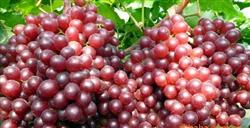
I. Selection of vines for treatment: Choose vines with normal growth and strong vigor, as this gives a high success rate, good fruit set, a high seedless rate, large berries and good market quality. Treating weak or over-vigorous vines gives unstable results, small berries and uneven berry size. It is necessary to investigate the vine's development in the previous year to see whether there was premature leaf fall or a severe downy mildew infection, and whether new shoot growth stopped too late. If any of these occur, the shoots will not be well ripened, and such vines are best not given seedless treatment.
II. Vine management before treatment: 1. Bud rubbing, tying and pinching; for weak vines, confirm the flower clusters early and rub out buds so that early growth is vigorous. For over-vigorous vines, keep 20%-30% of the new shoots, prune out the strongest or weakest shoots to balance shoot vigor, and leave 10-12 strong new shoots per sq m. This is very important. Tying should be finished before the first treatment, because only early tying can coordinate the growth and development of the new shoots and make the flower clusters develop uniformly. If tying truly cannot be done before the first treatment, tie promptly after treatment, at equal spacing, taking care not to let the canopy become too dense. Pinching should be done early, when about 6 leaves have grown above the flower cluster (7-10 days before flowering); pinch off the tip of the small shoot, then remove all secondary shoots except the one at the top, and control the top secondary shoot to the point where winter buds do not burst. For Kyoho grapes, the standard is 4-5 leaves per 100 g of berries. 2. Flower cluster management; generally leave two clusters on strong shoots and one cluster on medium and weaker shoots, usually about 20% more clusters than the normal amount, because clusters with poor market quality after treatment must be removed. Removing the secondary cluster is also very necessary, because within the same flower cluster the development of the shoulder and the tip differs greatly. To make the flower buds develop uniformly, the cluster must be trimmed: remove 3-4 spikelets below the shoulder, then remove the tip of the cluster (amounting to 1/6-1/8 of the whole cluster), leaving about 10 spikelets. For berry thinning, a cluster weight of 500-600 g is appropriate, so for large-berry grapes such as Kyoho, 35-40 berries should be left per cluster (depending on single berry weight), because once the cluster is too large it colors poorly; therefore when trimming the cluster it is very necessary to remove seeded berries, small hardened berries and excess berries, aiming for uniform berries and a 100% seedless rate.
III. Proper timing and methods of treatment: generally two treatments are given (varieties with a strong tendency to be seedless need only one treatment), the first before flowering to remove seeds and the second after flowering for enlargement. The second treatment is generally 10-15 days after flowering and is easy to time. After the second dipping, trim the cluster (thin out berries that are too crowded or out of proportion with the whole cluster, so the berries are neat and attractive and market quality is improved), then bag (after trimming, spray the cluster heavily with a fungicide; choose a fungicide with a longer effective period and good results such as Kepo, and bag the cluster promptly after spraying), and increase leaf area (seedless cultivation requires strong vine vigor and more leaves, so after fruit set extend the new shoots or secondary shoots until the whole new shoot reaches more than 1 m). The first treatment varies greatly with variety. Varieties with many seeds that are hard to de-seed should be treated 10 days before full bloom or even earlier; varieties with a tendency to be seedless can be treated near flowering time or at early bloom, but treating too late will include too many seeded berries and lower the marketable rate. The treatment method affects the result; dipping the cluster (10-15 seconds, do not repeat, and do not miss any) is most commonly used. This method gives even coverage with less chemical, but its drawback is that a large amount of chemical gets on the cluster stem and causes it to harden. Spraying or smearing the berries increases the amount of chemical used and gives uneven coverage.
IV. Chemicals used for seedless treatment: the chemicals used for seedless treatment include GA (gibberellin), PCPA (para-chlorophenoxyacetic acid), GA+SM, GA+PCPA, and the LM series of seedless agents (already successful on Kyoho "strong vine vigor, high fruitfulness of fruiting canes, strong fruiting ability of secondary shoots; in the young vine stage, short-cane pruning should be the main method, together with medium and long cane pruning, to speed up the expansion of the fruiting area, using the double-cane renewal method. After entering full fruiting, short-cane pruning becomes the main method. Generally canes are cut to 2-4 nodes, and some weak canes are heavily shortened, leaving 1-2 buds at the base; after budbreak the flower clusters on new shoots should be removed as early as possible to train renewal canes and prevent the fruiting area from moving outward and the fruiting canes from aging. Yield per mu should be controlled at about 3000 kg so as to produce high-quality fruit. Choose strong canes to carry fruit, generally leaving one cluster per fruiting cane, to ensure the cluster has sufficient nutrition during growth. The cane-to-fruit ratio should usually be kept in the range of 2-3:1. Excess flower clusters can be thinned 2-4 weeks before flowering, removing double clusters, small clusters and weak clusters promptly, and pinching the cluster tip and secondary clusters 10 days before flowering, to limit yield appropriately. When there are 6-10 new leaves, spray B9 at 3000-5000 times dilution to inhibit new shoot growth and promote good fruit set. At full fruiting and two weeks after flowering, dip the flower clusters and fruit clusters in 15-30 ppm and 30-50 ppm gibberellin respectively, which can enlarge the berries 1-2 times. Before budbreak, spray 5-degree lime sulfur or 200 times dinitro-o-cresol sodium salt to eliminate overwintering pathogens; during fruit growth, use 50% Tuzet at 600-800 times, 75% chlorothalonil at 600-800 times, 70% thiophanate-methyl at 1000 times, 65% zineb at 500 times, or 1:0.5:200 Bordeaux mixture to protect the fruit clusters. The main pest is the golden-ringed hornet, which from mid-July begins to damage early-ripening grapes, the adults gnawing ripe fruit and leaving the skin; control by burning hornet nests around the orchard before July. During fruit ripening, hang traps on the vines made of brown sugar, honey and water (1:1:15) plus red arsenic to kill the hornets. Storage: during fruit growth, apply more phosphorus and potassium fertilizer; as the fruit ripens, control watering to improve quality, and harvest late to increase ripeness. Store as you harvest, storing only the best, with the fruit stalk attached; disinfect the storage environment by fumigating with sulfur; use hanging storage, strictly controlling temperature (0-1.5 degrees) and humidity at about 85%, with temperature and humidity evenly distributed."), Pioneer, Muscat Hamburg, Red Fuji, Early Takasumi, Izumishiki, Jingya, Hongmi and Heixuanfeng and other varieties, all can be applied from 3-5 days before flowering to full bloom, with a seedless rate of over 95%, and with the advantages of large berries, early coloring and resistance to berry drop). Five days before flowering, dip Kyoho grape flower clusters in GA3 (distributed by Shanghai Biochemical Reagent Store) + SM (streptomycin produced by North China Pharmaceutical Co., Ltd.) at (50+100) mg.L-1, and five days after flowering dip the young clusters again in GA3 at 50 mg.L-1; this can bring the seedless berry rate of Kyoho grapes to 100%, ripen 20-30 days earlier, avoid the market peak, and fetch a unit price 2-3 times that of later-market fruit (the control).
V. Influence of weather conditions on treatment results: the weather conditions at the first treatment are very important. If more than 20 mm of rain falls within 8 hours after treatment, treat again, but the concentration must be reduced, generally to 50-80% of the original concentration, depending on the rainfall and the timing of treatment. If the weather is abnormally dry, with relative humidity persistently at 40% for a long time, seeded berries will be included, and fruit set and berry enlargement will be poor; rain later will cause fruit cracking. Therefore treatment should not be done in abnormally high temperatures or at noon; it is best done in the early morning or evening when humidity is high, and humidity is best kept above 80%, so in dry areas watering before and after treatment is necessary. A temperature of about 20 degrees is best; above 30 degrees or below 10 degrees will affect chemical uptake.
VI. Fertilizer and water management: compared with conventional cultivation, seedless cultivation can shorten the period from flowering to ripening by 20-25 days, and the fruit set rate is 1-3 times higher than conventional cultivation; at the same time, because seed development cannot produce growth-promoting hormones, plenty of water and fertilizer are needed to meet growth needs. Generally, a budbreak fertilizer, pre-flowering fertilizer, post-flowering fertilizer, fruit enlargement fertilizer, coloring fertilizer and autumn base fertilizer are applied over the year; the first four are mainly nitrogen fertilizer, and the last two are mainly phosphorus and potassium fertilizer and farmyard manure; water immediately after fertilizing.
VII. Disease and pest control: because it ripens early, it can generally be harvested before the rainy season arrives, so diseases and pests are mild; spraying Bordeaux mixture and similar products a few times to protect the leaves is enough.